
The most controversial fossil site in human evolution just got even more puzzling
The most controversial fossil site in human evolution just got even more puzzling
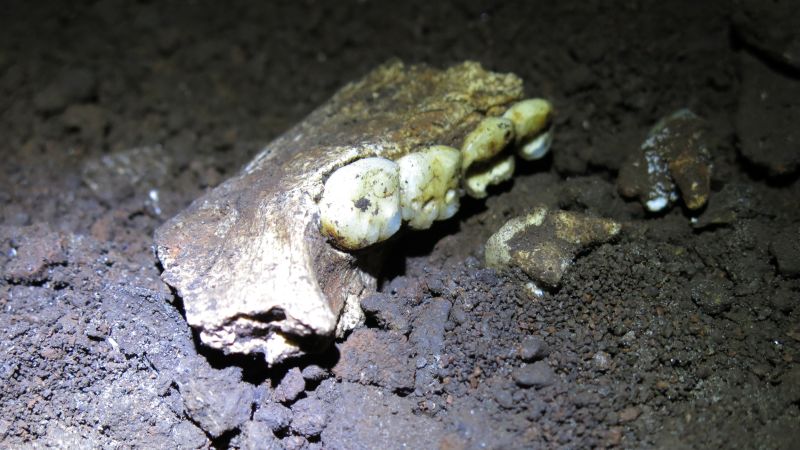
The most controversial fossil site in human – Over the past decade, a series of human-like fossils have been uncovered deep within the labyrinthine caverns of the Rising Star cave system in South Africa. These remains, discovered in the Dinaledi Chamber, have already reshaped scientific understanding of human origins, introducing a species that defies conventional classifications. Now, new research is complicating this narrative further, revealing that all 20 individuals whose remains were found at the site may have been female. This discovery has left researchers grappling with questions about the social behaviors and biological traits of Homo naledi, an ancient hominin whose existence challenges long-held assumptions about early human evolution.
New Discoveries Shed Light on Sex of Fossils
Scientists have used ancient proteins extracted from teeth to determine the sex of the remains, a technique known as paleoproteomics. The results, published in the journal *Cell*, indicate that none of the tested fossils carried the male-specific version of the amelogenin protein, a key marker for sex differentiation. “The findings sparked considerable unease among scientists,” said Lee Berger, a paleoanthropologist and National Geographic explorer in residence. Berger, who coauthored the study, emphasized that the data was cross-verified by two independent laboratories to rule out internal errors. “We ran it through twice because we didn’t want it to be a mistake,” he explained.
The research was led by Palesa Madupe, a molecular scientist who previously worked at the Globe Institute in Copenhagen. Now a postdoctoral researcher at the Max Planck Institute for Evolutionary Anthropology in Germany, Madupe analyzed 23 samples of tooth enamel. Two samples proved inconclusive, and two belonged to the same individual, leaving a final sample size of 20. The absence of the Y chromosome-linked amelogenin protein in all samples suggests that the fossils may have been exclusively female, a conclusion that raises intriguing questions about the species’ behavior and population structure.
Revisiting the Original Discovery
Initially, the Dinaledi Chamber was hailed as a groundbreaking site, yielding an unusually rich collection of Homo naledi fossils. These remains, dating between 335,000 and 241,000 years ago, included bones from at least 15 individuals. The species’ brain size was comparable to that of modern chimpanzees, yet its skeletal features hinted at a more complex lineage. One of the most astonishing revelations was the suggestion that Homo naledi practiced deliberate burial of its dead, a behavior once thought to be unique to humans. This finding implied a level of cognitive and cultural sophistication that defied expectations for such an ancient species.
Earlier studies had also pointed to the presence of symbolic markings on cave walls, potentially indicating early communication or ritualistic practices. Berger, who spearheaded the original excavation, noted that the lack of sexual dimorphism in the fossils was a defining characteristic. “When we described those hominins in 2015, we said they’re the least sexually dimorphic species of ancient hominid ever found,” he recalled. This lack of size or shape differences between males and females was unexpected, especially given the typically pronounced sexual dimorphism seen in other hominin species like *Australopithecus* or *Homo erectus*.
The Mystery of Sex Bias in Burial Practices
Now, the latest findings have introduced a new dimension to the puzzle. Berger proposed that the predominance of female remains could reflect a sex-based mortuary practice, akin to modern human customs where individuals are separated by gender during burial. “Homo naledi may have buried its loved ones by rituals that separated them in death by sex and gender,” he suggested. This theory challenges the idea that the site was a random accumulation of bones, instead pointing to a deliberate cultural behavior. However, the study’s authors acknowledged alternative explanations, such as genetic mutations or deletions in the amelogenin-Y gene that could have obscured the presence of males in the fossil record.
Enrico Cappellini, a senior author of the study and professor of paleoproteomics at the Globe Institute, highlighted the significance of the gene deletion. “This deletion has been observed in some living male humans and even in the DNA of a Neanderthal male,” he noted. The absence of the gene in the ancient samples could mean that Homo naledi males were simply not represented in the collection, or that their genetic makeup underwent systematic changes over time. “It would be very unlikely for the gene to have been deleted among even half of the 20 individuals we studied,” Cappellini added, suggesting that while mutations are possible, they are unlikely to account for the entire population’s absence.
The implications of these findings are profound. If Homo naledi’s burial practices were indeed sex-specific, it would suggest a level of social organization and identity recognition previously attributed to more advanced hominins. This could also indicate that the species had a significant presence in the cave system, with males potentially living or dying elsewhere. Alternatively, the site might have been a specialized location for the interment of females, possibly due to their physical or cultural attributes. The study leaves open the question of whether this sex bias was intentional or a byproduct of other factors, such as the cave’s accessibility or environmental conditions.
A Broader Context for the Findings
The technique of analyzing proteins in ancient remains has become a vital tool for studying human evolution. While it’s relatively new, it has been applied to other hominin fossils, including a 2-million-year-old specimen of *Paranthropus* and *Homo erectus*. These applications have provided insights into the biological diversity of early human species, but the Rising Star site presents a unique case. The hominin remains there not only exhibit a lack of sexual dimorphism but also a possible gender-specific burial pattern, both of which are rare in the fossil record.
Berger’s team has long argued that Homo naledi’s behavior reflects a blend of primitive and advanced traits. Its small brain size contrasts with its complex burials, while its skeletal structure suggests a mix of human-like and ape-like features. The latest findings on sex add another layer to this complexity, forcing researchers to reconsider the species’ social dynamics. “This is one of the great scientific lessons that come out of this,” Berger said, reflecting on the broader impact of the study. “It shows how much we still have to learn about early human relatives and their behaviors.”
As the debate continues, the Dinaledi Chamber remains a focal point for understanding human evolution. The site’s enigmatic nature—its mix of physical and cultural traits, its age, and now its potential sex bias—has made it a crucible for new theories. Whether the absence of male remains is due to biological deletion, environmental factors, or intentional practices, the findings underscore the importance of revisiting long-standing assumptions. For now, the Rising Star cave system stands as a testament to the mysteries that still linger in the study of human origins, inviting further exploration and discovery.
