
Appeals court deals biggest setback yet to Trump DOJ’s demands for confidential voter roll data
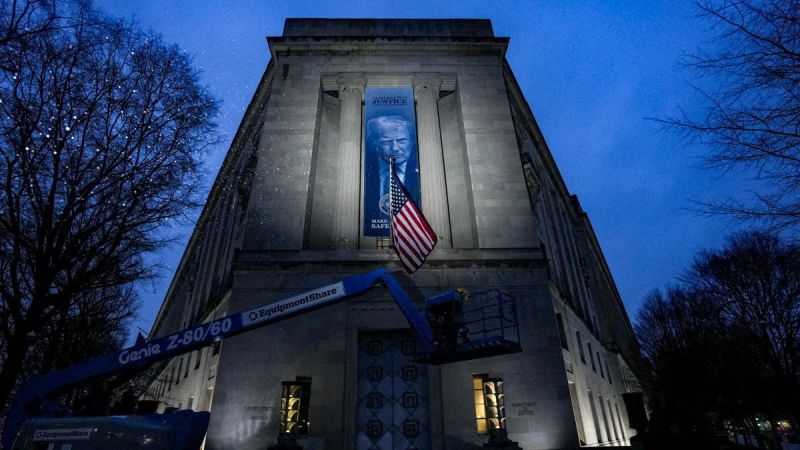
Appeals Court Blocks Trump DOJ’s Bid for Confidential Voter Data in Michigan
Appeals court deals biggest setback yet – On Wednesday, a federal appeals court ruled against the U.S. Department of Justice’s attempt to compel Michigan to release confidential voter registration data. This decision marks a significant blow to the Trump administration’s effort to audit unredacted voter rolls across the country, with the 6th Circuit Court of Appeals becoming the first appellate body to challenge the move. The ruling asserts that Michigan was not legally required to hand over the information, which includes sensitive details like Social Security numbers and driver’s license identifiers.
Legal Rulings Against Federal Efforts
The 6th Circuit Court of Appeals, in a 2-1 decision, determined that the Justice Department’s use of the 1960 Civil Rights Act to justify its request was flawed. The law, originally designed to combat voter suppression during the Jim Crow era, grants the attorney general authority to demand voting-related records that are “in possession” of election officials. However, the court found that Michigan’s voter files, which were compiled internally by state officials, did not fall under this category.
“Back then, the government used this power to ensure that everyone who had the right to vote could freely exercise that right,” wrote Circuit Judge Andre Mathis in the majority opinion. “But today, the government invokes Title III for an inverse purpose—to ensure that some people have not voted.”
This reasoning echoes concerns raised by multiple lower courts, which have already rejected the DOJ’s demands in nine separate rulings. The decision may pave the way for a potential Supreme Court review of the administration’s strategy.
The Dissenting View
Circuit Judge John B. Nalbandian expressed disagreement with the majority’s interpretation of the law. In his dissent, he argued that the DOJ’s approach is justified by the need to verify election integrity. He emphasized that the department’s actions are consistent with historical precedents where the Civil Rights Act was used to combat voter fraud.
Michigan Secretary of State Jocelyn Benson, whose office was at the center of the dispute, is not required to share the data because the state created its own voter file rather than acquiring it from an external source. “Michigan officials assembled the qualified voter file themselves,” Mathis stated in the opinion, which was supported by Judge R. Guy Cole, Jr. The ruling also highlighted that the DOJ had not fulfilled all legal criteria for its data requests, including demonstrating a clear need for the information.
Broader Implications of the DOJ’s Campaign
The push to obtain unredacted voter rolls is part of a larger federal initiative to exert greater control over state election processes. Over the past year, the DOJ has filed lawsuits in 30 states that resisted releasing their full voter registration files. This effort is driven by President Donald Trump’s persistent claims that the 2020 election was unfairly influenced by voter fraud.
Legal challenges to the administration’s approach have gained momentum. Earlier this week, a Washington, D.C. federal judge halted the use of a federal citizenship verification system to purge voter rolls. In Boston, a federal court ruled against provisions of a 2025 executive order aimed at tightening election rules. These decisions suggest a growing resistance to the Trump DOJ’s attempts to centralize election oversight. The Michigan case has now become a pivotal example of this trend.
Controversies Surrounding the Homeland Security Data System
A key argument against the DOJ’s strategy centers on the Department of Homeland Security’s (DHS) data system. The administration plans to cross-reference state voter rolls with this system to identify discrepancies. However, critics point out that the DHS database is not infallible, often flagging eligible voters as ineligible due to outdated or incomplete records. Naturalized citizens, in particular, have been incorrectly labeled as non-citizens, raising concerns about the accuracy of the data.
This system, which is already available for election officials to use voluntarily, has earned a reputation for generating false positives. While the DOJ insists it is necessary for detecting fraud, opponents argue that the process could unfairly target voters without sufficient evidence. The Michigan ruling underscores the legal complexities of using such data, highlighting the need for states to retain control over their own voter files.
Political Context and Future Challenges
The Trump administration’s legal maneuvers reflect a broader strategy to question election validity and justify federal intervention. By leveraging the 1960 Civil Rights Act, the DOJ has sought to justify its demands as a constitutional safeguard against voter fraud. However, the courts have increasingly questioned whether this tool is being applied appropriately in modern contexts.
With the appeals court’s decision, the administration now faces a critical crossroads. The ruling could weaken its ability to enforce data collection mandates, potentially shifting the focus of its election-related lawsuits to other states or legal arguments. Meanwhile, the broader implications of the case extend beyond Michigan, as it challenges the federal government’s authority to access state-held voter information. The outcome may influence upcoming elections and shape the legal landscape of voter roll management in the U.S.
Unraveling the Legal Basis for the DOJ’s Actions
The core of the Michigan case revolved around the interpretation of Title III of the Civil Rights Act. The DOJ claimed that the law allows it to request voter data from states to audit their registration processes. However, the 6th Circuit clarified that the law applies only to records that are “in possession” of election officials, not those they have compiled internally. This distinction is crucial, as it limits the scope of the DOJ’s authority to states that have received the data from third parties.
Michigan’s voter file, created by state officials, does not meet this criterion. As a result, the court ruled that the DOJ’s demand for the data was outside the law’s intended purpose. The ruling also emphasized that the department must demonstrate a direct link between the data and potential election fraud to justify its request. This legal threshold, the court argued, has not been sufficiently met in the current context.
What’s Next for the DOJ and Election Integrity?
Despite the setback, the DOJ has not abandoned its campaign. The administration continues to press for data from other states, using a combination of legal and political pressure to achieve its goals. While the Michigan decision may slow its progress, it also highlights the need for a more nuanced approach to voter roll audits.
With the Supreme Court now a potential arbiter of the issue, the future of the DOJ’s strategy remains uncertain. The court’s decision could influence how the administration frames its arguments in subsequent cases, particularly as it seeks to balance the need for election oversight with the protection of voter privacy. As the legal battle unfolds, the implications for state autonomy and federal authority in elections will become clearer.
