
NOAA’s Hurricane Hunter fleet is aging. Senators want to make it bigger and newer
NOAA’s Hurricane Hunter Fleet Faces Modernization Push
NOAA s Hurricane Hunter fleet is aging – A coalition of senators from both major political parties is pushing for a significant expansion of NOAA’s aging Hurricane Hunter aircraft fleet. The proposed legislation, set to be unveiled on Wednesday, seeks to triple the number of planes dedicated to storm tracking and atmospheric research. This initiative aims to address the growing challenges posed by increasingly severe weather patterns, ensuring the U.S. has the tools needed to monitor and predict hurricanes with greater precision.
Funding and Legislative Safeguards
The Senate bill, shared exclusively with CNN, allocates $2.5 billion for acquiring new aircraft and adds $45 million annually to support the recruitment of specialized pilots. This funding would also establish NOAA’s role in aircraft reconnaissance as a statutory obligation, preventing its responsibilities from being handed over to other agencies, such as the U.S. Air Force. Critics argue that NOAA’s small size makes it susceptible to budget cuts in Washington’s political landscape, where competing priorities often dominate.
Senator Ted Cruz, a Republican from Texas, and Senator Maria Cantwell, a Democrat from Washington, have co-sponsored the bill alongside four additional senators representing coastal states. Cantwell, whose state has recently experienced catastrophic flooding from atmospheric rivers, emphasized the urgency of the proposal. “As atmospheric rivers become more frequent and severe across the Pacific Northwest, our communities increasingly depend on accurate forecasts to prepare for flooding and other extreme weather,” she stated in a press release.
The Aging Fleet and Operational Challenges
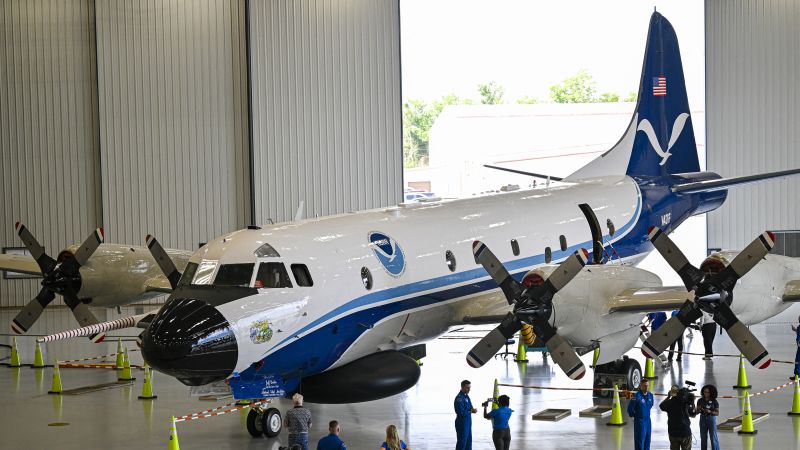
Currently, NOAA operates two older WP-3D Orion turboprop planes—nicknamed “Kermit” and “Miss Piggy”—and one heavily modified Gulfstream jet, “Gonzo.” These aircraft, many of which are over five decades old, are expected to reach the end of their service life by 2030. Their deteriorating condition has already led to last-minute cancellations of planned missions during recent hurricane seasons, due to mechanical failures that disrupt data collection.
While the Air Force also conducts hurricane reconnaissance, its C-130J fleet lacks the advanced instrumentation that NOAA’s planes provide. The specialized equipment aboard NOAA’s aircraft allows for detailed 3D analysis of storms, crucial for predicting their intensity and trajectory. However, with the current fleet, scientists face limitations in their ability to gather real-time data, which is vital for improving forecast accuracy.
NOAA’s Role in Weather Monitoring
NOAA’s Hurricane Hunter planes are instrumental in tracking tropical storms and hurricanes. By flying directly into these systems, they deploy a range of instruments to measure wind speed, pressure, temperature, and humidity. This data is then integrated into predictive models that help meteorologists forecast storm paths and intensity. The agency has also used its fleet to study atmospheric rivers, which can deliver extreme rainfall and snowfall to regions like the West Coast.
Recent years have seen a surge in the frequency and severity of such weather events, making the need for upgraded systems more pressing. The current fleet’s limitations have been highlighted during incidents where critical data was delayed or lost, potentially affecting preparedness efforts. Senators argue that without modernization, the nation’s ability to respond to these threats will be compromised.
The Need for Expansion
Lawmakers and climate scientists are united in their concerns about the aging fleet. They warn that continued reliance on outdated aircraft could lead to a decline in forecast accuracy, particularly as hurricanes undergo rapid intensification—a phenomenon that has become more common in recent decades. “The data collected from these flights is essential for refining models and saving lives,” said one climate expert, who spoke to CNN. “If we can’t gather reliable information, our predictions will be less effective.”
The bill proposes expanding NOAA’s fleet to at least six aircraft, double its current capacity, and potentially up to nine. This would not only replace the aging planes but also allow for more frequent and comprehensive missions. The legislation also mandates that NOAA maintain backup aircraft for each operation, reducing the risk of mission disruptions caused by equipment malfunctions.
Modernization and Technological Advancements
Among the proposed upgrades are advanced scientific tools, such as tail-mounted Doppler radars, which offer more precise measurements of storm dynamics. These innovations could enhance the accuracy of hurricane forecasts and improve projections for atmospheric river events, which are known for their devastating impact on coastal areas. The bill’s emphasis on cutting-edge technology aligns with the growing demand for better climate data in an era of shifting weather patterns.
NOAA is currently awaiting the delivery of a modern replacement for its Gulfstream jet, a key component of its research efforts. At the same time, the agency is working to procure at least one new WP-3D Orion to replace an existing plane. These steps are part of a broader strategy to ensure the fleet remains operational and capable of meeting the challenges of a warming climate. However, without congressional approval, these replacements may not materialize in the near future.
Political Consensus and Climate Implications
The bipartisan nature of the legislation underscores a rare agreement on the importance of climate preparedness. Senator Cruz, who chairs the Senate Commerce, Science, and Transportation Committee, stressed that the bill reflects a shared commitment to scientific research and disaster mitigation. “We cannot afford to let outdated systems hold back our ability to predict and respond to extreme weather,” he said.
The proposal also addresses concerns about transitioning the fleet to drones. While unmanned aircraft could offer cost-effective solutions, some experts fear they may not capture the same level of detailed data as crewed planes. The bill explicitly requires new planes to be manned, ensuring human oversight in critical data-gathering operations. This decision reflects a balance between innovation and reliability in the face of escalating climate challenges.
Future Outlook and Legislative Impact
If passed, the bill would mark a pivotal moment for NOAA, securing the funding needed to modernize its fleet and expand its capacity. It would also provide a legal framework to safeguard its role in storm monitoring, shielding it from potential reallocation to other agencies. The legislation’s success could influence future climate policy, setting a precedent for investing in infrastructure that supports scientific research.
As the debate over hurricane preparedness continues, the Senate bill serves as a testament to the growing recognition of NOAA’s importance. With more frequent and intense weather events expected in the coming decades, the agency’s ability to adapt will be crucial. The senators’ efforts to triple the fleet not only aim to enhance operational efficiency but also to ensure the U.S. remains equipped to face the unpredictable challenges of climate change.
