
Iran sends a defiant message to Trump with colossal funeral for slain Supreme Leader Ali Khamenei
Iran Sends a Defiant Message to Trump with Colossal Funeral for Slain Supreme Leader Ali Khamenei
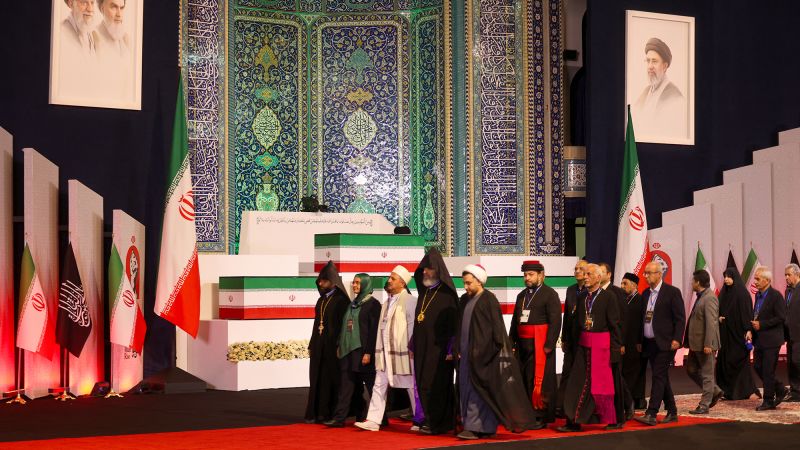
Iran sends a defiant message to Trump – Exactly four months following his assassination, Supreme Leader Ali Khamenei is being honored in a sweeping, multi-city mourning event that has dominated headlines across the Islamic Republic. The funeral, set to span over a week and unfold in five cities across Iran and Iraq, is expected to draw millions of participants, transforming the occasion into a grand display of national unity and religious fervor. This ceremonial outpouring occurs amid the backdrop of the 250th anniversary of the United States’ Independence Day, a timing that underscores the symbolic clash between Iran’s revolutionary spirit and Western ideals.
The event’s scale is unprecedented, with authorities mobilizing an array of resources to ensure its success. Government workers, university staff, labor unions, firefighters, military personnel, and aid organizations are all enlisted to coordinate the logistics of the funeral. Religious groups, particularly those dedicated to mourning rituals, are also playing a central role. This extensive effort is designed to create an atmosphere of reverence, with thousands of mourners traveling to holy sites across both nations to pay their respects. Iraq, where Shiite Muslims constitute the majority, has also pledged its support, with officials anticipating massive crowds in the days leading up to the event.
The funeral’s timing is no coincidence. Khamenei’s body will be displayed in state on July 4, the anniversary of the American Revolution, while another pivotal segment of the procession coincides with a significant Shiite observance marking the martyrdom of a revered religious figure. This dual symbolism is deliberate, framing Khamenei’s legacy as a bridge between Iran’s spiritual heritage and its contemporary struggle against global powers. The funeral takes place during the Islamic month of Muharram, a period deeply tied to Shiite traditions of mourning, particularly the commemoration of Imam Hussein’s death in 680 CE. His martyrdom, which symbolizes resistance against tyranny, is seen as a parallel to Khamenei’s own tragic fate.
A Martyr’s Resurgence
Ali Khamenei, who led Iran for 37 years with a steadfast resolve, was killed on February 28, 2026, during the early stages of the US-Israeli conflict. His assassination, which initially sparked widespread unrest, has since been transformed into a powerful narrative of resilience. As the funeral unfolds, supporters are being reminded that his death has not diminished his influence but rather elevated him to the status of a national martyr. “The assassination has made Khamenei far more powerful symbolically in death than he was in life,” remarked Sina Toossi, a senior nonresident fellow at the Center for International Policy, in a statement shared by state media. This sentiment reflects the regime’s strategy to frame Khamenei’s legacy as a vindication of its values.
The funeral is also a platform for Iran’s new Supreme Leader, Mojtaba Khamenei, to make his public debut after remaining in the shadows since his father’s assassination. As the son of the late leader, Mojtaba is expected to take a central role in the ceremonies, symbolizing continuity within the Islamic Republic. This transition is carefully orchestrated, with the event serving as both a tribute to the deceased and a demonstration of the regime’s enduring strength. “We must rise and raise the cry for the nation’s blood to the world so that the world knows that the honorable and noble nation of Iran does not remain silent in the face of oppression… and will not let go of the blood of its Imam (Khamenei),” wrote Mohammad Bagher Ghalibaf, the influential parliamentary speaker leading Iran’s negotiations with the US, in a message published by state media. His words encapsulate the funeral’s broader purpose: to assert Iran’s defiance against its adversaries.
Logistical Marvel and Emotional Toll
Organizing such a massive event requires meticulous planning, with officials emphasizing the historical significance of the undertaking. The logistics of the funeral include setting up temporary structures, managing traffic, and ensuring security for both domestic and international guests. Religious mourning groups, often seen as the backbone of the regime’s support base, are actively involved in leading prayers and distributing speeches that highlight Khamenei’s contributions to the country. The sheer scale of the operation has even drawn comparisons to the Islamic Republic’s previous largest gatherings, which were held in honor of its founder, Ayatollah Ruhollah Khomeini, in 1989, and the Quds Force commander Qassem Soleimani, in 2020.
Despite the regime’s efforts to maintain control, the funeral is also a testament to the emotional impact of Khamenei’s death. Thousands of Iranians, many of whom had once protested against his leadership, are now participating in the mourning process, a shift that underscores the regime’s ability to co-opt dissent. The event is not merely a celebration of the past but a rallying point for the future, with officials using it to reinforce the narrative that Iran has not only survived its recent conflicts but has emerged stronger. “An epic feat that will show the greatness of a nation’s spirit to the world,” Ghalibaf added, reflecting on the broader implications of the ceremony.
Historical precedents suggest that such grand funerals can be both a unifying force and a source of chaos. The 1989 funeral of Khomeini, for instance, saw mourners descend into frenzied displays of devotion, with some tearing at the coffin’s shrouds in their grief. Similarly, Soleimani’s funeral in 2020 drew massive crowds, though it also led to deadly crushes in the streets. These events highlight the challenges of managing large-scale mourning, yet the regime appears confident in its ability to replicate the success of past ceremonies.
As the funeral approaches, the media has intensified its coverage, shifting focus from previous discussions about US-Iran talks to tributes of Khamenei’s life and legacy. Documentaries, songs, and religious sermons have flooded the airwaves, creating a cultural wave that reinforces the leader’s image as a symbol of perseverance. This strategic shift in narrative is critical for the regime, as it aims to reframe the assassination not as a defeat but as a catalyst for renewed determination. The funeral, in this context, is more than a farewell—it is a declaration of Iran’s unyielding stance in the face of adversity.
