
FBI seizing evidence at California plant where chemical tank overheated and forced evacuations
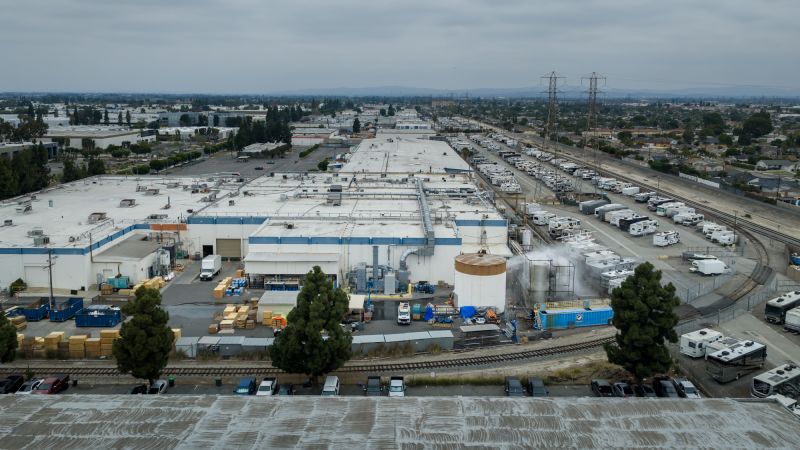
FBI Seizing Evidence at California Plant Amid Chemical Tank Overheating Crisis
FBI seizing evidence at California plant – On Wednesday, federal law enforcement agents executed a search warrant at a Southern California aerospace facility, focusing on a chemical tank that had overheated the previous month. This incident, which prompted the evacuation of nearly 50,000 residents, raised concerns about potential explosions, leading authorities to take swift action. The search was authorized by a federal judge last week, targeting documents and records related to the “storage, use, or disposal” of methyl methacrylate, the flammable chemical stored in the tank.
Chemical Tank Overheating and Evacuation Order
The overheating incident occurred due to a failure in the cooling system’s valve, which was supposed to maintain the tank’s temperature at 50 degrees Fahrenheit (10 degrees Celsius). Without this critical component functioning, the temperature soared to 100 degrees Fahrenheit (37.7 degrees Celsius), prompting emergency evacuations. Firefighters and local officials worked tirelessly to stabilize the situation, employing a sprinkler system and removing insulation to reduce the heat. A fortunate crack in the tank released pressure, preventing a catastrophic explosion and allowing most evacuees to return home by the Memorial Day weekend.
Authorities confirmed that the final evacuation orders were lifted after the tank’s temperature stabilized at 92 degrees Fahrenheit (33.3 degrees Celsius) for four consecutive hours without the need for sprinkler intervention. Despite the immediate threat being contained, officials emphasized that the situation remains under close monitoring. Orange County health officials assured the public that no toxic fumes or contamination were released during the incident, though residents reported strong odors and symptoms like respiratory irritation, headaches, and dizziness.
Company Cooperation and Community Apology
GKN Aerospace Transparency Systems, the company operating the facility in Garden Grove, Orange County, has been cooperating with federal investigators. A spokesperson for the company, Steve Carlin, addressed the situation during a community meeting on Tuesday evening, expressing regret for the disruption caused. “We are deeply sorry for the impact this event has had on Garden Grove,” Carlin said, noting the company’s long-standing relationship with the community and its commitment to transparency.
“We understand the unsettling nature of this incident for the residents and businesses affected, and we will keep them informed as we investigate the root causes,” Carlin added, acknowledging the company’s responsibility to address the situation.
Residents and local leaders have called for GKN to relocate the tanks containing methyl methacrylate, citing safety concerns. While the company has not yet committed to such a move, Carlin stated that the investigation is still in its early stages, leaving the company’s next steps uncertain. The facility employs over 500 people, and the incident has sparked debates about industrial safety protocols and proximity to residential areas.
Legal and Investigative Actions
In parallel, the Orange County District Attorney’s Office is conducting a criminal inquiry into the incident. A spokesperson, Kimberly Edds, confirmed that the office issued a preservation letter to GKN, instructing the company to retain all evidence related to the event. “We want to ensure that any information relevant to the investigation is available for review,” Edds said, adding that GKN’s external legal team acknowledged receipt of the letter.
More than a dozen individuals and businesses affected by the evacuation have filed federal lawsuits against GKN Aerospace. Plaintiffs argue that the company’s operations placed the community at risk and question why the plant was situated so close to residential neighborhoods. These legal actions aim to hold the company accountable for potential negligence in maintaining safety standards.
Environmental and Health Impacts
Methyl methacrylate, the chemical at the center of the incident, is commonly used in manufacturing plastics and coatings, including Plexiglas and dental prosthetics. According to the Environmental Protection Agency, exposure to this substance can lead to serious respiratory issues, neurological effects, and skin, eye, or throat irritation. While officials claimed no harmful emissions were released, the prolonged evacuation has left many residents anxious about long-term health effects.
The incident, which was first reported on May 21, highlighted the delicate balance between industrial activity and community safety. Authorities continue to monitor air quality in the area, vowing to assess any lingering risks over the coming months. Meanwhile, GKN has promised to provide regular updates on the investigation, aiming to restore public trust and clarify the circumstances that led to the overheating.
Broader Implications and Public Response
The event has sparked broader discussions about chemical storage practices and emergency response protocols. Community members have expressed frustration over the initial evacuation order and the speed at which the situation was addressed. “We need to know why this happened and how it can be prevented in the future,” said one resident, who requested anonymity due to concerns about ongoing health risks.
Local officials have urged the company to implement additional safeguards, such as redundant cooling systems or improved tank insulation. While GKN has taken steps to mitigate the immediate threat, the incident underscores the importance of proactive safety measures in industrial facilities. The company’s transparency in sharing information with the community will be critical in determining its reputation moving forward.
As the investigation progresses, federal agencies and local authorities will work to determine whether GKN’s actions met regulatory standards or if lapses in maintenance contributed to the crisis. The results of the FBI’s search could provide key evidence in this process, shedding light on the company’s operational practices and potential liabilities. For now, the 50,000 residents who were evacuated remain in the spotlight, awaiting clarity on the incident’s resolution and the future of the plant’s operations.
With the temperature of the tank now stable and the immediate danger mitigated, the focus shifts to understanding the broader implications of the event. The collaboration between federal and local agencies, along with the company’s commitment to transparency, will be essential in addressing community concerns and preventing similar incidents in the future. As the investigation unfolds, the residents of Garden Grove will watch closely, hoping for answers and reassurance that their safety remains a top priority.
