
A mysterious ‘cold blob’ in the ocean has puzzled scientists. A new study says it’s an ominous sign
Cold Blob in Ocean Signals Major Climate Shift
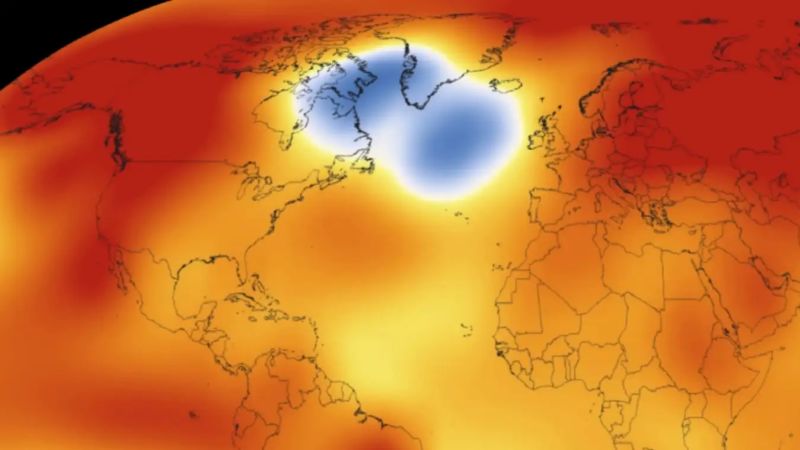
A mysterious cold blob in the ocean – Scientists have long been captivated by a mysterious cold blob in the ocean, a peculiar cooling zone south of Greenland and Iceland that has defied the warming trend seen globally. This anomaly, known as the “cold blob” or “warming hole,” has dropped by nearly 1 degree Celsius since the early 1900s, raising concerns about its potential impact on climate systems. A recent study suggests that this cooling is not random but closely linked to the gradual weakening of a critical ocean current—the Atlantic Meridional Overturning Circulation (AMOC). The findings highlight the cold blob’s role as a possible warning sign of broader environmental changes.
The AMOC and Its Climate Role
The Atlantic Meridional Overturning Circulation, often described as Earth’s oceanic conveyor belt, plays a pivotal role in redistributing heat across the globe. It transports warm, salty water from the tropics northward, where it cools, becomes denser, and sinks to form deep currents that loop back toward the equator. This process helps stabilize the planet’s climate by balancing heat and salinity. However, the cold blob’s persistent cooling indicates a disruption in this system, with implications that extend far beyond the North Atlantic.
Researchers have debated the cause of the cold blob’s unusual temperature drop, with theories ranging from altered wind patterns to atmospheric shifts. Yet, the latest study offers a compelling link: the cold blob’s cooling is a direct consequence of the AMOC’s weakening. This conclusion adds urgency to understanding how human activities, such as climate change, are affecting the ocean’s circulation. The cold blob serves as a visible indicator of these changes, drawing attention to the interconnected nature of Earth’s systems.
Unraveling the Cooling Pattern
By integrating oceanic heat data from satellites and instruments with advanced climate models, scientists have uncovered that the cold blob’s cooling is not limited to the surface. It extends deep into the Atlantic’s waters, suggesting a fundamental shift in how heat is transported. The cold blob’s behavior is now seen as evidence of the AMOC’s altered dynamics, which could have profound effects on weather patterns and sea levels worldwide. This deep-sea cooling underscores the need for further investigation into its long-term consequences.
Stefan Rahmstorf, a physicist at Potsdam University, explained that the cold blob’s formation is tied to changes in oceanic heat transport. “The AMOC has been operating at its weakest point in over a thousand years,” he noted, emphasizing the significance of the cold blob as a climate signal. Independent studies corroborate this decline, suggesting that the AMOC’s weakening could lead to dramatic shifts in global climate. The cold blob, therefore, is not just a localized phenomenon but a key piece of the climate puzzle.
Human-driven climate change is identified as a primary factor in the AMOC’s slowdown. Melting ice sheets and glaciers are releasing vast amounts of freshwater into the North Atlantic, disrupting the salinity balance that sustains the current. This disruption could trigger a tipping point, where the AMOC collapses entirely. The cold blob’s presence highlights the early signs of such a collapse, offering a stark reminder of the potential for rapid and severe climate impacts.
Global Impacts of the AMOC’s Decline
A complete shutdown of the AMOC could have catastrophic global consequences. In the United States, it might accelerate sea level rise along the eastern coast, threatening coastal cities. In Europe, colder winters could become more frequent, challenging the continent’s typical climate patterns. Meanwhile, in Africa, the monsoon system might shift, leading to prolonged droughts in regions reliant on seasonal rainfall. The cold blob, therefore, serves as a harbinger of these far-reaching changes.
While the cold blob has been a subject of debate, the study reinforces its connection to the AMOC’s weakening. By analyzing multiple datasets, researchers found consistent patterns that support the idea of the cold blob being part of a larger climate disruption. This alignment strengthens the argument that the cold blob is not an isolated event but a symptom of deeper oceanic and atmospheric changes, underscoring the urgency of addressing climate impacts on ocean currents.
