
Every day is soccer jersey day
The Soccer Jersey Phenomenon
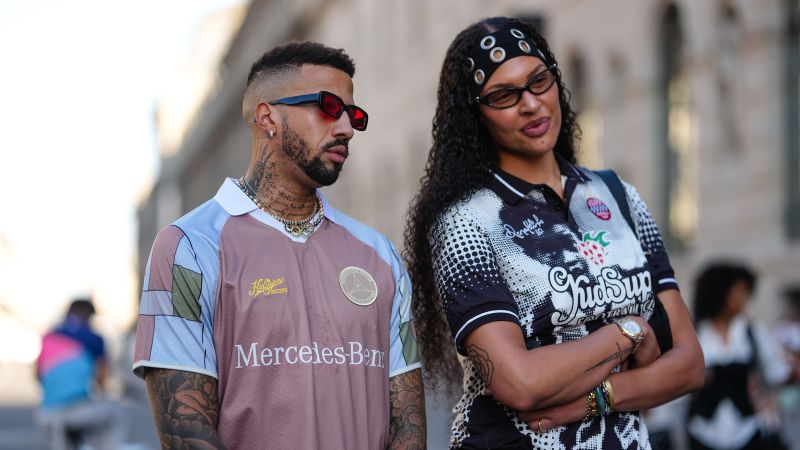
Every day is soccer jersey day – In the summer of 2026, soccer jerseys have transcended their traditional role as functional sportswear to become a cultural symbol of style and identity. What was once a simple garment worn by fans during matches is now a versatile fashion staple, embraced by a broader audience seeking to blend athletic heritage with contemporary flair. This shift is evident in the proliferation of collaborations between athletes and brands, as well as the emergence of limited-edition collections that reinterpret soccer’s iconic design elements.
Olivia Rodrigo, the pop sensation, recently partnered with Spotify to create a now-sold-out throwback jersey inspired by FC Barcelona. The piece features her signature monogram prominently displayed over the classic red and blue vertical stripes, transforming a nostalgic uniform into a personalized fashion statement. Meanwhile, the Gap has introduced two summer-themed collections that draw from “football culture,” offering designs that echo the aesthetics of the sport while catering to mainstream fashion sensibilities. Nike, too, has tapped into the trend with Latin American-themed “statement” jerseys, which are rooted in the cultural and emotional narratives of the game.
Interestingly, some individuals are adopting soccer jerseys not just as a nod to the sport but as a stylish choice for everyday wear. These jerseys often diverge from traditional replicas, instead opting for creative designs that either pay homage to official team uniforms or introduce entirely new concepts. For instance, New York City Mayor Zohran Mamdani launched a retro-inspired striped jersey as part of a municipal merch drop, commemorating the city’s connection to the World Cup. Originally priced at $50 for affordability, the jersey now fetches over $1,000 on luxury resale platforms like Grailed.
What sets these modern iterations apart is their departure from the conventional team badge. Instead, the jerseys in Mamdani’s collection feature a soccer ball emblem, subtly reimagining the sport’s identity for a new generation. This World Cup season, the soccer jersey has become more than a fan’s allegiance—it’s a fashion accessory that merges sport with streetwear. As noted by fashion expert Markus Ebner, “That pink Inter Miami jersey, I feel like a cool girl might wear that on the dance floor in New York. Not because she’s an Inter Miami fan; because it’s pink and it’s cool.”
From Niche to Mainstream
The journey of soccer jerseys into the fashion world has been gradual yet transformative. A decade ago, wearing a jersey in the U.S. was often associated with stereotypes—hipsters dubbing the sport “footy” or casual fans adopting the attire as a sign of pretentiousness. However, as soccer gains traction in the American consciousness, so too has the jersey’s appeal. Phil Oh, a fashion photographer, observed that the sport’s growing popularity has led to a more inclusive perception of jersey culture.
Streetwear brands were among the first to recognize this shift. In 2005, Supreme collaborated with Umbro to release a soccer jersey that blended athletic function with urban style, even as soccer broadcasts in the U.S. remained scattered across niche or premium channels. Snoop Dogg, meanwhile, became a notable advocate for the jersey in the early 2010s, frequently showcasing designs from rival teams in his wardrobe. This choice sometimes drew side-eye from die-hard fans, but it also highlighted the jersey’s potential as a statement piece.
High-profile endorsements further accelerated the trend. In 2016, Drake’s appearance in a pink Juventus away jersey sparked significant interest, with eBay listings still categorizing the piece as “Juventus x Drake.” This move, though seemingly unusual for a rapper of his stature, underscored the jersey’s ability to transcend sport-specific identity. The same year, Josh Warwick, co-founder of Cult Kits—a vintage soccer jersey retailer—noted the growing diversity in who wears these shirts. At a 2022 pop-up in New York, he recalled young women in their early 20s selecting a “really random” neon yellow Blackburn Rovers away shirt from 1996, a relic of a team that had languished in English soccer’s lower divisions for years.
“That was quite a good illustration of the way that football shirt culture is diversified from just people who just love the club or love the game to actually people who really appreciate the aesthetic of the shirt as well,” Warwick reflected. His observation points to a broader cultural shift: soccer jerseys are no longer confined to match days or die-hard followers. Instead, they’ve become a canvas for self-expression, much like the polo shirt or rugby stripes before them.
Market Expansion and Design Innovation
The trend has sparked a surge in both vintage and new jersey releases, with brands rethinking how to integrate soccer aesthetics into everyday fashion. Designers of all sizes have launched remixed versions of classic jerseys, featuring brand logos in place of traditional sponsorships. Miaou, Nahmias, Aimé Leon Dore, and Ksubi are among the labels that have contributed to this evolution, offering unique takes on the sport’s visual language.
Fast fashion retailers have also entered the fray, with H&M collaborating with Lotto earlier this year and ASOS now selling knockoff national jerseys. These affordable options make soccer-inspired designs accessible to a wider audience, while luxury resellers like Grailed cater to collectors and connoisseurs. The combination of these efforts signals a robust market, where soccer jerseys are no longer just a niche product but a mainstream fashion item.
As the trend continues to expand, it reflects a deeper cultural redefinition. The soccer jersey’s basic structure—a pullover with short or long sleeves and optional collars—allows it to harmonize with a variety of outfits, unlike the more rigid designs of baseball or basketball jerseys. Simultaneously, its bold colors and striking graphics make it a standout piece, capable of drawing attention without relying on the sport itself.
What’s particularly striking is how this phenomenon has bridged generational and cultural divides. The jersey, once a symbol of loyalty to a team, now represents a broader appreciation for design and heritage. As the U.S. market surpasses the UK to become Cult Kits’ largest, the global influence of soccer jerseys in fashion is undeniable. From retro-inspired striped jerseys to neon yellow relics of the 1990s, the sport’s visual legacy is being reinterpreted in ways that resonate with diverse audiences.
The rise of soccer jerseys as a fashion staple also highlights the sport’s evolving role in American culture. While it remains the world’s most popular sport, its acceptance in the U.S. has been slower, marked by a transition from skepticism to admiration. This change is evident not only in the increasing number of jersey designs but also in the way they are being marketed and consumed. As streetwear and fast fashion brands continue to innovate, the soccer jersey is poised to remain a defining trend of the World Cup era—and beyond.
