
What it takes to be chosen as a World Cup referee – and how to ref the final
The Path to World Cup Glory
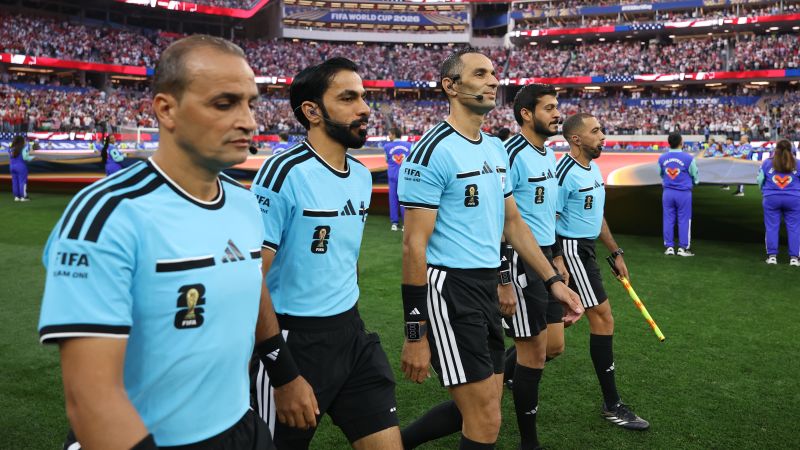
What it takes to be chosen – Behind the scenes of the World Cup, a different kind of competition unfolds. Forty-eight nations vie for supremacy on the pitch, but another group—composed of officials—faces a similarly demanding journey to secure their place on the global stage. This year, a record number of 170 referees will oversee matches, including 52 main officials, 88 assistant referees, and 30 video assistant referees (VARs). The expanded format, featuring 48 teams and 104 games, has created a more complex officiating landscape, requiring a broader pool of talent from 50 FIFA member nations. Eight of these officials represent the United States, while the inclusion of female referees marks a historic milestone, with six women joining the ranks following FIFA’s decision to integrate them into the tournament in Qatar.
Selection Process and Criteria
The selection of referees for the World Cup is a meticulous process that begins immediately after the previous edition. Candidates must demonstrate a combination of technical expertise, physical fitness, and consistent performance in domestic and international competitions. Over the past three years, their actions have been closely scrutinized, with evaluations conducted by a committee to determine their readiness for the highest level. This includes attending seminars to refine their understanding of the game’s rules and undergoing rigorous fitness assessments to ensure they can handle the demands of high-stakes matches.
Referees are not only judged on their ability to enforce the Laws of the Game but also on their adaptability to evolving challenges. For instance, the introduction of VARs has required officials to master new technologies and decision-making protocols. This blend of skill and precision is critical, as even a single misjudgment can ripple through the tournament’s outcome. The process also emphasizes fairness, with FIFA implementing measures to avoid conflicts of interest by barring officials from officiating matches involving their own country. This ensures that the final selection is based purely on merit rather than familiarity or bias.
Personal Sacrifices and Emotional Journeys
Becoming a World Cup referee is not just a professional achievement; it’s a personal one. Many officials juggle their roles with full-time careers, often at the expense of family and personal life. “Most referees have been through at least one divorce,” says Leif Lindberg, a retired assistant referee who participated in the 2002 final between Brazil and Germany. His experience underscores the toll of balancing high-pressure duties with life’s demands, a challenge that extends to many in the field. Lindberg, now on his second marriage, reflects on the emotional weight of his first World Cup assignment, which coincided with South Korea’s debut on the global stage. “The noise was incredible,” he recalls. “Every one of us was dreaming about officiating the World Cup.”
For others, the path is even more unique. A Somali referee, who was set to officiate the final, faced unexpected hurdles when denied entry to the United States due to “vetting concerns.” Such obstacles highlight the scrutiny officials undergo beyond the field. Meanwhile, in China, the nation’s sole representative referee has become a focal point of fan support, a testament to the global reach of the sport. These stories illustrate the blend of dedication, resilience, and luck required to reach the pinnacle of soccer officiating.
The Weight of the Final
Once chosen, referees must prepare for the ultimate test: the World Cup final. The process begins days before the match, as officials refine their focus and anticipate the pressure. While mastering the Laws of the Game is essential, the final demands more than technical knowledge—it requires emotional fortitude and the ability to remain impartial under intense scrutiny. “You just hope the match comes quickly because the pressure is very high,” says Renato Faverani, a former assistant referee who participated in four games at the 2014 World Cup, including the Germany-Argentina final. His words capture the duality of excitement and anxiety that accompanies the grandest stage.
The moment of revelation is both exhilarating and nerve-wracking. Returning from a practice session near his hotel, Faverani was surprised to find all referees gathered in a large hall, awaiting the announcement. FIFA President Sepp Blatter stood at the front, unrolling a document and reading names aloud. “The referees for the World Cup final are: Mr…” his voice trailed off, building suspense. When Faverani’s name was called, the room erupted in celebration. Colleagues like England’s Howard Webb, who had overseen the 2010 final in South Africa, joined in to congratulate him. The emotional high was short-lived, however, as the reality of the task set in. “For two or three hours, it was the best moment,” he says. “Then, the pressure and responsibility arrived.”
Preparing for the Ultimate Challenge
The World Cup final is not just a showcase of athletic prowess but also a test of mental and physical endurance. Referees must maintain composure, make split-second decisions, and manage the expectations of fans, players, and teams. Their preparation extends beyond the pitch, involving countless hours of training, analysis, and team collaboration. The success of the tournament hinges on their ability to deliver fair and consistent rulings, a responsibility that weighs heavily on those who reach this level.
Moreover, the role of VARs has transformed the officiating landscape, adding an extra layer of accountability. These officials work in tandem with their on-field counterparts, reviewing critical decisions through technology. The dynamic between referees and VARs ensures that errors are minimized, but it also introduces new complexities. For example, a record-breaking three red cards were issued in the opening game, underscoring the intensity of the competition and the precision required from officials. As the tournament progresses, the stakes escalate, and referees must remain steadfast in their commitment to the game’s integrity.
Ultimately, the journey to becoming a World Cup referee is a blend of rigorous training, personal sacrifice, and unwavering dedication. While the spotlight may not be on the players alone, the officials play an equally vital role in shaping the tournament’s outcome. Their stories, from the challenges of selection to the emotional highs and lows of officiating the final, reflect the passion and perseverance that define their profession. As the World Cup reaches its crescendo, these individuals stand at the crossroads of history and sport, entrusted with upholding the spirit of the game at its most prestigious stage.
