
The USA dares to dream the impossible World Cup dream
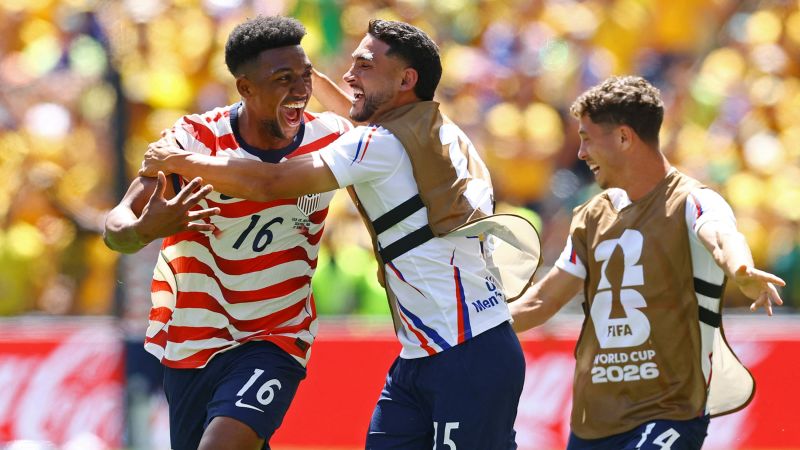
The USA dares to dream the impossible World Cup dream
The USA dares to dream the impossible – This weekend marks a pivotal moment for American soccer, as the nation’s team edges closer to achieving a long-standing goal. After securing a 2-0 victory over Australia, the U.S. has advanced to the knockout rounds, with Paraguay’s 1-0 win against Turkey ensuring their position as Group D leaders. These two wins are significant, as they represent the first time since the inaugural World Cup in 1930 that the Americans have managed to triumph in two group matches. The achievement has sparked renewed optimism, challenging the perception that the U.S. is a perennial underdog in international competition.
A Shift in Perspective
As the tournament progresses, the narrative around American soccer is evolving. While longtime fans are accustomed to the nation’s strong performances in other sports, men’s soccer has often felt like an outlier. However, the recent wins have ignited a sense of belief that the U.S. can compete on a global stage. This transformation is reminiscent of the “Sméagol-Gollum Dynamic,” a metaphor for the duality of American soccer fandom: one side humbly acknowledges the challenges, while the other fiercely believes in the possibility of success.
The Sméagol side knows the history, the structural barriers, and the cultural hurdles that have kept the U.S. from reaching the heights of traditional soccer powerhouses. Yet, the Gollum side emerges when the team delivers standout performances, convincing fans that the dream of a deep World Cup run is no longer out of reach.
Historically, American soccer fans have been captivated by the European leagues and the Champions League, often watching matches on weekends and weekdays alike. Though few U.S. players participate in these elite competitions, the nation’s fans remain engaged, celebrating the talent of global stars. This shared enthusiasm for international soccer creates a unique context, where the U.S. is both admired and compared to countries with rich football traditions. Yet, the recent results suggest a change in the collective mindset.
The Path Forward
The U.S. team’s journey through the group stage has been a testament to their resilience and tactical adaptability. While the road to the knockout rounds remains uncertain, the two wins have demonstrated that the Americans can hold their own against teams with established reputations. For a nation that has long grappled with the challenges of developing elite soccer talent, this progress is a cause for celebration. It signals a shift from mere participation to genuine competitiveness.
Meanwhile, the Netherlands faces a hurdle after drawing 1-1 with Japan in their opening match. The draw, though not a loss, has left fans questioning whether the Oranje can overcome early setbacks. Sweden, on the other hand, has already made a statement with a commanding 5-1 victory over Tunisia, showcasing their attacking prowess and setting the stage for a potential clash against the Dutch in the next round. For the U.S., the challenge will be to maintain this momentum as they prepare for the knockout stages.
Germany’s 7-1 rout of Curaçao in the first group match has solidified their position as a dominant force, scoring more goals than any other team in the early rounds. This performance underscores the gap between the European giants and the rest of the field, but it also highlights the potential for underdogs to make their mark. The U.S. and Paraguay’s rise in Group D could disrupt the usual power dynamics, proving that even teams from non-traditional soccer nations can challenge the status quo.
A New Era of Expectations
For many American fans, the Sméagol-Gollum Dynamic is more than a metaphor—it’s a reflection of their emotional journey. They’ve long been conditioned to accept that the U.S. is a contender in the Olympics but an outsider in the World Cup. However, the recent success has flipped that script, prompting a reevaluation of what the team is capable of. This transformation is not just about results but about mindset, as fans begin to see the possibility of a breakthrough.
The U.S. squad’s performances have also highlighted the growing depth of talent within the country. While the team may still face formidable opponents in the knockout rounds, their ability to secure victories against teams like Australia and Paraguay has shown that they can compete with the best. This progress is a product of years of investment in youth development, coaching, and infrastructure, which have finally begun to bear fruit. As the tournament unfolds, the question is no longer whether the U.S. can succeed—it’s how far they can go.
Looking ahead, the Americans have a chance to build on their momentum. Their next matches will test their ability to maintain consistency and adapt to different styles of play. The Sméagol side remains cautious, aware of the challenges that lie ahead, while the Gollum side is already envisioning a deep run. This duality is what makes American soccer fandom so intriguing, as it balances realism with the thrill of possibility.
As the World Cup continues, the U.S. team’s performance will serve as a barometer for the nation’s progress in the sport. While the path is still uncertain, the two wins and the energy surrounding the team suggest that the dream of a historic run is now within reach. For fans, this is a moment of rekindled hope—a chance to believe that the impossible is no longer just a fantasy, but a tangible goal.
For more insights into the U.S. team’s win over Australia, refer to David Close’s detailed analysis from Lumen Field, which captures the significance of this milestone. The match, held at 1 p.m. ET in Houston Stadium (NRG Stadium), Houston, Texas, USA, has set the stage for a new chapter in American soccer history. As the tournament moves forward, the world will watch to see whether the U.S. can turn this momentum into a breakthrough.
