
NASCAR mourns Kyle Busch at a solemn Coca-Cola 600
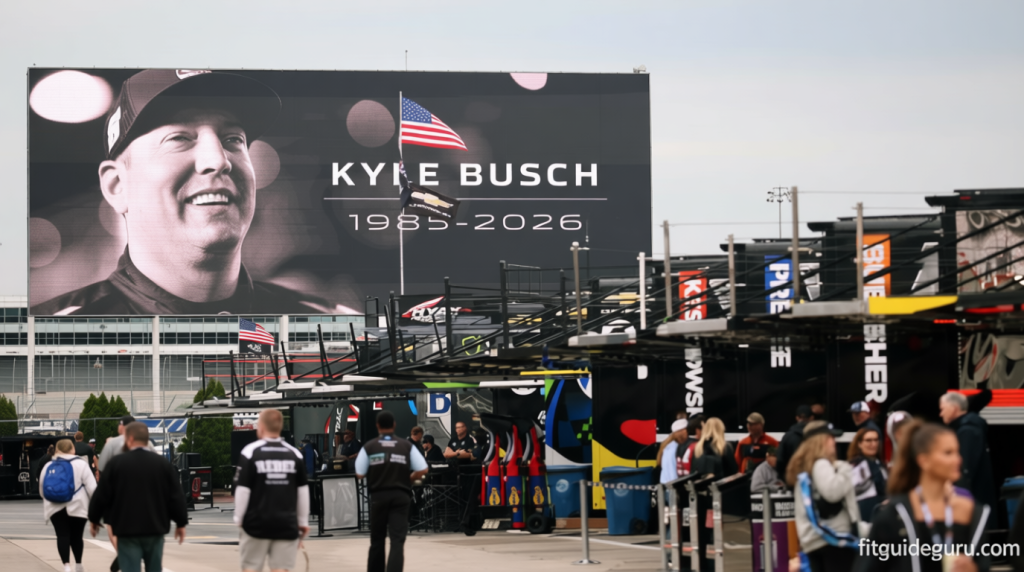
NASCAR mourns Kyle Busch at a solemn Coca-Cola 600
NASCAR mourns Kyle Busch at a solemn – Charlotte Motor Speedway, typically a hub of roaring engines and vibrant energy, transformed into a somber gathering ground on May 24, 2026, as tens of thousands of fans converged to honor Kyle Busch. The Coca-Cola 600, a cornerstone of the NASCAR calendar, had been anticipated for months, but this year’s race carried a unique weight. The track, which had hosted the iconic event for decades, now served as a stage for collective mourning, with fans and drivers alike reflecting on the loss of a racing icon whose career was marked by brilliance and resilience. The skies, once gray with persistent rain, finally broke through to reveal a patch of blue, a fleeting symbol of hope against the backdrop of grief.
A Legacy Cut Short
Kyle Busch, a 41-year-old NASCAR legend, passed away just days after securing his final victory in the Craftsman Truck Series at Dover International Speedway. His death from complications of severe pneumonia that escalated into sepsis left the racing community in shock, with the news rippling through the sport’s tightly knit network. The Centers for Disease Control and Prevention describe sepsis as the body’s “overwhelming and life-threatening response” to an infection, a condition that can rapidly progress to tissue damage, organ failure, and death. Even a minor infection, if left unchecked, can trigger sepsis, underscoring the fragility of life in the face of illness.
“Sepsis can be triggered by any type of infection, even a minor one, and occurs when germs enter a person’s body and multiply, causing illness and damage to organs and tissues.”
Busch’s decline was swift, catching both insiders and outsiders in the racing world off guard. On Wednesday, as the Coca-Cola 600 approached, he was seen coughing up blood and struggling with shortness of breath, a stark contrast to the vibrant athlete who had dominated tracks for over a decade. The emotional toll of his condition was evident, and his absence from the scene only deepened the sense of loss. Fans, many of whom had watched him race for years, now stood in silence, their cheers replaced by tears and shared memories.
The 911 Call and the Race Against Time
Just hours before the race began, a 911 call provided a chilling glimpse into Busch’s final hours. The caller, whose identity remains redacted, described Busch lying on the bathroom floor of a training facility in Concord, North Carolina, while still conscious. “Ambulances should approach the building with sirens off,” the caller instructed, emphasizing the urgency of the situation. The call, made at 5:30 p.m. ET on Wednesday, came nearly 24 hours before his family and Richard Childress Racing officially announced his passing. It was a moment that encapsulated the speed and unpredictability of the disease, as well as the relentless pace of the sport.
A Silent Tribute on the Infield
At the heart of the memorial was Busch’s No. 8 car, which had been repainted with a special tribute on the infield of Charlotte Motor Speedway. Drivers, crew members, and even officials paused to honor the fallen competitor, their usual camaraderie replaced by quiet reflection. The car, once a symbol of Busch’s dominance, now stood as a testament to his enduring legacy, with its presence serving as a reminder of the fragility of life and the impact one driver can have on an entire sport. Richard Childress Racing, his team, decided to temporarily retire the number, a decision that would remain in effect until his 11-year-old son, Brexton, was ready to step into the same spotlight.
Brexton, already a skilled youth racer, is preparing to follow in his father’s footsteps. His training, which has taken place in the shadow of his father’s achievements, is a moving tribute to Busch’s influence. The decision to suspend the No. 8 car also reflects the deep respect the racing world holds for him, as the number becomes a symbol of continuity and tribute for the next generation of drivers. For now, the spotlight is on the past, with every lap and moment of the Coca-Cola 600 carrying a silent message of remembrance.
A Shift in the Racing Atmosphere
The usual chaos of a NASCAR weekend was muted this year. The track, which often buzzes with the energy of competition, now felt heavy with emotion. Campers and fans, who typically revel in the festival-like atmosphere, had arrived early to process the tragedy. The music, once a constant backdrop, was softer, and the flags that usually wave proudly now hung still in the breeze. Even the rain, which had delayed the race multiple times, seemed to mirror the uncertainty of the day.
For the crews and drivers, the stakes were as high as ever, but the emotional weight of the event added a new layer to the competition. The Coca-Cola 600, a race known for its grueling 600-mile format, became a metaphor for the endurance of grief. As the sun set and the race began around 6 p.m. ET, the first laps were not just a test of speed but a journey through the hearts of those who had lost a cherished figure. The no. 33 car, which had taken Busch’s place on the track, was unveiled with a ceremony that felt almost sacred, as if the team itself were paying homage to the man who had left an indelible mark on the sport.
Busch’s passing has left an empty seat at the dinner table for fans who once gathered to celebrate his victories, and a hush over the pit crew who had trained alongside him. His legacy, however, remains alive in the stories of those who watched him race, in the no. 8 car that now stands as a monument, and in the quiet moments of reflection that have become part of this year’s Coca-Cola 600. The race, though fierce, is a reminder that even in the fastest of sports, time can slip away in an instant, leaving behind a void that can only be filled by memory and tribute.
The Emotional Weight of the Event
As the race unfolded, the emotional landscape of the event became increasingly palpable. Fans, many of whom had shared in Busch’s triumphs and trials, found themselves on the edge of their seats, not just for the competition, but for the sense of history that lingered in the air. The track, with its history of iconic moments, now bore witness to a different kind of legacy—one that was not defined by speed or victories, but by the shared grief of a community united in mourning. The No. 8 car, parked in the infield, became a focal point for those who wanted to honor Busch, a silent tribute to a driver who had once been the heart of the Coca-Cola 600’s excitement.
Richard Childress Racing’s decision to retire the number until Brexton is ready to race underscores the personal connection between the legacy and the next chapter of the Busch family story. Brexton, who had already demonstrated talent in youth racing, now carries the weight of expectation and the hope of carrying his father’s spirit into the future. The no. 33 car, which had taken its place on the track, was a poignant symbol of this transition, its presence a reminder that while Busch is no longer with us, his impact will endure through those who follow in his footsteps.
As the Coca-Cola 600 progressed, the race became more than a sporting event—it was a shared experience of remembrance. The cheers, the flags, and the camaraderie of the weekend were still present, but they carried a deeper meaning. The racing community, once filled with the sound of engines and the thrill of competition, now found itself united in a different kind of rhythm, one that honored the past while embracing the future. Kyle Busch’s absence was felt in every corner of the speedway, but his legacy, like the engines that roar beneath the lights, will never be silenced.
