
Rubio compares the founding of the UFC to landing a man on the moon
Rubio compares the founding of the UFC to landing a man on the moon
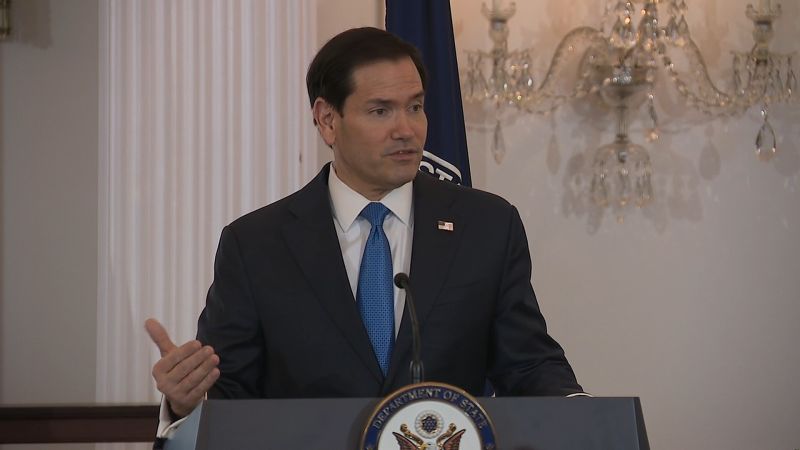
Rubio compares the founding of the UFC – US Secretary of State Marco Rubio has drawn a striking parallel between the creation of the Ultimate Fighting Championship (UFC) and the historic Apollo moon landing, framing the sport as an embodiment of American ingenuity and ambition. In a recent address at the State Department, Rubio highlighted the UFC’s role in uniting diverse communities through the universal language of combat, likening its inception to one of the nation’s most iconic achievements. His remarks, which occasionally echoed the persuasive tone of a political campaign, underscored the significance of the upcoming UFC event scheduled at the White House, a gathering that Rubio described as “historic” in its symbolic value.
Ambition and Unity in Motion
Rubio, a former presidential candidate with a well-documented interest in foreign policy, has increasingly positioned himself as a bridge between American cultural exports and diplomatic outreach. While he has publicly downplayed any immediate presidential aspirations for 2028, his recent activities—such as appearances in the White House briefing room and Capitol Hill engagements—have amplified his visibility. These moments, often tailored for social media, reflect a strategic effort to leverage the UFC’s global appeal as a platform for showcasing US values.
“When President Kennedy announced that we were going to put a man on the moon and return them safely to the earth, no one thought that was possible, and we did it,” Rubio said. His statement, delivered with the cadence of a campaign speech, framed the moon landing as a testament to the nation’s capacity for bold, collective action.
Rubio’s analogy extended beyond the moon to the spirit of American innovation, calling the UFC’s origins “audacious” and emphasizing its role in transcending social and geographic divides. “We are a nation founded on doing what no one else dared to do, and no one else aspired to do,” he asserted, suggesting that the UFC’s establishment mirrored the same kind of visionary progress.
UFC as a Tool of Diplomacy
During the signing of a memorandum of understanding between the State Department and the UFC, Rubio positioned the organization as a cultural ambassador, claiming it could serve as the “United Nations of fighting.” According to the State Department spokesperson, the agreement aims to utilize the UFC’s global reach to promote American excellence, with plans to engage athletes and coaches in overseas initiatives. These efforts will focus on fostering teamwork and leadership among youth through martial arts clinics and workshops, while also coordinating international events to align with US diplomatic objectives.
“We’re excited about what this brand means about America’s ability to expand and reach out to different parts of the world,” Rubio said, highlighting the UFC’s potential to educate audiences on diverse societies and cultures. His comments suggest a broader vision where sports and diplomacy intersect, using the octagon as a stage for cross-cultural dialogue. However, this ambitious plan has not gone unnoticed by critics, who argue that the White House’s involvement in hosting the event could blur the lines between public and private interests.
“A billion people all over the world will be watching America celebrate its 250th birthday with the White House in the background and some of the best athletes in the world in that octagon,” Rubio declared, linking the event to both national pride and global recognition.
Legal Challenges and Political Connections
Despite Rubio’s optimistic take, the event has sparked controversy. Two Virginia residents have filed a lawsuit to halt the UFC fight at the White House, alleging that using presidential grounds for a private, for-profit sports spectacle prioritizes commercial gain over public use. The legal challenge cites a report revealing that President Donald Trump purchased $50,000 in stock from UFC’s parent company, raising questions about potential conflicts of interest. The lawsuit argues that the White House’s presence in the event could create a diplomatic crisis, as foreign leaders may pressure the US to host such gatherings during the 250th anniversary of American independence.
Rubio’s remarks also touched on the enduring appeal of mixed martial arts as a unifying force. “The whole idea of America is audacious,” he said, drawing a direct connection between the nation’s founding and the UFC’s emergence. By describing the sport as a medium for cultural exchange, Rubio emphasized its role in breaking down barriers, with the fights serving as a lens through which global audiences can view American influence. This perspective aligns with his broader advocacy for using sports as a tool to amplify national narratives.
Historical Context and Modern Implications
Rubio’s comparison to the moon landing evokes a sense of historical legacy, suggesting that the UFC’s founding represents a milestone akin to NASA’s 1969 achievement. The analogy highlights the sport’s ability to inspire and challenge societal norms, much like the space race did during the Cold War. However, the modern context of the event—set against the backdrop of Trump’s 80th birthday and the nation’s bicentennial celebrations—adds a layer of political symbolism that has drawn both praise and scrutiny.
“Dana White and the people around him had a vision to create a structure that would elevate mixed martial arts,” Rubio said, praising the UFC CEO’s leadership. This vision, he argued, has transformed the sport into a global phenomenon, one that can educate Americans about cultures beyond their borders. The State Department’s collaboration with UFC, as outlined in the memorandum, aims to build on this legacy, using the platform to promote English language learning and leadership development in international settings.
Rubio’s remarks also reflected a personal touch, as he acknowledged the UFC’s growing prominence in his political career. While he has not officially declared a run for 2028, his increasing engagement with the event suggests a desire to connect with younger, more culturally diverse audiences. The White House’s endorsement of the UFC’s brand, he argued, reinforces America’s ability to lead in both sport and diplomacy.
A New Era of Cultural Influence
As the UFC prepares to host its event at the White House, Rubio’s vision underscores the sport’s potential to serve as a modern-day symbol of American progress. By drawing parallels between the moon landing and the UFC’s rise, he positions the organization as a beacon of innovation and unity. The memo between the State Department and UFC, meanwhile, outlines a blueprint for integrating sports into diplomacy, with the goal of fostering international goodwill through shared experiences and cultural exchanges.
Rubio’s assertion that the UFC is “one of the very few things left in our society that convenes us all” highlights the sport’s unique role in a fragmented world. The upcoming event, he claimed, will not only celebrate the nation’s independence but also showcase its ability to connect with global audiences. Whether this metaphor holds true in practice remains to be seen, but the political and cultural weight behind the analogy is clear.
