
Judge rejects bid to stop UFC fight at White House
Judge Rejects Bid to Stop UFC Fight at White House
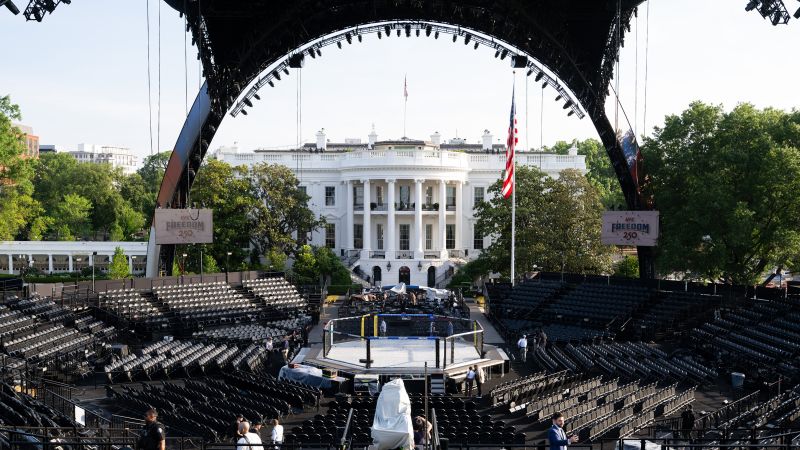
Judge rejects bid to stop UFC fight – A U.S. federal judge has ruled against efforts to halt a UFC fight planned for the White House this weekend, dismissing a request from two Virginia residents. The decision by Judge Amit P. Mehta came Friday, ending a legal battle initiated by the plaintiffs who claimed the event violates federal regulations. The case, which was filed just days before the fight, centers on whether the administration’s use of the South Lawn and Lincoln Memorial for the event is lawful.
Plaintiffs’ Legal Challenge
The two individuals, a political activist and a Vietnam War veteran, argued that the White House’s use of its grounds for the event was improper. They contended that the UFC fight should have followed standard permitting procedures, such as conducting an environmental impact assessment, because it is not an official government activity. Instead, the event is described as a privately organized spectacle, they asserted, and should not be exempt from typical regulations.
“The event is neither ‘for the celebration of the 250th anniversary of American Independence’ nor, crucially, being ‘planned, organized, and executed’ by the federal government,” the plaintiffs’ legal team wrote in court documents.
Their case hinged on the concept of “standing,” which refers to a plaintiff’s legal right to challenge an action. Mehta concluded that the plaintiffs lacked this standing, as they could not prove direct harm from the event. The judge acknowledged the administration’s claim that a last-minute injunction would disrupt the fight and cause significant financial and logistical damage.
Administration’s Defense
White House officials defended the event, emphasizing its connection to the nation’s 250th birthday. They cited a federal rule that allows certain events around the anniversary to bypass standard permitting requirements. However, the plaintiffs argued that the fight is not tied to the country’s founding but rather to President Donald Trump’s birthday, which coincides with the event’s date.
“The potential loss of those dollars resulting from a last-minute, court-ordered stoppage cannot be ignored,” Mehta wrote in his ruling.
The administration highlighted that the UFC has invested over $60 million in the event, covering production, labor, construction, and promotion costs. Meanwhile, federal services like emergency equipment, law enforcement, and food provisions are provided by the government. White House management director Joshua Fisher noted that perishable food items will be prepared for thousands of attendees, including 4,000 guests on the South Lawn and 120,000 on the Ellipse.
Legal Arguments and Implications
During the proceedings, the Justice Department contested the plaintiffs’ claims, asserting that the administration has the authority to host such events without congressional approval. DOJ lawyers argued that temporary structures, like the “claw” used for the fight, are common on White House grounds and do not require extraordinary legal review. “Nobody has ever before suggested that Congress needs to pass legislation for every concert tent or Easter egg roll kiosk,” they stated in court filings.
The plaintiffs, however, maintained that the event’s purpose was not to commemorate the 250th anniversary but to promote Trump’s personal interests. They pointed to his ownership of stock in UFC’s parent company, suggesting the fight would benefit him financially. This claim adds a layer of political controversy to the legal dispute, framing the event as a campaign tool rather than a public celebration.
Federal Services and Cost Concerns
The administration’s defense also included detailed accounts of the federal services involved. These range from security and medical support to the provision of food for attendees. While the UFC covers most of the event’s expenses, the White House is responsible for ensuring the safety and infrastructure of the location. The exact cost to taxpayers for these services remains unclear, as the administration has not provided specific figures.
The case underscores broader debates about the balance between private enterprise and government oversight. Critics argue that hosting large events at the White House can blur the line between public and private interests, while supporters see it as a way to leverage government resources for significant national events. The ruling may set a precedent for future events hosted at the White House, potentially expanding the scope of exemptions for private organizations.
Next Steps and Event Timeline
Although Mehta did not rule on the event’s legality, the decision clears the way for the UFC fight to proceed. The administration stated that workers will begin dismantling the temporary “claw” structure on Monday, following the event’s conclusion. This timeline highlights the urgency of the situation, as the fight is scheduled for Sunday and the legal challenge was filed just days earlier.
The plaintiffs had sought a temporary injunction to pause the event while further legal proceedings continued. Their request was denied, leaving the UFC and its partners free to move forward with the plan. The ruling does not resolve the underlying dispute about whether the event should have followed stricter regulations, but it signals that the court is more inclined to defer to the administration’s claims of necessity and cost efficiency.
Broader Context of the Legal Battle
Mehta’s decision aligns with a pattern of rulings that have favored the Trump administration in recent legal challenges. The judge’s reasoning reflects a pragmatic approach, prioritizing the financial and operational risks of halting the event over the plaintiffs’ arguments about regulatory compliance. This approach may be seen as a way to minimize disruptions to a high-profile event, which has drawn widespread public attention.
The plaintiffs’ focus on the event’s purpose also raises questions about the definition of “official” activities. By tying the UFC fight to Trump’s birthday, they argue that the administration is using the White House as a platform for political gain. This perspective suggests that the event’s benefits to Trump outweigh its adherence to permitting rules, creating a compelling case for legal scrutiny.
Despite the judge’s rejection of the bid, the case remains significant for its implications on how federal spaces are managed. The dispute highlights the tension between private events and public use of government property, as well as the role of regulatory exemptions in major political activities. With the fight set to take place, the outcome of this legal challenge may influence future decisions about similar events hosted at the White House.
The original ruling, while not addressing the event’s legality directly, sets the stage for further debate. The administration’s ability to justify the use of federal resources for private events could shape how other organizations approach similar requests. As the UFC fight approaches, the focus shifts from legal arguments to the spectacle itself, which promises to draw thousands of spectators and generate considerable media coverage.
Mehta’s decision also underscores the importance of legal standing in such cases. By denying the plaintiffs’ standing, the judge effectively sidelined their challenge, allowing the administration to proceed without immediate judicial intervention. This outcome may encourage other critics to refine their legal arguments or seek alternative avenues for accountability. The case serves as a reminder of the complex interplay between public policy, private interests, and the judiciary in shaping the use of national landmarks.
