
This city had a flooding problem. So it turned to an animal that had been extinct there for 400 years
This city had a flooding problem. So it turned to an animal that had been extinct there for 400 years
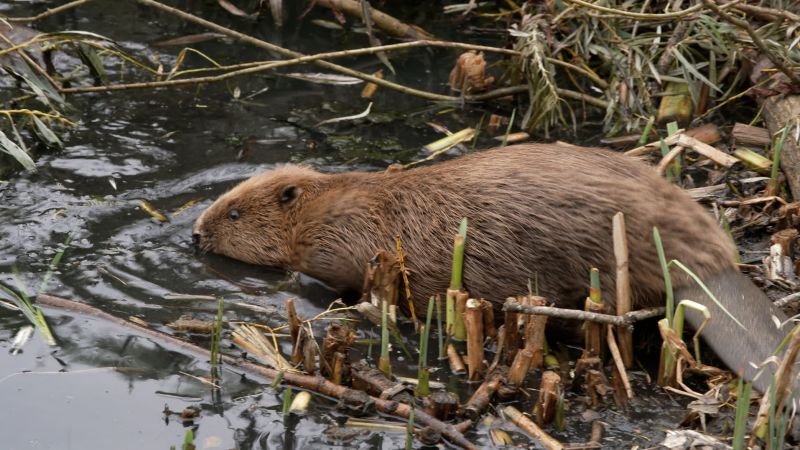
This city had a flooding problem – Nestled in the West London borough of Ealing, a unique ecological experiment is unfolding in an area once plagued by recurring flooding. Just a short distance from a McDonald’s and a bustling strip mall, a team of beavers is transforming a neglected urban landscape into a thriving wetland. These industrious rodents, which had vanished from the UK for centuries, are now playing a key role in addressing a modern environmental challenge.
Heavy rainfall used to flood Ealing’s streets, sending water surging into the Greenford tube station as part of the London Underground system. In response, local officials initially proposed a conventional approach: constructing an artificial reservoir with concrete and heavy machinery. However, a group of conservationists championed an alternative. “Why not try a natural solution?” Sean McCormack, a veterinarian and project leader at the Ealing Beaver Project, posed the question. “Why not reintroduce beavers?”
A forgotten space reborn
Paradise Fields, the 24-acre site where beavers were relocated in 2023, had long been a patch of urban wilderness. Over recent years, it has undergone a remarkable transformation, thanks to the beavers’ relentless work. As climate change intensifies storm activity and extreme weather, such projects are gaining traction as a way to build more resilient environments. Yet, experts caution that success depends on careful planning and collaboration.
“It was kind of a forgotten and neglected space,” McCormack remarked. “But now, it’s a vibrant ecosystem in the making.”
Wild beavers disappeared from the UK around 400 years ago, primarily due to human demand for their fur, meat, and scent glands. These glands, known for their musky, vanilla-like aroma, were once prized for food flavoring and perfumes. Despite their absence, their ecological role has not been forgotten. In recent years, reintroductions have become a growing trend, driven by their ability to shape landscapes with natural ingenuity.
Beavers are exceptional engineers. Their teeth, strengthened with iron to develop an orange hue, allow them to gnaw through trees and sticks, constructing dams that form natural reservoirs. These structures not only offer the beavers protection from predators but also serve as a buffer against flooding for nearby communities. “Beaver engineering turns the land into a sponge,” explained Emily Fairfax, a geography assistant professor at the University of Minnesota. “It absorbs excess water, reducing runoff and preventing damage downstream.”
Flood control and beyond
Far beyond their dam-building skills, beavers create intricate networks of canals that spread water across valley floors like a web of micro-streams. “These canals help distribute floodwaters more evenly,” Fairfax said. “They’re like natural channels that slow the flow and minimize the risk of sudden surges.” This multi-layered approach is especially valuable in combating the unpredictable effects of climate change, such as droughts and wildfires. The wetlands formed by beavers retain water during dry periods, while their damp environments also deter the spread of flames.
“There’s a joke in the beaver science community that if you’ve got a problem, there’s a beaver for that,” Fairfax said. “It’s an overstatement, but beavers do provide a staggering number of ecosystem services.”
The Ealing project has already shown promising results. By the beavers’ second winter at Paradise Fields, the targeted area had remained flood-free for the first time in over a decade, according to McCormack. The animals’ activities have also fostered biodiversity, attracting birds, butterflies, bats, and even freshwater fish. Currently, the site hosts eight beavers, with a recent litter of kits added to the population in the spring. The project will tally the number of kits once they emerge from their lodge, expected by late this month.
While the London initiative is thriving, beaver rewilding is also gaining momentum in the United States, particularly in the West. However, not all reintroductions are welcomed. “Beavers can’t just be released anywhere,” Fairfax emphasized. “There needs to be adequate resources—food, water, and space—for them to establish their habitats.” Additionally, communities must be prepared for potential conflicts, such as dams encroaching on infrastructure. A contingency plan ensures the animals’ activities align with human needs.
George Holmes, a conservation professor at the University of Leeds, highlighted the importance of community support. “When beavers are introduced without proper coordination, it can lead to unintended consequences,” he said. This method, sometimes called “beaver bombing,” has caused issues for farmers and landowners. The tunnels beavers dig in riverbanks can trap cattle or machinery, and there are concerns about their impact on local agriculture. Nonetheless, the Ealing project demonstrates that, with careful management, beaver rewilding can be a sustainable and effective strategy.
As the climate crisis accelerates, the Ealing Beaver Project stands as a testament to the power of nature-based solutions. By leveraging the skills of these ancient engineers, the city has not only addressed its flooding challenges but also revitalized a forgotten corner of its landscape. The beavers’ presence has created a mosaic of habitats that support a wide array of wildlife, proving that ecological restoration can coexist with urban development. With continued effort and adaptation, such initiatives may offer a blueprint for other cities facing similar environmental hurdles.
