
Ötzi the Iceman is long dead, but some of his ancient microbes are still alive
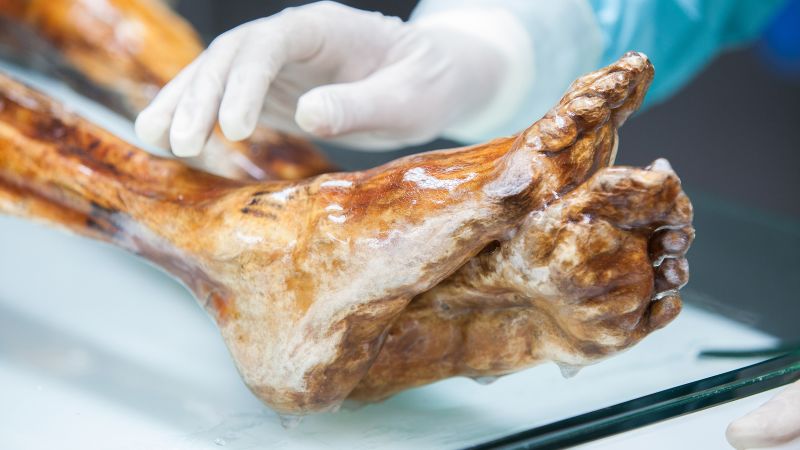
Ötzi the Iceman’s Microbial Resilience Defies Time
Ötzi the Iceman is long dead, yet his ancient microbes continue to defy the passage of time. This 5,300-year-old mummy, discovered in the Ötztal Alps in 1991, has long been a marvel to scientists due to his remarkably preserved state. However, recent research has revealed an even more astonishing fact: some of the microscopic life forms surrounding his remains may still be active. The study suggests that microbial activity in ancient remains is not as dormant as previously thought, offering new insights into how life persists in extreme environments.
The Living Archive Within Ice
Microbes found in and around Ötzi’s body have been identified as part of a “dynamic ecosystem” that has survived millennia. Researchers analyzing the mummy’s remains discovered that certain fungal species have remained viable in the icy conditions of the Alps. These microbes likely colonized the mummy after death, thriving in microhabitats that retained moisture and warmth. This challenges the assumption that ancient microbes are only inert remnants, showing that some may have remained metabolically active for thousands of years.
One of the study’s most intriguing findings is that microbial activity in ancient specimens might hold greater significance than previously believed. While many assume that microorganisms in frozen environments are inactive, the research indicates that some could still grow in localized pockets of warmth within the mummy’s tissues. This phenomenon suggests that ancient remains might preserve not just genetic material but also active biological processes, complicating the interpretation of microbial data from such sources.
Microbial Clues to Prehistoric Life
For researchers, Ötzi’s microbial communities are as vital as the man himself. The study highlights how these microbes provide a rare snapshot of the Copper Age human gut microbiome. “These microbes offer a unique window into the microbial ecosystems of our ancestors,” said Frank Maixner, lead author of the research. His findings reveal that certain gut bacteria, now rare in modern populations, are still present in people with traditional lifestyles, emphasizing the dramatic shifts in microbial diversity over the past few thousand years.
The analysis also links specific microbial species to the glacier where Ötzi perished. Researchers found that fungi common in high-altitude environments were likely part of the mummy’s biological story, surviving in hibernation until modern techniques revived them. This connection between the mummy and his icy surroundings raises questions about the origins of microbial communities in ancient remains and their role in shaping our understanding of prehistoric life.
Preservation vs. Microbial Activity
Though the icy conditions of the Ötztal Alps have preserved Ötzi’s body for thousands of years, they also create challenges for microbial studies. Freezing temperatures slow degradation but may not entirely stop it. For example, some microbes adapt to cold environments, potentially allowing their communities to persist even in the frozen state. This discovery has prompted scientists to reevaluate how ancient remains are stored and analyzed, as active microbes could influence the accuracy of genetic data.
Ötzi was preserved in a climate-controlled setting at the South Tyrol Museum of Archaeology, mirroring the glacier’s conditions. However, recent investigations suggest that microbial activity might still occur in these preserved remains. The study indicates that the presence of active microbes complicates efforts to distinguish between ancient and modern microbial DNA, highlighting the need for more rigorous methods to ensure the authenticity of findings from such specimens.
“Microbial DNA is often overlooked in ancient human studies, and it’s unclear whether the microbes identified are truly as old as the remains,” noted Anders Bergström, an evolutionary genomics researcher. His comments underscore the importance of rethinking how scientists interpret microbial data from preserved specimens like Ötzi the Iceman, as the microbes may represent a blend of ancient and contemporary influences.
