
Kazakhstan: Largest country in Central Asia approves new constitution
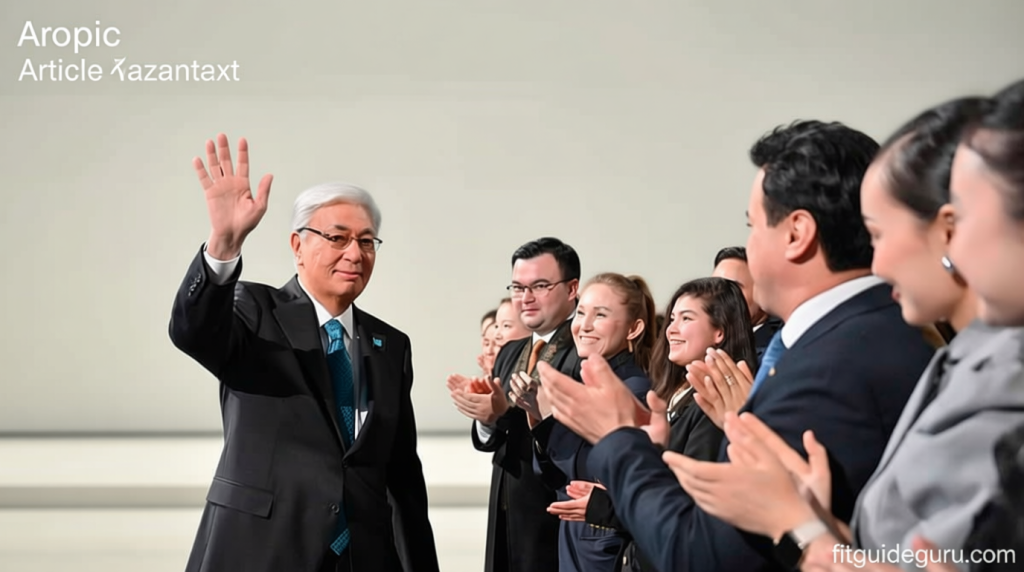
Kazakhstan: Largest Central Asian Nation Approves New Constitution
On March 15, the Central Electoral Commission declared the outcome of a constitutional referendum, aligning with President Kassym-Jomart Tokayev’s earlier announcement. Preliminary data showed the new Constitution was ratified by the public, marking a pivotal moment for the nation. Tokayev emphasized the significance of the vote, stating,
“Today we witnessed a truly historic event for our country. The citizens of Kazakhstan participated in the referendum and supported the constitutional reform. They cast their vote for the future of our country.”
As the architect of the change, Tokayev noted the original constitution’s role in Kazakhstan’s early years of independence after the Soviet Union’s dissolution. He argued that evolving circumstances necessitated a revised framework. The new document enhances the president’s authority, granting expanded powers to appoint key institutions such as the Constitutional Court, National Security Committee, and State Security Service, all with Senate approval. This includes selecting 10 Constitutional Court judges, six Central Electoral Commission members, and eight Supreme Audit Chamber officials, as well as overseeing the designation of the Human Rights Commissioner and Supreme Court heads.
A contingency clause allows the president to dissolve the unicameral Kurultai parliament if its approval of candidates is rejected twice. In such a scenario, the president would retain authority to issue decrees equivalent to constitutional laws. The Kurultai’s chair and vice president would also fall under this rule. The reform reintroduces the vice president role, which was abolished in 1996. The new vice president will represent the nation abroad and engage with domestic and international cultural, scientific, and social groups, with additional responsibilities delegated by the president.
Key amendments include broadening freedom of speech protections to encompass “scientific, technical, and artistic creativity,” as opposed to the previous “freedom of speech and art.” Language provisions now state that Kazakh and Russian will be used “alongside,” suggesting Kazakh takes priority, according to experts. Political scientist Gaziz Abishev explained,
“Official documents in the Kazakh language will have the highest authenticity. This means that if versions of the same document in different languages contradict each other, the Kazakh version will be considered correct.”
The new constitution also expands personal data protections and clarifies the separation of religion from state governance. Marriage is defined as a union between a man and a woman, following recent legislation banning LGBTQ+ propaganda. Internationally, Kazakhstan remains part of organizations like the UN and has signed the Paris Agreement. While the current constitution prioritized international obligations over domestic laws, the revised version maintains respect for global law but no longer mandates the renunciation of the first use of armed force as a foreign policy principle.
