
Michigan synagogue attack was Hezbollah-inspired act of terrorism, FBI says
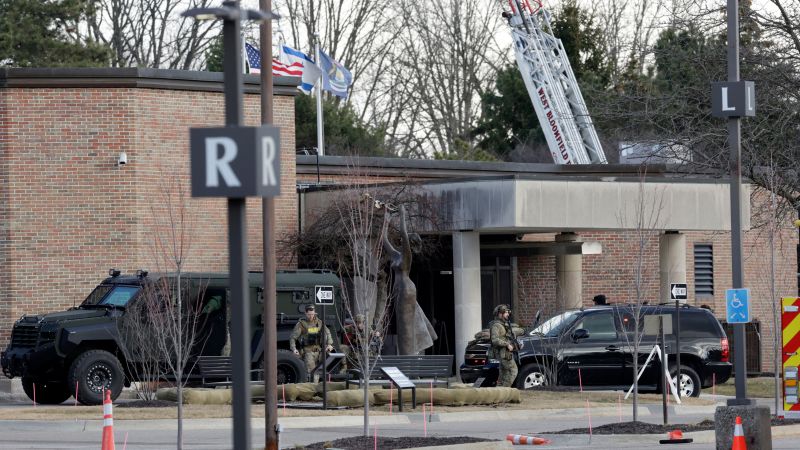
Michigan Synagogue Attack Was Hezbollah-Inspired, FBI Says
In a Monday press briefing, the FBI confirmed that the March 12 assault on a synagogue in West Bloomfield, Michigan, was a deliberate act of terrorism orchestrated by Hezbollah. The attacker, Ayman Ghazali, a naturalized U.S. citizen from Lebanon, targeted the Jewish community and the largest temple in the state, according to officials.
Ghazali drove a pickup truck into the building while more than 100 children were inside for school. After waiting over two hours in the parking lot, he maneuvered the vehicle deep into the synagogue, striking a security officer before the truck became stuck in a hallway. Security personnel then engaged him in a firefight, which ended with Ghazali shooting himself inside the truck.
During the incident, the vehicle’s engine compartment ignited, causing significant structural damage. The FBI revealed that Ghazali had loaded the truck with over $2,000 in commercial-grade fireworks and 35 gallons of gasoline to amplify the explosion. “He used these materials to enhance the impact of his attack,” stated Jennifer Runyan, the FBI’s special agent in charge in Detroit.
Planning and Motivation
Investigations uncovered Ghazali’s meticulous preparations in the days leading up to the attack. His plans escalated on March 9, with online activity tracing his focus to Hezbollah and Iranian media, as well as content on firearms and ammunition. Runyan noted that he had searched for terms like “Orthodox synagogues” and “Israelis near me” while planning the assault.
Two days before the attack, Ghazali purchased an AR-style rifle, 10 magazines, and approximately 300 rounds of ammunition from a gun store in Dearborn Heights. He practiced shooting the next day and then acquired fireworks. On the 11th, he ordered dozens of water containers, which he filled with gasoline in four trips to avoid detection.
Authorities also discovered he had bought two torch lighters, believed to be used in igniting the truck. Ten minutes before the attack, Ghazali sent his sister—thought to reside in Lebanon—videos and messages in Arabic, declaring his Hezbollah-backed ideology. “God willing, I will kill as many of them as I possibly can,” he said in one recording, according to Runyan.
Family Connections and Context
A week prior to the attack, Israeli airstrikes killed two of Ghazali’s brothers in Lebanon, as the U.S. and Israel engaged in their second week of conflict with Iran. The Israeli military identified one of the slain brothers, Ibrahim Muhammad Ghazali, as a Hezbollah commander responsible for weapon operations in the Badr unit. This event likely fueled Ghazali’s resolve.
Runyan emphasized that there is no evidence Ghazali had accomplices. Jerome Gorgon, the U.S. attorney for the Eastern District of Michigan, added that if Ghazali had survived, he would have faced charges for providing material support to Hezbollah. “He acted under Hezbollah’s direction and control,” Gorgon said. “His goal was to kill others, not just himself.”
The attack resulted in one security officer being injured, though no other casualties were reported. Photos of the damaged synagogue were shared to illustrate the aftermath of the incident. This story has been updated.
