
These Gen Zers are into a new kind of clubbing and it’s more prayer than party
Gen Z Redefines Nightlife: Bhajan Clubbing Blends Spirituality and Modernity
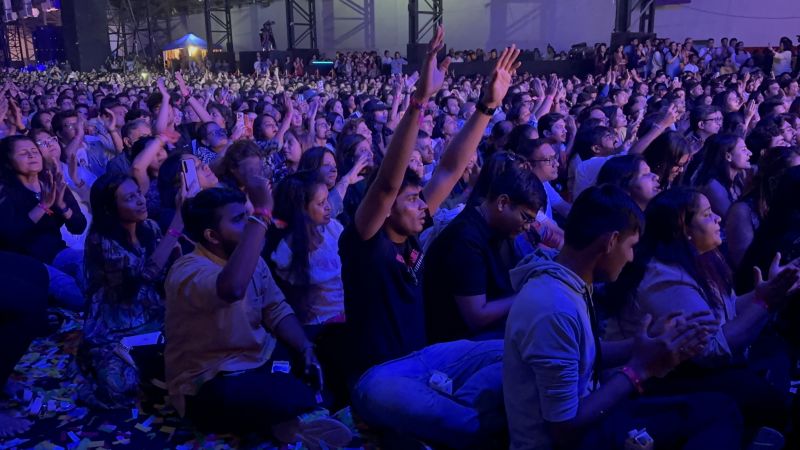
These Gen Zers are into a new – Under the glow of towering LED displays, a sea of young faces fills a cavernous venue in Mumbai, India’s bustling financial hub. The atmosphere buzzes with anticipation as Gen Z professionals and students queue up, scanning QR codes and donning wristbands. Unlike traditional nightclubs, the absence of smoke and the presence of a serene, seated crowd signal a shift in how this generation is experiencing music and community. As the evening progresses, nearly 5,000 attendees shuffle inside, shedding their shoes and settling cross-legged on the floor, ready to immerse themselves in an entirely different kind of rhythm.
A New Nightlife Paradigm
When the music begins, it’s not the pulsating beats of electronic pop or the familiar rock anthems that echo through the speakers. Instead, centuries-old Hindu devotional songs, known as bhajans, fill the air. These hymns, traditionally sung in temples or during religious processions, now resonate in a contemporary setting that merges spirituality with the high-energy vibe of clubbing. The crowd rises to their feet, swaying in unison, their voices joining in a chorus that transforms the venue into a living prayer space. Yet, the atmosphere is far from chaotic—no marijuana is visible, and the scent of alcohol is absent.
“This concert felt like a gateway to something deeper,” said Jill Veera, a 25-year-old participant. “It wasn’t just about dancing; it was about connecting with a higher purpose.” Her words reflect the core ethos of the event: a celebration of spirituality without the indulgence of substance. Attendees savor buttermilk or herbal teas, their focus on the music and the shared experience rather than the typical clubbing rituals. “Alcohol is natural in most concerts, but here, the energy came from the hymns and the collective feeling,” Veera added. “It was like drinking the soul of the moment.”
The Evolution of Bhajan Culture
Bhajans, which have been a staple of Indian religious traditions for centuries, are now finding a new audience among the youth. Historically, these devotional songs were performed in temples, processions, or community gatherings, often as a free expression of faith. Today, they are reimagined for ticketed events that feature smoke machines, dynamic lighting, and immersive sound systems—elements typically associated with nightclubs and music festivals. “The theatrics of the event speak to us,” explained Dhwani Paradia, a 26-year-old who attended the gathering with her 23-year-old sister, Fiyoni Paradia. “The visuals and the beat create an experience that feels both modern and meaningful.”
While the format is new, the essence of bhajans remains rooted in their spiritual significance. These songs, often accompanied by instruments like the harmonium or tabla, have long been a bridge between the divine and the everyday. However, the recent trend has elevated them to a cultural phenomenon, blending traditional devotion with contemporary entertainment. The Backstage Siblings, a duo of performers who have been vocal about this shift, are at the forefront of the movement. “We’re not replacing clubbing,” said Raghav Agarwal, one half of the duo. “We’re redefining it—making spirituality accessible, exciting, and relatable for a new generation.”
Prachi Agarwal, his sister and fellow performer, emphasized the inclusive nature of the events. “Whether you come with your grandparents, friends, or even a partner, there’s a place for everyone here. It’s about joy, not just intoxication.” The duo’s performances are carefully crafted to mirror the energy of modern concerts while preserving the devotional spirit of bhajans. Their approach has sparked a wave of interest across major Indian cities, with audiences drawn to the blend of tradition and innovation.
Growth and Global Influence
The trend has gained enough traction to attract support from Saregama, one of India’s oldest music labels. This endorsement underscores the movement’s potential to reshape the cultural landscape, bridging the gap between spiritual practices and mainstream entertainment. Online, the phenomenon has taken off rapidly, with videos of chanting crowds, emotional embraces, and barefoot dances amassing millions of views. These clips capture the raw, communal joy of the gatherings, showcasing how Gen Z is redefining spirituality as a dynamic, experiential activity.
Supporters of bhajan clubbing argue that it offers a fresh take on devotion, free from the rigid rituals of older traditions. “It’s about feeling connected without the constraints of formal ceremonies,” said one participant. “The music is a universal language, and here, it’s being used to unite people in a new way.” Critics, however, question whether the trend risks commercializing spirituality, turning it into a spectacle rather than a genuine practice. “What began as a heartfelt expression of faith now feels like a trend,” noted a social media user. “Is it still sacred, or has it become just another fashion statement?”
Political and Cultural Context
The rise of bhajan clubbing coincides with a broader political shift in India, where Hindu symbolism and religious identity have taken center stage. This movement has amplified the visibility of Hindu traditions in public life, sometimes at the expense of secular values. The ruling Bharatiya Janata Party (BJP) has embraced the trend, with Prime Minister Narendra Modi publicly praising it as a sign of young Indians’ spiritual awakening. “It’s heartening to see a generation that values both entertainment and faith,” Modi remarked, highlighting the event’s alignment with his vision of a culturally vibrant, spiritually grounded society.
As the movement gains momentum, it reflects a deeper cultural dialogue about what spirituality means in a modern, urban context. For many Gen Z participants, bhajan clubbing is not just about music—it’s a form of mindfulness, a way to disconnect from the digital world and reconnect with something timeless. “We’re living in a fast-paced environment, and this gives us a moment to pause and feel,” said Fiyoni Paradia. “It’s like a spiritual coffee rave, where you can enjoy the vibes without the hangover.”
India’s religious and spiritual economy, valued at around $58 billion in 2025, is now seeing a new chapter. Bhajan clubbing is part of a growing wave of “sober curious” events that prioritize wellness and meaning over excess. These gatherings challenge the stereotype of clubbing as a purely hedonistic experience, offering a platform where spirituality and socializing coexist. For now, the trend continues to grow, fueled by a generation that seeks authenticity in their pursuits. As the lights dim and the final notes fade, the crowd departs not just as attendees, but as part of a movement that is redefining how young Indians experience faith, music, and community.
