
Suspected Ebola patients ‘escape’ health center in DR Congo
Suspected Ebola patients ‘escape’ health center in DR Congo
Community Tensions Spark Outbreak Escalation
Suspected Ebola patients escape health center – Residents in a DRC town erupted in anger over the Ebola crisis, storming a health center and setting a tent ablaze in the region’s epicenter. The incident, reported by staff on Saturday, marked the second such event in eastern DR Congo within a week. While no injuries were initially reported, the chaos led to the escape of 18 individuals with suspected Ebola infections, leaving them untraceable and raising concerns about containment efforts.
Dr. Richard Lokudi, hospital director in Mongbwalu, recounted the attack as a direct response to fear and misinformation. “We strongly condemn this act, as it caused panic among the staff and also resulted in the escape of 18 suspected cases into the community,” he said. The tent, part of a treatment facility managed by Doctors Without Borders, was targeted by locals who arrived late Friday night. Their actions disrupted the center’s operations, forcing staff to confront both the flames and the fallout from the fleeing patients.
Similar unrest occurred in the town of Rwampara, where a treatment center was torched after family members were denied access to retrieve the body of a man believed to have died from Ebola. The attack highlighted the growing divide between health workers and the community, with fears of contagion fueling resistance to traditional burial practices. Ebola corpses are known to spread the virus during funeral rites, making such protests a critical challenge for containment.
Authorities Struggle to Balance Safety and Tradition
In response to the escalating tensions, officials in northeastern DR Congo imposed a ban on funeral wakes and gatherings exceeding 50 people. This measure aimed to reduce the risk of transmission but also deepened local resentment. David Basima, a Red Cross team leader overseeing burials in Rwampara, described the situation as fraught with conflict. “We experienced a lot of difficulties, including resistance from young people and the community,” he said. “We were forced to alert the authorities so that they could come to our aid, just for safety.”
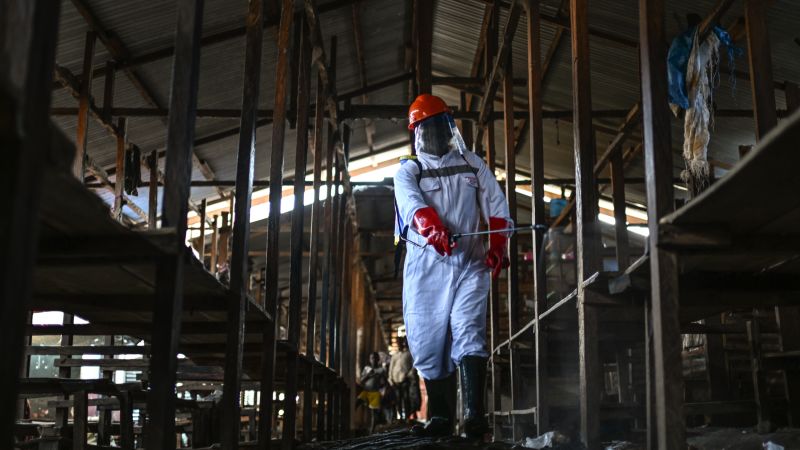
To manage the crisis, armed soldiers and police were deployed to oversee communal burials in the region. Red Cross workers, wearing white protective suits, carefully lowered sealed coffins into the ground, ensuring strict protocols to prevent virus spread. Families, however, remained distant, watching from a safe distance as the funeral procession unfolded under tight security. These burials, though necessary, underscored the emotional strain on both healthcare workers and the public.
Outbreak Grows as Contagious Risks Mount
The World Health Organization (WHO) classified the outbreak in DR Congo as posing a “very high” risk, a step up from its prior “high” rating. Despite this, the global spread of the disease is still considered unlikely. WHO Director-General Tedros Adhanom Ghebreyesus noted that 82 confirmed cases and seven deaths had been recorded, though the actual scale of the outbreak is believed to be much larger. The organization emphasized the urgency of expanding surveillance to track the full extent of the crisis.
A significant development in the epidemic was the identification of the Bundibugyo virus, a less common strain of Ebola. This virus spread undetected for weeks in Ituri province after the first known death, while authorities initially tested for the more prevalent Zaire strain. The delay in recognition has complicated efforts to control the outbreak, with 750 suspected cases and 177 suspected deaths now reported. More cases are expected as testing and monitoring intensify.
Humanitarian Missions Face New Challenges
The International Federation of Red Cross and Red Crescent Societies reported that three of its volunteers in Mongbwalu had succumbed to the outbreak. These workers were believed to have contracted the virus on March 27 while handling dead bodies during a humanitarian mission unrelated to Ebola. If confirmed, this would shift the timeline of the outbreak back by several weeks, pushing the earliest known death to late April in Bunia, the capital of Ituri province.
Dr. Jean Kaseya, director-general of the Africa Centers for Disease Control and Prevention, stressed the importance of community trust in combating the outbreak. “A response to the outbreak must include building trust with communities,” he said. This sentiment aligns with the challenges faced by health workers, who must navigate cultural practices while implementing stringent measures to prevent contagion. The recent attacks and protests suggest that fear and mistrust are growing, threatening the effectiveness of containment strategies.
As the situation worsens, officials and health organizations are working to bridge the gap between medical protocols and local traditions. The use of sealed coffins and protective gear has become standard in burial procedures, but the emotional toll on families remains significant. In Mongbwalu, the burned tent symbolized more than just a loss of equipment—it represented a breakdown in communication and a surge in panic.
Public health experts warn that the outbreak’s rapid spread could be attributed to both the virus’s high transmissibility and the community’s fear of infection. The initial focus on the Zaire strain may have delayed the identification of the Bundibugyo virus, allowing it to proliferate unchecked. This has created a dual challenge: managing the immediate crisis while addressing the long-term need for community engagement and education.
Residents’ anger, while disruptive, also highlights the human element of the outbreak. Many fear that the virus will devastate their families, leading to a reluctance to participate in care or burial efforts. The attacks on health centers have forced authorities to adapt their strategies, sometimes at the cost of community cooperation. In Mongbwalu, the staff’s response to the crisis was quick but incomplete, as they could not account for the 18 suspected cases that disappeared into the population.
Despite these setbacks, the WHO and local health officials remain committed to containing the outbreak. Their focus on expanding surveillance and educating communities reflects a broader strategy to address both the medical and social dimensions of the crisis. However, the recent events in Mongbwalu and Rwampara serve as a reminder of the ongoing struggle between public health imperatives and cultural norms.
With the outbreak now spanning multiple regions, the need for coordinated efforts has never been greater. The loss of three Red Cross volunteers adds to the urgency of ensuring safety measures are understood and accepted by the public. As the situation evolves, the balance between scientific rigor and community trust will determine the success of the response.
Global Implications and Local Impact
While the risk of the virus spreading globally remains low, the DRC’s outbreak has become a focal point for international attention. The WHO’s “very high” risk assessment underscores the severity of the crisis and the need for increased resources and support. Local health centers, already strained by the outbreak, face additional pressure from both the disease and community unrest.
Residents’ actions, though reactive, have drawn criticism from health officials. Dr. Lokudi called the attacks “a setback” for containment efforts, emphasizing that the escape of suspected cases could lead to new infections. The events in Mongbwalu and Rwampara illustrate the complex interplay between fear, misinformation, and the spread of the virus. Without addressing these factors, the outbreak is likely to persist and intensify.
As the health center in Mongbwalu rebuilds, the community remains a key player in the fight against Ebola. The staff’s resilience is matched by the challenge of winning public cooperation. With 750 suspected cases and 177 deaths on the rise, the need for a unified response has never been more critical. The coming weeks will test both the medical teams and the local population, as they work together to stem the tide of the outbreak.
In the meantime, the WHO continues to monitor the situation closely, with Tedros Adhanom Ghebreyesus reiterating the importance of vigilance. “The outbreak is believed to be much larger,” he said, highlighting the uncertainty surrounding the true scale of the epidemic. The Bundibugyo virus, now identified as a key player, may require tailored strategies to address its unique transmission dynamics. This has added another layer of complexity to an already challenging public health crisis.
The story of the DRC’s Ebola outbreak is one of both scientific and social challenges. As health centers face attacks, and volunteers lose their lives, the battle against the virus becomes more than a medical endeavor—it is a test of community resilience and adaptability. The road ahead demands not only medical intervention but also a deep understanding of the fears and needs driving local resistance.
