
Scientists say they have built a cell from scratch for the first time
Breakthrough in Synthetic Biology: Scientists Create a Cell from Scratch
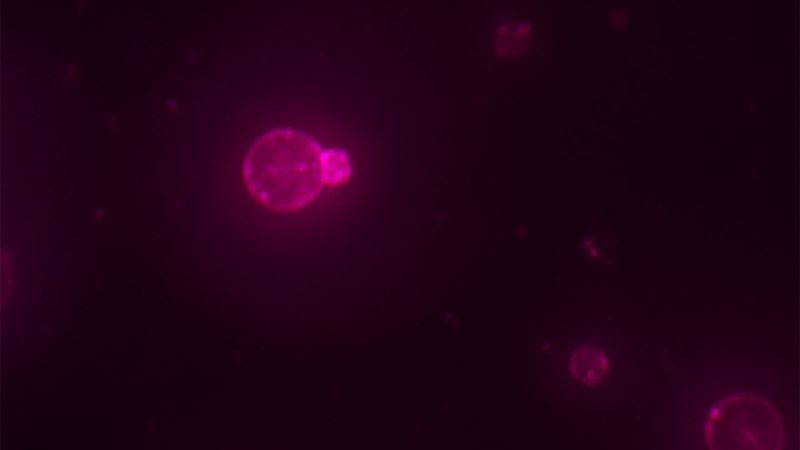
Scientists say they have built a cell – For the first time, scientists have successfully constructed a cell entirely from nonliving chemical components, capable of performing essential life functions such as feeding, growing, and replicating. This achievement, hailed as a major milestone in synthetic biology, could redefine how researchers approach the development of custom organisms designed to act like living machines. The research team, led by Dr. Kate Adamala, a synthetic biologist at the University of Minnesota, has demonstrated that it is possible to engineer a self-sustaining cellular system without relying on natural biological templates.
A New Frontier in Life Science
The synthetic cell, named SpudCell, is a simplified prototype that mimics basic cellular processes but lacks the complexity of natural cells. While it is not yet a fully functional organism, its creation offers unprecedented insights into the origins of life and opens the door to applications such as targeted drug delivery, environmental remediation, and industrial chemical production. According to Adamala, the ability to define the exact molecular composition of the cell allows for precise engineering and opens possibilities for future advancements.
“I know the full ingredient list of the cell, I know exactly what chemicals, what molecules at what concentrations,” she said. “It is fully defined, which means we can engineer it.”
Unlike traditional bioengineering, which modifies existing cells, this approach begins with the fundamental building blocks of life. Adamala and her colleagues meticulously assembled the synthetic cell using a combination of lipids, proteins, and nucleic acids, creating a system that operates independently of natural cellular constraints. While the cell is not yet self-sufficient in all aspects, it represents a critical step toward understanding how life might have emerged from nonliving matter.
Compared to Natural Cells: A Simpler System
SpudCell, though functional, is far less complex than natural cells. A typical biological cell contains millions or even billions of molecules, but SpudCell is composed of only 150 to 200 molecules. This minimalistic design allows researchers to study cellular behavior in a controlled environment, free from the evolutionary complexity of natural organisms. Despite its simplicity, the synthetic cell can sustain itself for about five generations, feeding and replicating under specific conditions.
One of the key differences between SpudCell and natural cells is its replication mechanism. Natural cells rely on a cytoskeleton—a structural framework that organizes internal components—for division. SpudCell, however, uses a different process: proteins accumulate at the membrane, creating tension that causes the cell to split. This method, while effective, does not involve the cytoskeleton, making the synthetic cell a novel model for studying cellular dynamics.
Additionally, SpudCell cannot produce its own ribosomes, which are essential for protein synthesis in natural cells. This limitation highlights the current stage of development, as the cell requires external support for certain functions. Yet, its ability to replicate and perform basic tasks underscores its potential as a platform for further innovation.
From Lab to Application: The Path Forward
Researchers envision a future where synthetic cells could be tailored for specific purposes, such as producing pharmaceuticals or capturing carbon dioxide. Adamala emphasized that the project’s success lies in its defined molecular structure, which allows for precise modifications. “Building a cell from scratch means you are no longer tied to the constraints and evolutionary baggage of natural biology,” explained Yuval Elani, an associate professor at Imperial College London. “It opens up the possibility of designing systems and programming them to do things that living cells may not do easily, or may not do at all.”
Elani, who was not involved in the research, called the breakthrough a “genuine milestone” in the quest to determine whether chemistry can be organized to resemble life. The synthetic cell’s ability to function autonomously—albeit in a limited capacity—suggests that the boundaries between life and nonlife are more permeable than previously thought. This could lead to the development of entirely new forms of biological technology.
Contextualizing the Breakthrough: What Is Mirror Life?
Cells are the fundamental units of life, yet their complexity remains a mystery. The human body, for instance, contains 37 trillion cells, each with unique functions and molecular compositions. Even with modern tools, scientists struggle to fully unravel the mechanisms behind cellular diversity. The creation of SpudCell provides a fresh perspective, offering a simpler model to study these processes.
Adamala’s work is part of a broader effort in synthetic biology, which differs from stem cell research. While stem cell research focuses on reprogramming existing cells, synthetic biology aims to build new life forms from scratch. This distinction is crucial, as it highlights the field’s potential to create organisms with tailored properties. The synthetic cell’s genome is significantly smaller than that of a natural cell, with 90,000 base pairs—compared to E. coli’s 4.6 million. This reduction in genetic material makes it easier to manipulate and study.
SpudCell’s replication process is slower than that of E. coli, which divides every 30 minutes. Each generation of SpudCell requires external feeding and takes roughly 12 hours to replicate at 30 degrees Celsius (86 degrees Fahrenheit). This slower rate, however, does not diminish its significance. It demonstrates the feasibility of creating self-replicating systems that could eventually be optimized for speed and efficiency.
Collaboration and Future Goals
The creation of SpudCell was not a solitary effort. Adamala collaborated with other scientists, including Drew Endy, Jan Jedryszek, and biotech entrepreneur Chris Raggio, to establish Biotic, a public-benefit institution dedicated to advancing synthetic biology. By making SpudCell accessible to other researchers, the group hopes to accelerate progress in the field and explore its potential applications.
Adamala also humorously named the synthetic cell “SpudCell,” partly as a joke to avoid naming it after herself. The name is a nod to the Russian satellite Sputnik, which launched the space age in the 1950s. This analogy underscores the significance of the achievement, drawing parallels between scientific milestones and the birth of new technologies.
Although the research has not yet been published in a peer-reviewed journal, Adamala confirmed that the team plans to submit their findings this week. The public release of the scientific paper marks an important step in sharing the breakthrough with the broader scientific community. As the field evolves, SpudCell may serve as a foundation for more advanced synthetic organisms, paving the way for a new era of bioengineering.
Implications for Science and Society
The development of SpudCell raises profound questions about the definition of life. If a cell can be constructed from nonliving components and perform life-like functions, does that qualify it as life? This debate is central to the field of synthetic biology, which seeks to blur the lines between natural and artificial systems. Adamala’s work, along with others in the field, aims to answer these questions while creating tools that could address global challenges.
