
Fossils reveal the earliest animal with a head was also the oldest known ‘righty’
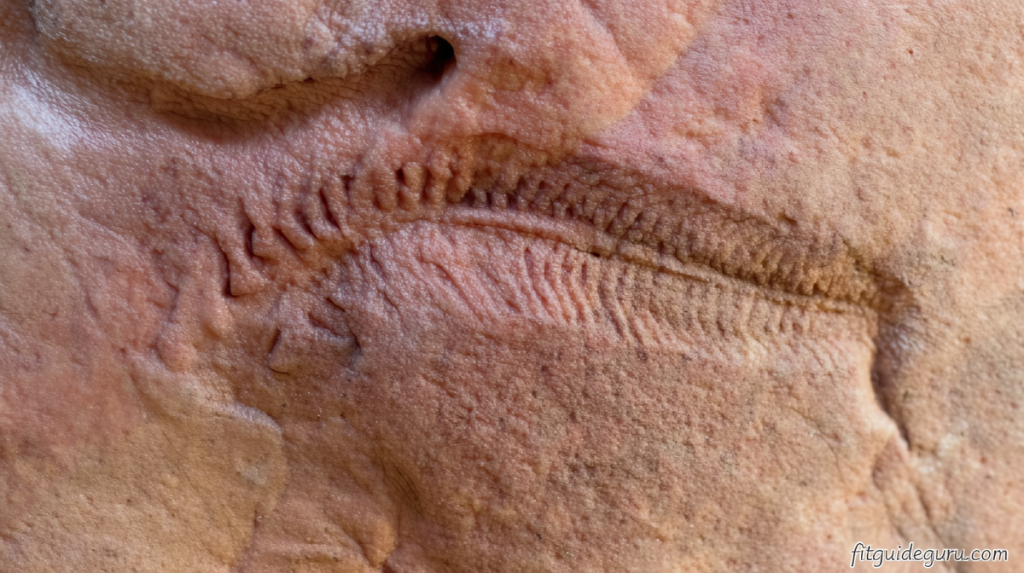
Fossils Reveal Earliest Animal Had Right-Handedness
Fossils reveal the earliest animal with a head was also the oldest known right-handed creature. This peculiar worm-like organism lived in Earth’s oceans approximately 550 million years ago and showed a consistent tendency to curve toward its right side. Spriggina floundersi emerged during the Ediacaran Period, which spanned from 635 million to 542 million years ago. The diminutive creature possessed a flattened, segmented body resembling an elongated oval. One end narrowed to a point while the opposite featured a prominent curved formation, establishing it as the oldest documented animal with a distinct head region.
Decades of Scientific Debate Resolved
Paleontologists first cataloged Spriggina specimens in 1958, yet uncertainty persisted regarding whether this organism could propel itself independently. Recent investigations have finally addressed this longstanding question through an extensive examination of over one hundred fossil specimens. This represents the most thorough study conducted since the creature’s initial discovery. Scientists determined that Spriggina not only crawled across ocean floors but also exhibited a strong preference for curving to its right side. This behavioral inclination mirrors the right-handedness observed in numerous contemporary species.
While no living creature closely resembles Spriggina, it established crucial evolutionary groundwork for directional preference. This characteristic appears across diverse groups including humans, other primates, rodents, amphibians, and various insect species. Scott Evans, who led the investigation published Thursday in Scientific Reports, noted the initial skepticism surrounding these ancient remains.
“Fossils of early animals, to most people — even to me — they look weird,”
Evans continued by emphasizing the deeper significance of these discoveries:
“What we see is that a lot of the fundamental characters that we associate with animals today, things like the ability to move and even having this behavioral handedness, are present in these earliest animal communities.”
Understanding the Fossil Evidence
The fossil record reveals both straight and curved specimens, with each impression serving as a mirror image of the original soft-bodied creature. Remarkably, the majority of fossils display leftward curvature within the rock matrix, indicating that the animals actually bent rightward during their lifetimes. Researchers carefully measured and compared these body curves across all specimens. S. floundersi reached maximum lengths of four inches (ten centimeters), though most individuals measured between 0.8 and 1.2 inches (two to three centimeters).
The investigation team analyzed surrounding rock formations for evidence of ancient currents and storm activity. This analysis helped determine whether the curved body positions resulted from water movement or represented active locomotion. Evans, serving as assistant curator of invertebrate paleontology at New York City’s American Museum of Natural History and assistant professor at the museum’s Richard Gilder Graduate School, expressed his astonishment at the findings.
“The really surprising thing was that they had this ‘handedness,'”
“About twice as many of these things are bent to the left as are bent to the right.”
Initially puzzled by this distribution pattern, Evans investigated contemporary methods for identifying handedness in living animals. He discovered an identical two-to-one ratio favoring right-sided preference. This consistency led him to conclude that Spriggina possessed a meaningful behavioral inclination.
“That suggests that this is a significant behavioral preference in Spriggina,”
“I never thought that for an impression of a half-billion-year-old organism, we’d be able to say it preferred to turn one way versus the other.”
Scientific Validation and Implications
Diego García-Bellido, a senior paleontology researcher at the South Australian Museum and associate professor of paleontology at Adelaide University, provided independent validation of the findings. Though not participating in the new study, he praised the rigorous methodology employed by Evans and colleagues.
“I am very cautious when interpreting the fossil record, and I believe Evans and coauthors have been as well,”
“They have clearly considered and stated all alternative hypotheses and they offer clear, valuable insights into early animal behavior.”
