
Explainer: Who is Mojtaba Khamenei and how did he succeed his father?
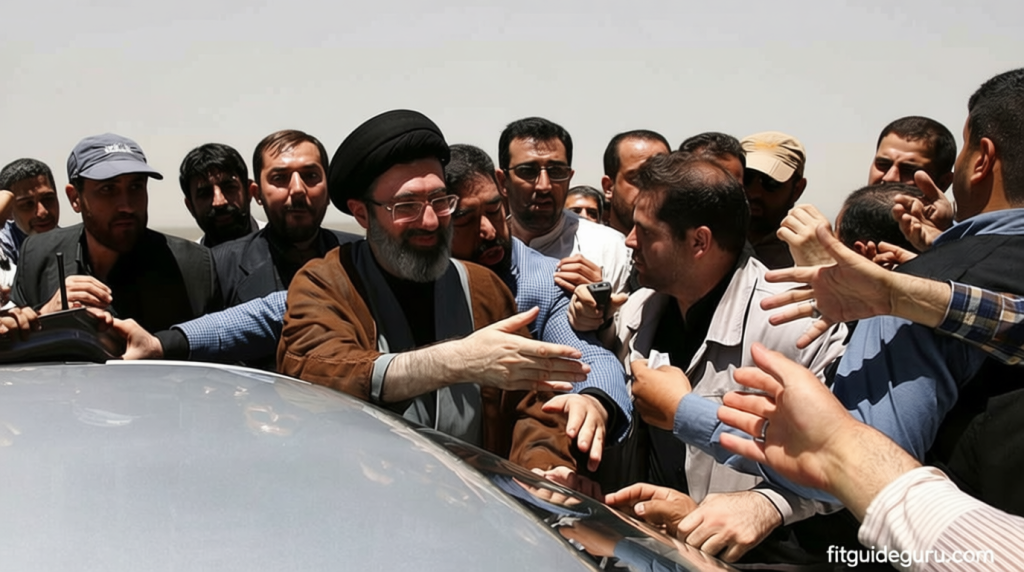
Explainer: Who is Mojtaba Khamenei and how did he succeed his father?
The Iranian Assembly of Experts has officially named Mojtaba Khamenei as the new Supreme Leader, succeeding his father, Ali Khamenei. This transition occurred amid heightened tensions in the region, following an Israeli strike that killed the elder Khamenei and his wife, Zahra Haddad Adel, in a single attack. Mojtaba, now 56, is set to assume leadership of the Islamic Republic, marking the continuation of a family legacy in Iran’s political hierarchy.
Early Life and Military Service
Mojtaba Khamenei was born in 1969 in Mashhad, a city with deep ties to Iran’s religious institutions. His path to power began during the Iran-Iraq War, where he was deployed as a teenager to frontline combat. Serving in the Habib ibn Mazaher Battalion of the 27th Mohammad Rasulullah Division, he was exposed to the core of Iran’s military and ideological networks. This experience not only forged strong connections with the Islamic Revolutionary Guard Corps (IRGC) but also embedded him in the political memory of the regime.
Analysts suggest that Mojtaba’s early exposure to combat shaped his influence within Iran’s security apparatus, allowing him to build relationships with future leaders.
Political Career and Family Dynamics
Unlike his brothers, who remained in cultural or administrative roles tied to their father’s office, Mojtaba carved a distinct trajectory. While Mostafa and Masoud Khamenei focused on traditional duties, Mojtaba’s role evolved into one of quiet dominance, linking him to hidden power structures and sensitive security operations. His father’s assassination in 2026 solidified his position, but his political alignment remains unclear.
Although Mojtaba’s wealth has sparked debate, Western media has highlighted his financial influence, citing assets in cities like London and Vienna. However, the exact control of these holdings remains obscured by the lack of transparency in Iran’s leadership-linked economic systems. Within Iran, he is not widely recognized as a businessman, with his authority attributed more to his political stature and ties to state institutions.
Legacy of the Iran-Iraq War
The war holds significant weight in Iran’s political narrative, and Mojtaba’s participation symbolized his commitment to the regime’s ideals. His time in the Habib ibn Mazaher Battalion coincided with the rise of key figures like Qasem Soleimani and Ahmad Kazemi, who later held prominent roles in the Islamic Republic. These associations likely bolstered his influence, even if his tenure in combat was brief.
After the war, Mojtaba pursued religious studies at Qom seminary, graduating from the Alavi School in Tehran. He trained under influential clerics, including Mohammad-Taghi Mesbah-Yazdi and Mahmoud Hashemi Shahroudi, while maintaining a close relationship with his father. This foundation in both theology and military strategy positioned him for the leadership role he now occupies.
Uncertainty in Ideological Direction
Despite his rise, Mojtaba’s political orientation remains a subject of speculation. Some observers argue that his silence on major policies aligns him with hardline security factions, while others contend that his lack of public records makes it difficult to assess his true ideological stance. As Iran’s new leader, his decisions will shape the country’s trajectory in the coming years.
