
An astronaut suddenly couldn’t speak in space. What does that mean for future missions?
An astronaut suddenly couldn’t speak in space. What does that mean for future missions?
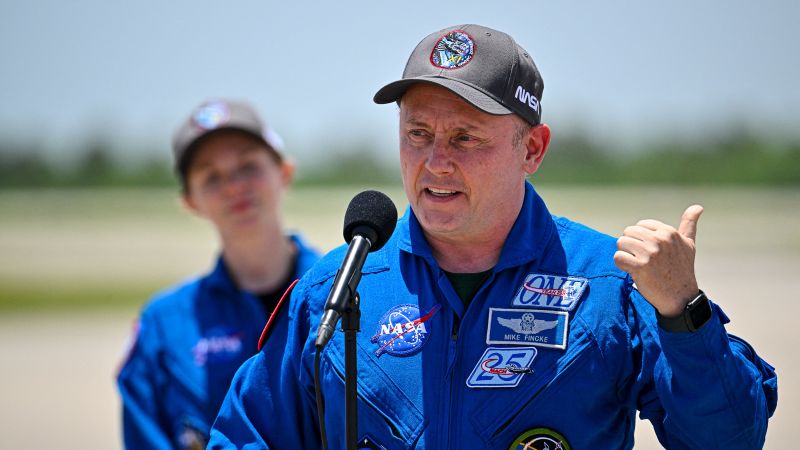
An astronaut suddenly couldn t speak – Five months into his fourth International Space Station mission, veteran NASA astronaut Mike Fincke faced an unexpected challenge. During a routine dinner the day before a spacewalk, he abruptly lost his ability to speak. The incident, which occurred in January, lasted just 20 minutes, yet it triggered a significant decision by NASA. Despite feeling no pain, Fincke became visibly distressed, prompting his crewmates to act swiftly. “It was completely out of the blue. It was just amazingly quick,” he told the Associated Press, reflecting on the suddenness of the event.
The crew quickly responded, with emergency protocols in place to ensure his safety. However, the agency took an unprecedented step: the SpaceX Crew-11 mission was cut short, and Fincke, along with three of his fellow astronauts, returned to Earth a month earlier than planned. The station was left with only three people staffing it, marking a rare disruption in the usual operations of the orbital laboratory. This incident has raised questions about the medical preparedness of astronauts during long-duration space missions and how future plans might adapt.
According to NASA’s administrator, Jared Isaacman, the early return was necessitated by a “serious medical condition.” He emphasized that while astronauts undergo rigorous medical training, there are situations where returning to Earth is the optimal choice. “This is what we trained for. It’s built in our planning. It was executed very well,” Isaacman said in a post-splashdown press briefing. The agency aims to apply lessons from this event to improve safety measures for subsequent missions. “We will capture any relevant lessons learned to inform preparations for future expeditions,” he added.
The Impact of Space on the Human Body
As NASA continues to push the boundaries of space exploration, the incident involving Fincke underscores the complexities of prolonged exposure to microgravity. The five key hazard areas identified by the agency—radiation, isolation, distance, microgravity, and hostile environments—highlight the multifaceted challenges astronauts face. These factors can lead to a range of health issues, from muscle and bone atrophy to cardiovascular strain and vision problems. For instance, weightlessness causes fluids to shift toward the upper body, affecting blood flow and potentially leading to temporary neurological symptoms.
Dr. Farhan Asrar, an associate professor at the Faculty of Medicine of the University of Toronto, explained that such conditions are not uncommon. “The environment of space can be disabling, and the strains of space can impact virtually every aspect of your body,” he noted. He specifically mentioned that certain blood flow disturbances could result in a temporary lapse of speech, a condition akin to a transient ischemic attack (TIA). A TIA, also known as a mini-stroke, occurs when blood flow to the brain is interrupted for a brief period, causing neurological dysfunction that typically resolves on its own without permanent damage.
Asrar highlighted the symptoms of a TIA, including dizziness, confusion, and loss of balance, and suggested that Fincke’s episode might have been related to such an event. However, the exact cause remains unclear, as NASA has not disclosed all the details of the incident. The agency typically maintains confidentiality around medical matters, prioritizing astronaut privacy and protecting sensitive data. Even when studies examine specific health effects, identities of participants are often kept anonymous, as seen in a 2019 research project involving 11 healthy astronauts.
In that study, nine men and two women, with an average age of 46, were monitored for blood flow changes. Six of them experienced stagnant or reverse blood flow, one developed a blood clot, and another had a partial clot. These findings reinforce the idea that microgravity significantly alters physiological processes, including circulatory systems. “Space affects your muscle mass, your bone health. We know that fluid shifts have been causing a lot of issues as well,” Asrar said, underscoring the need for continued research into the long-term effects of space travel.
Implications for Future Missions
The early return of Crew-11 raises important considerations for missions that venture farther into space. While returning to Earth is a straightforward solution in such cases, the logistics of long-duration missions—like those to the Moon or Mars—may complicate this process. For example, the Crew-11 astronauts returned safely on January 15, eight days after the incident, which wasn’t an emergency evacuation. Such scenarios could become more frequent as space agencies plan for extended stays in hostile environments.
Despite the uncertainty surrounding Fincke’s specific condition, the event serves as a reminder of the critical role medical contingencies play in space missions. “We will capture any relevant lessons learned to inform preparations for subsequent missions,” Isaacman reiterated, signaling NASA’s commitment to refining its protocols. The incident also highlights the importance of real-time medical assessments, such as the use of the space station’s ultrasound machine by the crew. This tool likely helped evaluate Fincke’s cardiac function and other bodily systems, with guidance from mission control.
Fincke himself later confirmed that the early exit was due to health concerns, though he did not reveal a formal diagnosis. “The symptoms were likely space-related,” he stated in an interview with the Associated Press. This suggests that the issue might be tied to the physiological changes that occur in space, rather than Earth-based illnesses. As NASA prepares for missions that extend beyond the ISS, such as those involving deep space travel, the agency must ensure that astronauts have access to advanced medical resources and that evacuation procedures are streamlined for emergencies.
The event has also sparked discussions about the broader implications for space exploration. While Fincke’s episode was isolated, it reflects a growing awareness of the risks associated with prolonged exposure to microgravity. As agencies like NASA and SpaceX continue to send crews on longer missions, the ability to respond swiftly to health crises will become increasingly vital. This incident could influence the design of future spacecraft, incorporating more robust medical systems and emergency protocols to safeguard astronauts in even the most remote parts of space.
