
AI glasses are aiding cheating in exams. Test-obsessed Asia is ground zero
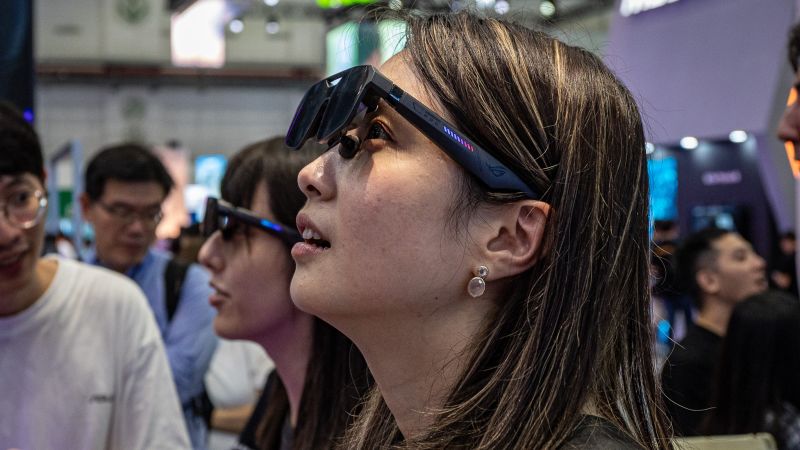
AI Glasses Pose New Challenge to Exam Integrity in Test-Driven Societies
AI glasses are aiding cheating in exams – For decades, students have relied on traditional methods to gain an edge in academic assessments—glancing at neighbors, hiding notes in palms, or relying on whispered tips. However, the rise of artificial intelligence has introduced a more discreet and advanced tool: smart glasses equipped with AI capabilities. In the highly competitive education systems of East Asia, where academic performance often dictates future career prospects and social standing, these devices are becoming a growing concern for educators. As technology becomes more integrated into daily life, the pressure to achieve top grades has pushed students to adopt innovative cheating techniques, raising questions about the future of standardized testing.
Rapid Adoption of AI-Powered Wearables
Recent incidents in South Korea highlight the increasing prevalence of AI glasses in academic settings. Last month, two examinees were caught using the devices during an English proficiency test, a critical benchmark for hiring decisions. The smart glasses, designed to operate silently, allowed users to transmit questions to connected AI systems, which then generated answers and displayed them on the lenses. Similarly, in Taiwan, a student wearing such glasses during a medical school entrance exam was flagged after proctors noticed unusual eye movements. Upon inspection, the glasses were found to emit heat, revealing their hidden function.
While these cases are recent, the use of AI glasses for academic dishonesty is not entirely new. The devices have been gaining traction for years, evolving from bulky prototypes to sleek, unobtrusive models. Their affordability and sophistication have made them accessible to students, who now see them as a reliable alternative to outdated cheating methods. This shift has placed traditional education practices under scrutiny, as institutions struggle to adapt to the technological changes reshaping the exam landscape.
Global Concerns and Regulatory Responses
East Asia is not the only region grappling with this issue. In China, the grueling college entrance exam—taken by over 10 million candidates annually—saw authorities implement stringent screening measures, including checking all pairs of glasses. In the UK, the head of England’s exam watchdog has warned that AI glasses and other smart devices could exacerbate cheating in exams. These developments underscore a global effort to combat the growing threat of wearable technology in academic environments.
South Korea, which reported its first instances of AI glasses cheating, is now convening discussions between the Ministry of Education and exam administrators. Officials have confirmed that while electronic devices are already banned from test rooms, the integration of AI into wearable tech demands new protocols. Meanwhile, Taiwan’s universities are revisiting their rules to address the use of AI eyewear during examinations. These adjustments reflect a broader trend of education systems racing to keep pace with technological innovation.
Expert Perspectives on the Shift in Learning
“If we’re seeing a few cases being reported, we’re seeing a lot more cases not being reported,” said Thomas Corbin, a lecturer at Deakin University in Australia. His research into AI-powered glasses and their use in academic settings highlights a critical dilemma: how to measure student knowledge when technology can provide instant answers. The devices, he argues, are reshaping the very purpose of exams, challenging the balance between learning and performance.
Professor Meng Zili of the Hong Kong University of Science and Technology (HKUST) has also observed this trend. Last year, he noticed a student wearing stylish glasses during an exam and, intrigued by their design, decided to test their functionality. The experiment revealed that AI glasses could transmit questions to AI language models, which then generated answers and projected them onto the lenses. The student’s performance, aided by the device, placed them among the top five in a class of over 100, surpassing the average score of 72.
“After conducting the experiment, it really raises the question of how much knowledge students actually need to memorize for exams, versus whether we should allow them to use AI during assessments,” Zili noted. This insight sparks a debate about the role of AI in education: should it be seen as a tool to enhance learning, or as a threat to fairness? As AI technology continues to evolve, the line between assistance and deception grows increasingly blurred.
The Future of Examinations in the AI Era
Wearable AI is not only becoming more advanced but also more integrated into everyday life. US tech giant Meta, in collaboration with Ray-Ban, launched its first AI-enabled glasses in late 2023, and subsequent releases have seen over seven million units sold in the following year. These devices, capable of independent operation and seamless connectivity, are rapidly transitioning from novelty to necessity, prompting concerns beyond exam integrity.
Experts warn that the widespread adoption of AI glasses could redefine how students approach learning. Corbin, for instance, likened the challenge they pose to the disruption caused by ChatGPT in essay writing. “Wearable AI is as much of a challenge to exams as ChatGPT was to essays in 2022,” he remarked. “I just don’t think there is any real way that we can reliably have exam practices moving forward.” This sentiment echoes the growing recognition that traditional assessment methods may need to adapt to maintain their effectiveness.
As AI glasses become more sophisticated, their ability to assist students during exams is expanding. Some models can process data in real time, interpret complex problems, and even predict answers based on patterns. This advancement raises not only questions about fairness but also about privacy, as the devices collect and analyze personal data. For educators, the challenge lies in developing new strategies to detect and deter cheating without stifling the benefits of technology.
Reimagining Education in the Age of AI
The integration of AI into education is forcing institutions to rethink their approach to assessment. With students now able to access vast amounts of information instantly, the focus of exams may shift from testing memory to evaluating critical thinking. Yet, the risk of technology enabling dishonesty remains significant, especially in high-stakes environments where a single error can cost a student their future.
While some see AI as a means to reduce the burden on students, others caution that it could erode the value of academic achievement. The incidents in South Korea and Taiwan serve as early warnings, illustrating how easily technology can be weaponized in the pursuit of success. As these devices become more mainstream, the need for updated policies and innovative testing methods will only intensify.
In the end, the rise of AI glasses in exams reflects a broader transformation in education. It challenges educators to create assessments that measure not just what students know, but how they apply knowledge in real-time. The question now is whether the education system can evolve alongside technology, ensuring fairness without sacrificing the tools that make learning more efficient.
