
After more than 66 years in the air, the industry’s longest-serving flight attendant prepares to retire
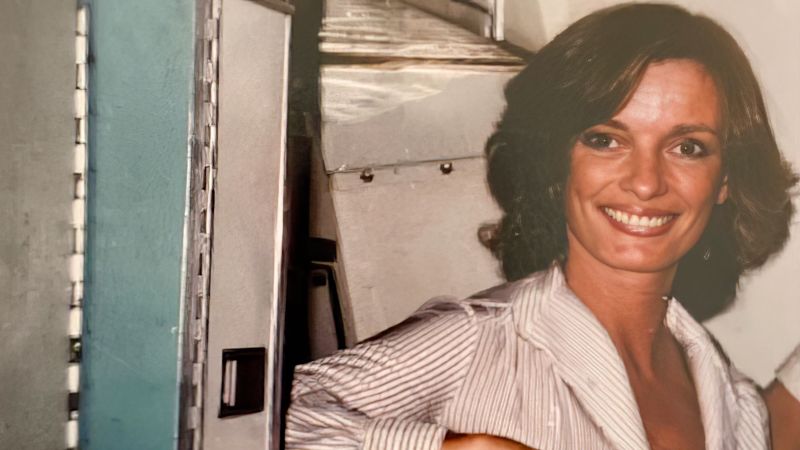
After more than 66 years in the air, the industry’s longest-serving flight attendant prepares to retire
After more than 66 years – Joan Prince Crandall, now set to end a six-decade-long career, reflects on her journey with a blend of nostalgia and pride. Her dedication to the skies has not only shaped her personal life but also left an indelible mark on the aviation industry. As the title of “stewardess” fades into history, Crandall’s path from the early days of propeller-driven aircraft to the modern era of jet travel underscores a transformative profession.
A Legacy in the Skies
For Crandall, the allure of being a flight attendant began with the glamour of the role. It offered her a unique opportunity to explore the world, experience new cultures, and embrace the thrill of flight. She remembers the era when high heels, meticulously tailored uniforms, and an emphasis on elegance were standard for the job. “Those days had a certain sparkle,” she said, though the industry has since evolved, replacing the fashion-centric approach with a more functional and safety-focused mindset.
“Being a flight attendant has been my entire career, from stewardess to the present day,” Crandall told CNN during a recent interview. Her journey began in 1959 at Pacific Airlines, where she first boarded a Douglas DC-3, a 24-passenger aircraft that became her starting point. The transition to newer planes, including the Martin 404 and Fairchild F-27, marked the early chapters of her career, but it was the arrival of jet technology that redefined her experience entirely.
The Evolution of a Profession
Over the years, the role of a flight attendant has undergone significant changes. While the core duties of serving passengers and ensuring comfort remain, the job now demands a broader skill set, including emergency response training and crisis management. “The job isn’t just about being pretty anymore—it’s about being prepared for anything,” she remarked. This shift highlights how the profession has adapted to meet the demands of modern air travel, even as the personal sacrifices have remained.
Crandall’s career has mirrored the industry’s transformations. She has witnessed the rise of jet engines, which replaced the slower piston-powered planes of her early days. “Higher, faster, smoother, more seats,” she exclaimed, describing the leap from propeller-driven aircraft to the sleek, high-speed jets that dominate today’s skies. Her memories of the transition are vivid, from the smell of jet fuel to the hum of engines that now carry thousands of passengers across continents.
Challenges and Triumphs
Though Crandall’s career has been marked by progress, it was not without obstacles. In the late 1950s and 1960s, the role of a stewardess was heavily influenced by societal expectations. Many airlines imposed strict policies on weight, appearance, and personal life, requiring women to retire at age 32 or quit if they married. “It was a different time,” she said, acknowledging the pressures faced by early female flight attendants.
“The rules were tough, but I never had to deal with them directly,” Crandall recalled. While some companies enforced these policies, she noted that her employers allowed her to continue working beyond the age limit. This flexibility became a turning point in her career, enabling her to build seniority and contribute to the industry’s growth. “It was a small victory, but it meant the world to me,” she added.
These policies were emblematic of broader gender norms in the workforce. According to the Association of Professional Flight Attendants, women were often chosen for their perceived ability to provide “cheap labor” during the 1930s, when the profession first emerged. However, the 1964 Civil Rights Act brought a pivotal change, embedding protections against sex discrimination into law. “That was a game-changer,” Crandall said, emphasizing how the act empowered women in her field and beyond.
The inclusion of “sex” in the Civil Rights Act was a strategic addition, yet its impact was profound. For flight attendants like Crandall, the legislation allowed them to balance their careers with personal aspirations. “You could finally have a family without worrying about losing your job,” she explained. This shift in policy reflected a broader movement toward equality, which Crandall saw as both a personal and professional milestone.
A Changing Industry
Crandall’s career has spanned multiple airlines, including Pacific Airlines, Air West, Hughes Airwest, Republic Airways, and finally Delta Air Lines since 2008. Each transition brought new challenges and opportunities, from navigating mergers to adapting to technological advancements. Despite these shifts, her commitment to the profession has remained steadfast. “I’ve always loved the idea of flying, no matter the plane or the destination,” she said.
The evolution of the job has also altered the number of passengers a flight attendant is responsible for. In the past, smaller aircraft meant closer, more personal interactions, but today’s larger planes require a more streamlined approach. Yet, the core essence of the role—ensuring passenger safety and comfort—has remained unchanged. “You still have to be ready to step in during emergencies,” she said, recalling her training on slides and evacuation procedures.
Retirement and Reflection
As Crandall prepares to retire, she reflects on the journey that has taken her from the early days of the aviation industry to its current state. The average salary for flight attendants today stands at approximately $70,980, according to the US Bureau of Labor Statistics, a figure that pales in comparison to the personal fulfillment she has derived from her work. “It’s not just about the money—it’s about the stories you gather and the people you meet,” she said.
Her career has been a testament to resilience and adaptability. From the stylish uniforms of the 1950s to the modern-day professional attire, she has witnessed the industry’s transformation. Yet, the challenges she overcame—like the weight and appearance policies of her time—have shaped her perspective. “I never imagined I’d still be flying after all these years,” she said, adding, “But the love for the job never left me.”
Crandall’s story is not just one of individual perseverance but also a reflection of the broader changes in aviation. Her journey highlights how the profession has evolved from a glamorous but restrictive role into a dynamic and essential career. As she steps into retirement, she leaves behind a legacy that bridges the past and present, reminding others of the importance of adaptability and determination in a constantly changing world.
With her last flight set to take place, Crandall’s retirement marks the end of an era. Yet, her contributions to the industry will continue to inspire future generations of flight attendants. Her career, spanning over 66 years, serves as a reminder of the enduring passion for aviation and the power of a profession to shape lives. “I’ll miss the sky, but I’ll always cherish the memories,” she concluded, her voice filled with warmth and gratitude.
