
The Seine used to be a toxic mess. Now it’s the hottest new swim spot in Paris
The Seine used to be a toxic mess. Now it’s the hottest new swim spot in Paris
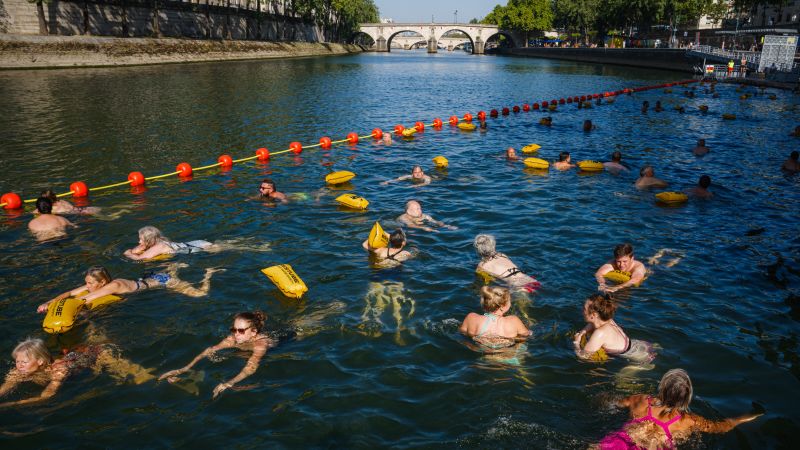
The Seine used to be a toxic – As the summer heat intensifies in Paris, visitors may find themselves drawn to a surprising addition to their itinerary: swimming in the Seine. With temperatures recently surpassing 104 degrees Fahrenheit (40 Celsius) in late June, the city is bracing for a third heatwave next week. The introduction of three new designated swimming areas along the river couldn’t have arrived at a more opportune moment, offering a refreshing escape for both locals and tourists. This marks the second consecutive summer the Seine has been open to swimmers, a shift that has redefined how Parisians engage with their iconic river.
A Legacy of Water and Culture
The Seine’s relationship with Parisian culture is as deep as its waters are wide. Centuries ago, the river was a hub for nude bathing, a practice that began in the 17th century. People would wade into the water from its sloped banks, a tradition that was soon deemed too risqué. In 1716, a public decency law was enacted, banning such activities. Yet, this rule was short-lived, giving way to more structured forms of river recreation in the 18th century.
By the 19th century, swimming had evolved into a major social and sporting event. Wealthier establishments along the riverbanks not only offered bathing facilities but also integrated dining and entertainment, creating vibrant spaces that drew crowds. The Piscine Deligny, a notable example, became a fashionable destination and eventually hosted events for the 1900 Paris Olympics. These early days of river swimming were characterized by both leisure and competition, showcasing the river’s historical significance.
From Ban to Revival
The golden age of Seine swimming began to wane around the turn of the 20th century. A series of drownings and accidents involving river traffic led to a total ban on swimming in 1923. Despite this, some informal bathing continued, particularly during sweltering summers. A long-distance race that had been held since 1905 persisted, defying the authorities and highlighting the enduring appeal of the river.
However, the decline of the swimming culture wasn’t solely due to regulations. Pollution played a critical role, turning the Seine into a symbol of urban neglect. By the 1970s, the river had become a flowing cesspit, with over half of the region’s wastewater dumped untreated into its waters. The ecosystem suffered severely, and by 1970, the Seine was biologically dead, supporting only three resilient fish species.
For decades, the river’s condition was a source of shame. Even as late as 2013, the Paris triathlon had to be canceled because the water quality posed a risk to athletes. The city’s long-held promise to clean the Seine remained unfulfilled until 2016, when mayor Anne Hidalgo reignited the effort in preparation for the 2024 Olympic Games. This initiative required a monumental engineering project and over a billion euros to upgrade Paris’s wastewater infrastructure.
The centerpiece of the cleanup is a massive underground basin near Gare d’Austerlitz. This structure, a colossal concrete cylinder measuring 50 meters in width and 30 meters in depth, is supported by deep-set pillars and can hold 50,000 cubic meters of stormwater—equivalent to the volume of 20 Olympic-sized pools. Previously, Paris’s 19th-century sewers, designed during Haussmann’s modernization, combined rainwater and sewage, allowing overflow to directly enter the Seine during heavy rains. Now, this excess is diverted to the Austerlitz basin, where it’s temporarily stored before being treated.
One of the most iconic anecdotes tied to this transformation involves an American woman who once envisioned living in Paris. Now, she calls the city home, and the Seine’s revival is a testament to its enduring allure. For Americans, the 4th of July has become a unique opportunity to embrace Parisian culture by plunging into the river, a celebration that mirrors the city’s own journey from decay to renewal.
A Cultural Renaissance
The renewed access to the Seine is not just a practical solution but also a cultural milestone. It symbolizes a return to a past where the river was a central part of daily life. While some may view river swimming as a modern trend, it’s rooted in a tradition that dates back centuries. The 250th anniversary of Franco-American friendship, celebrated this year, coincides with the Seine’s reopening, adding a layer of historical significance to the event.
Today’s swimming spots are carefully selected and monitored to ensure safety. The city has implemented strict guidelines, testing water quality regularly and designating areas where the river is deemed clean enough for recreation. This has created a new tradition, blending historical practices with contemporary environmental standards. Parisians and tourists alike are now engaging with the Seine in a way that’s both nostalgic and innovative.
Experts note that the revival of the Seine as a swimming destination reflects broader efforts to reclaim public spaces. The project has not only improved water quality but also boosted the city’s eco-friendly image, attracting attention from environmentalists and tourists. For many, the sight of people enjoying the river is a powerful reminder of its potential and the importance of sustainable urban planning.
The transformation of the Seine is a story of resilience and innovation. What was once a polluted waterway now serves as a symbol of Paris’s commitment to environmental restoration. The city’s ability to adapt its infrastructure while honoring its history underscores the Seine’s unique role in shaping Parisian identity. As the summer progresses, the river’s new status as a recreational hub is likely to become a defining feature of the season, bridging the gap between the past and the future.
A New Era for the Seine
The Seine’s journey from toxic mess to vibrant swimming spot is a testament to human ingenuity and dedication. While the 1923 ban had nearly extinguished the tradition, the pollution crisis in the mid-20th century was the final blow. The 1988 pledge by then-mayor Jacques Chirac to swim in the Seine as a public demonstration was a symbolic gesture that, though unfulfilled, highlighted the urgency of the issue.
Today’s efforts, spearheaded by Anne Hidalgo, have turned this promise into reality. The new infrastructure ensures that the river not only meets modern standards but also supports a growing number of recreational activities. This transformation has made the Seine a focal point of Paris’s environmental and cultural renaissance, offering a glimpse into the city’s evolving relationship with its waterways.
As the sun beats down on the banks of the Seine, the ripple of this change is felt across the city. The river, once a symbol of neglect, is now a beacon of possibility, inviting people to reconnect with their surroundings. Whether it’s for a quick dip or a leisurely swim, the Seine’s new status as a swim spot is a celebration of progress, blending history with modernity in a way that resonates with both locals and visitors.
