
Somali referee denied entry to US for 2026 World Cup over ‘vetting concerns’
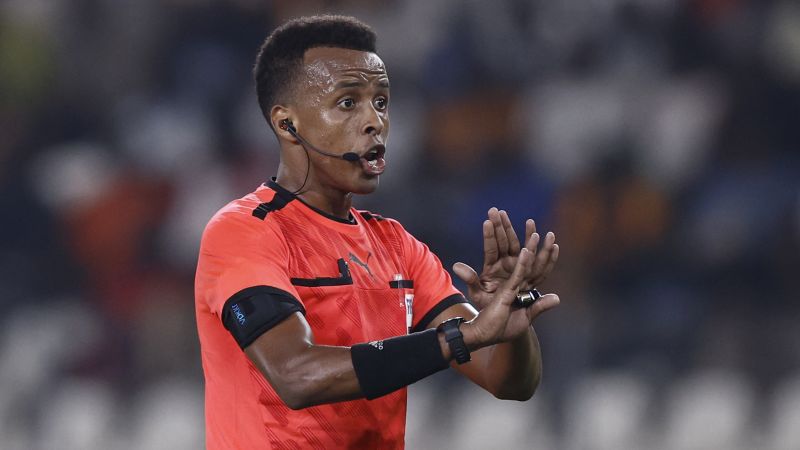
Somali Referee Omar Abdulkadir Artan Barred from U.S. for 2026 World Cup
Somali referee denied entry to US – FIFA has confirmed that Somali referee Omar Abdulkadir Artan will not participate in the 2026 World Cup, which is set to take place in the United States. The decision came after Artan was denied entry into the country, raising questions about the administration’s approach to international sports personnel. This marks a significant setback for the referee, who had been selected to officiate in the prestigious tournament.
Additional Scrutiny at U.S. Ports of Entry
According to a statement from the U.S. Customs and Border Protection (CBP), Artan faced extra checks upon arriving in Miami from Istanbul. A CBP spokesperson explained that the inspector required further verification, which is standard procedure when there are suspicions about a traveler’s eligibility. “During processing, the traveler underwent additional inspection, a routine part of CBP’s inspection process when officers need to verify information or determine admissibility,” the spokesperson added. This step led to Artan being deemed inadmissible due to vetting concerns, even though no specific details were provided about the reasons for his exclusion.
“During processing, the traveler underwent additional inspection, a routine part of CBP’s inspection process when officers need to verify information or determine admissibility,” said a U.S. Customs and Border Protection spokesperson.
Artan, a key figure in African football, was part of the list of referees chosen by the Confederation of African Football (CAF) for the World Cup. His selection was based on his reputation as one of the continent’s top male referees in 2025. However, the Trump administration’s travel policies have cast a shadow over his participation, as Somalia is among the 39 nations impacted by the executive order. This has led to heightened scrutiny for individuals from these countries, even when their credentials are well-established.
Artan’s Response to the Denial
Despite the unexpected turn of events, Artan expressed optimism about his future in the sport. In a statement shared with CNN, the referee said, “Despite the circumstances, I am in a positive mood and I am focused on the next challenges in my refereeing career.” He also thanked FIFA and CAF for their support, vowing to maintain his standards as he looks forward to future opportunities. “I want to thank the football family for their messages and wish my colleagues all the best success during the World Cup,” he added. “I look forward to joining them again in future competitions.”
“Despite the circumstances, I am in a positive mood and I am focused on the next challenges in my refereeing career. I would like to thank FIFA and CAF for all their support and I promise to keep my refereeing levels up as I concentrate on the future. I want to thank the football family for their messages and wish my colleagues all the best success during the World Cup and I look forward to joining them again in future competitions.”
FIFA clarified that it does not oversee immigration decisions, stating that the host government retains control over visa approvals. In a press release, a FIFA spokesperson noted, “FIFA is not involved in host country immigration processes, including visa adjudications, and has been informed by authorities that Mr. Artan’s status will not be changed at present.” This underscores the logistical challenges faced by international sports events in navigating national immigration policies.
Broader Context of Immigration Policies
The denial of Artan’s entry aligns with a pattern of increased scrutiny under the Trump administration’s travel ban. This policy has affected not only diplomats and business travelers but also athletes and officials from countries like Somalia, which is among the 39 targeted nations. While Artan’s case highlights the challenges for sports professionals, it is part of a wider trend where U.S. immigration authorities have applied strict criteria to visa applicants, particularly in the months leading up to major events.
Artan’s exclusion has sparked discussions about the balance between security and international collaboration in sports. The 2026 World Cup, which is set to begin in less than a week, will see teams and officials from around the globe converging in the United States. For Artan, this means missing out on a chance to contribute to the tournament, which is expected to be a landmark event for African football. The decision may also have implications for future World Cup selections, as officials from affected countries could face similar hurdles.
Other nations have also experienced similar issues. For instance, the Iranian football federation reported that its team was granted entry to the U.S. just one day before their match, according to semi-official media. This timeline has fueled accusations of last-minute decision-making and potential discrimination against Iranian staff. Mehdi Taj, the president of Iran’s football federation, stated, “The Iranian soccer team had been granted permission to enter the U.S. for the tournament, but only one day before the match, according to semi-official Iranian media, sparking accusations of unfair treatment.”
“…but only one day before the match,” said Mehdi Taj, the president of Iran’s football federation, as reported by semi-official Iranian media.
Amir Ghalenoei, Iran’s head coach, further emphasized the inconvenience, noting that some management staff, media personnel, and an executive director remained without entry permits. These cases illustrate how the travel ban has created a ripple effect across the sports world, affecting not just players but also the broader ecosystem of international competition. While the Iranian team managed to participate, the delay in approving their staff’s visas has raised concerns about the impact on team preparation and cohesion.
As the World Cup approaches, the situation has added an extra layer of complexity to the event’s organization. The U.S. is hosting the tournament, which has been a long-awaited goal for the nation’s football community. However, the exclusion of Artan and the challenges faced by Iranian officials serve as reminders of the intersection between politics and sports. These incidents may influence how future tournaments are planned, with organizers potentially needing to factor in extended visa processing times or alternative routes for international personnel.
Implications for Global Sports Participation
The case of Artan and the Iranian team underscores the broader implications of the U.S. immigration policies on global sports. Referees and officials from affected countries must now navigate additional bureaucratic steps, which can delay their arrival or even prevent them from participating. For the 2026 World Cup, this could affect the quality of officiating, especially if key referees are unable to attend. The tournament relies on a diverse pool of officials to ensure fairness and consistency across matches, and the travel ban may limit that pool.
While the U.S. government maintains that its decisions are based on security assessments, critics argue that the policy has been applied inconsistently, particularly in the context of international sporting events. The timing of the World Cup, which coincides with the height of the travel ban, has amplified the impact of these policies. As a result, athletes and officials may face extra hurdles, potentially altering the dynamics of the competition. For Artan, this means a temporary loss of opportunity, but he remains committed to his career, stating that he will “keep my refereeing levels up as I concentrate on the future.”
The travel ban’s reach extends beyond the initial 39 nations, with some reports suggesting that it has been used to target individuals with ties to certain regions. While the exact criteria for these vetting concerns remain unclear, the process has been described as rigorous, with officials subjected to thorough checks upon arrival. The denial of Artan’s entry exemplifies this approach, as he was inspected upon landing in Miami and found ineligible despite his credentials. This has raised questions about whether the policy is being applied fairly to all participants, including those in the sports industry.
As the World Cup gets underway, the focus will remain on the quality of play and the integrity of the competition. However, the exclusion of Artan and the challenges faced by other teams highlight the growing tension between national security measures and the global nature of football. These incidents may serve as a catalyst for future discussions about how immigration policies can be streamlined to accommodate the needs of international sports events. For now, the football family will have to move forward without Artan, hoping for a resolution that allows him to return to the field in the future.
Looking Ahead: A New Era for U.S. Hosting
With the World Cup set to commence in North America, the event is expected to showcase the continent’s growing role in global football. However, the travel restrictions have added an unexpected challenge to the preparations. While the U.S. government has been responsible for approving visas, FIFA has emphasized its role in selecting referees, stating that it does not control immigration processes. This division of responsibility has left the organization in a difficult position, as it must now work around the host country’s decisions.
Artan’s case has sparked debates about the long-term effects of the travel ban on sports diplomacy. As a respected referee, his exclusion could serve as a symbol of the broader impact on international cooperation. The football community, which has rallied behind him, continues to express hope that his situation will be reconsidered. Meanwhile, the tournament organizers will need to address the logistical challenges of ensuring a smooth event, despite the obstacles posed by immigration policies.
As the world turns its attention to the U.S. for the 2026 World Cup, the story of Artan’s denial serves as a reminder of the complexities involved in hosting such a massive event. The Beautiful Game, which has transcended borders for decades, now faces new hurdles in a politically charged climate. Yet, the spirit of football remains undeterred, with officials and players alike determined to make
