
‘A lot of sleepless nights’: Why the war in Iran might cost Iraq a berth in the 2026 World Cup
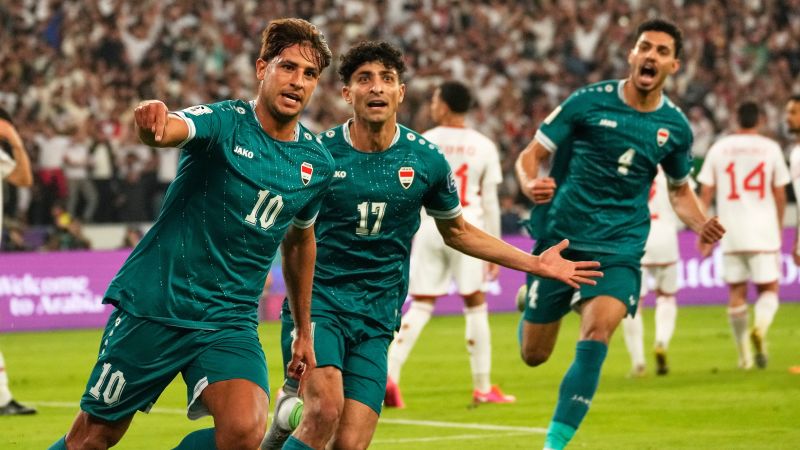
‘A lot of sleepless nights’: Why the war in Iran might cost Iraq a berth in the 2026 World Cup
Just days away from securing a place in the 2026 FIFA World Cup, Iraq’s men’s national soccer team faces an unexpected hurdle. The Lions of Mesopotamia are set to compete in a pivotal playoff qualifier on March 31, where they will face the winner of Bolivia versus Suriname, which plays on March 26. However, the ongoing conflict in Iran and its ripple effects across the Middle East have complicated the team’s ability to reach the game in Monterrey, Mexico.
Graham Arnold, the Australian coach of Iraq’s squad, has expressed concern over the travel logistics. With airspace over Iraq closed, most of his players and all coaching staff remain trapped in the country until at least April 1, the day after the match. “It’s stressful,” Arnold said, explaining the strain of navigating the situation. “I’ve got four or five plans, all different, and it’s been a struggle to get everything right.”
“I’ve spent countless sleepless nights ensuring my plans are solid,” Arnold added. “It’s a big challenge, not just because of the travel issues, but also due to visa complications caused by embassy closures in the region.”
The Iraq Football Association (IFA) has formally asked FIFA to postpone the playoff to give the team time to prepare. A source from the IFA confirmed the request to CNN Sports, stating that the delay would allow players to reach Mexico. FIFA is expected to make a decision by the end of the week.
Arnold’s team is currently split across three countries. While 60% of his squad stays in Iraq, his medical team is stuck in Qatar, and he himself is in Dubai. The situation mirrors early days of the pandemic when he coached Australia, but this time, the obstacles are geopolitical rather than health-related. A planned training camp in Houston, Texas, to adjust to the climate and time zone has already been canceled.
With the only viable option being a long bus journey, Arnold doubts it will be feasible. “A 30-hour drive to another nation isn’t healthy for the players, and visas to enter those countries are still uncertain,” he explained. If the game proceeds as scheduled, Iraq may miss its chance to qualify for the first time in 40 years.
Meanwhile, Iran’s Football Federation president, Mehdi Taj, has raised concerns about his country’s participation in the co-hosted tournament. “It’s clear that following this attack, our optimism for the World Cup has been severely shaken,” Taj said. If Iran withdraws, FIFA will need to find a replacement, and Arnold believes his team would be the logical choice. “We’re next in line, as both Iraq and Iran are part of the Asian Football Confederation,” he noted.
Arnold proposes delaying the playoff game until the week before the tournament begins, ensuring his team can travel and prepare adequately. “Bolivia and Suriname can play in March without issues,” he said. “We could face the winner just before the World Cup starts—letting the victor advance and the loser return home.” Despite the uncertainty, his focus remains on his players’ readiness.
