
Trump unveils a new presidential airplane
Trump Unveils New Presidential Aircraft
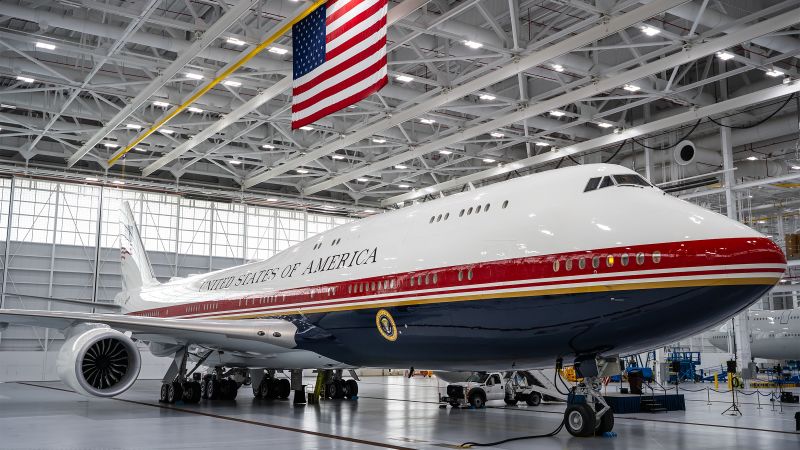
Trump unveils a new presidential airplane – At Joint Base Andrews on Friday, President Donald Trump took center stage to reveal what he described as “the world’s most luxurious plane.” The event marked a significant moment in presidential travel, as the new aircraft was unveiled to a crowd of military personnel and onlookers. Trump, who has long emphasized his personal style, seemed particularly pleased with the design choices, which he claimed were tailored to his own preferences. Among the highlights of the unveiling was the updated color scheme, a departure from the traditional robin’s egg-blue that has been a hallmark of the presidential fleet since the Kennedy era. “The colors are a much better and more appropriate look,” he remarked, expressing confidence in the new aesthetic.
Design and Aesthetic Choices
Trump’s approval of the new plane was evident in his detailed comments about its features. The wood paneling, which he praised as “the highest quality,” was a key point of emphasis. The aircraft’s tail bore a flag that fluttered with a more dynamic flair, a subtle yet deliberate change from the rigid, static design of previous models. “We put the wave in it,” he explained, adding that the previous version had been a “straight little noodle” he never truly favored. This adjustment, he argued, better reflected the American spirit, aligning with his own admiration for bold, expressive imagery.
“I like the color of the American flag, right? That makes sense.”
While the overall structure of the plane retained its functional design, the interior showcased a blend of modern luxury and classic elements. Reporters who toured the aircraft noted the presence of reclining leather seats, tan walls, and gold light fixtures. The Air Force emphasized that its focus was on “mission over aesthetics,” which meant minimal changes to the layout. However, one notable addition was the presidential seal embossed on the seatbelts, a detail Trump highlighted as a mark of authenticity and pride.
A Legacy of Aging Aircraft
For decades, the presidential fleet relied on two aging Boeing 747-200s that have served as Air Force One since 1990. These planes, though reliable, had seen extensive use over the years, ferrying leaders such as George H.W. Bush, Bill Clinton, Barack Obama, and Joe Biden across global missions. Their continued service was a testament to their durability, but Trump expressed frustration with their limitations. “The delays in producing the new planes had frustrated me,” he said, noting the concern that they might not be completed before his term ends in 2029.
The new aircraft, however, provided a solution to these logistical challenges. Donated by the government of Qatar, the jet was swiftly integrated into the presidential rotation, with the Air Force working to prepare it for use. Trump’s satisfaction with the donation was clear, as he praised the quality of the modifications. “Everything was designed good. It was my taste, I will say,” he remarked, underscoring the personal connection he felt to the project.
Symbolism and National Representation
Trump’s comments on the design choices hinted at a broader narrative of national representation. He argued that the new plane’s appearance was more in line with the country’s values than the older models. “A normal president wants to stay away from aircraft,” he quipped, suggesting that previous leaders might have overlooked the importance of a visually striking symbol of American power. The navy blue and white fuselage, accented with red stripes, was intended to create a striking contrast while maintaining a sense of tradition. The changes, he implied, were not merely cosmetic but a reflection of his vision for the nation’s image on the world stage.
Yet, the shift in design also drew comparisons to Trump’s personal jet, which he has used for years. This parallel was not lost on observers, who noted that the new presidential aircraft now bore a striking resemblance to his private aircraft. While some critics questioned the implications of this similarity, Trump framed it as a natural evolution. “They’re great planes, they’re great history,” he said of the older models, hinting at their eventual fate. The Air Force confirmed plans to “fix them up a little bit” and transform them into museum pieces, ensuring their legacy would be preserved while making way for the new era.
Future Plans and Strategic Significance
The Air Force announced that the new plane would soon begin “commissioning flights,” a process designed to test its readiness for official duties. These flights, described as a “final exam” for the aircraft, would assess its performance under operational conditions. Trump, however, had already set his sights on a specific use for the jet. He aimed to fly it to Mount Rushmore ahead of July 4, the nation’s 250th birthday, as a way to celebrate the country’s heritage. On Independence Day itself, he envisioned the plane soaring over the U.S. Capitol, a gesture he believed would symbolize the strength and unity of the American people.
Despite the emphasis on luxury, the new aircraft was also positioned as a strategic asset. Its donation by Qatar highlighted the growing influence of foreign allies in U.S. infrastructure, particularly in the realm of presidential travel. The White House had initially dismissed concerns about the ethical and legal implications of accepting a $400 million gift from a foreign government, prioritizing the immediate need for a modernized fleet. The cost of modifications, which the Air Force stated would remain under the $400 million threshold, was seen as a worthwhile investment to ensure the plane’s readiness for high-profile events and international travel.
Reflections on Presidential Travel
The unveiling of the new plane sparked discussions about the evolving role of presidential aircraft in modern governance. While the older Boeing 747s had been workhorses for decades, their outdated appearance and limited capacity raised questions about their continued use. Trump’s new aircraft, with its streamlined design and advanced features, represented a departure from the past, blending functionality with a sense of grandeur. Critics argued that the focus on aesthetics could overshadow practical considerations, but Trump countered that the visual impact of the plane was essential to projecting the nation’s power and prestige.
As the Air Force prepares for the new era of presidential travel, the implications of this upgrade extend beyond mere style. The changes to the aircraft’s design and interior reflect a broader shift in how the U.S. leadership chooses to represent itself globally. For Trump, the plane was not just a means of transportation but a statement of his personal brand and political philosophy. The fact that the new jet now mirrors his private aircraft suggested a seamless integration of his preferences into the presidential infrastructure, a move that some analysts viewed as both symbolic and strategic.
In the end, the new plane was more than a luxury item—it was a symbol of continuity and change. While the older models would be preserved for historical purposes, the new aircraft was poised to take center stage in the future of presidential travel. As Trump’s administration looked to the horizon, the jet stood as a testament to the president’s vision, blending tradition with a fresh, bold approach to national representation.
