
Takeaways from the appeals court hearing on the White House ballroom project
Takeaways from the appeals court hearing on the White House ballroom project
Takeaways from the appeals court hearing – On Friday, a federal appeals court scrutinized President Donald Trump’s initiative to build a large ballroom at the White House without congressional approval. The two-hour hearing, held before a three-judge panel of the US DC Circuit Court of Appeals, marked another critical moment in the ongoing legal dispute over the project. The administration argued that the project should proceed, despite lingering questions about its legality, while opponents raised concerns about the preservation of historic landmarks and the executive’s constitutional authority. The case has become emblematic of broader debates about executive power and the role of the judiciary in checking presidential decisions.
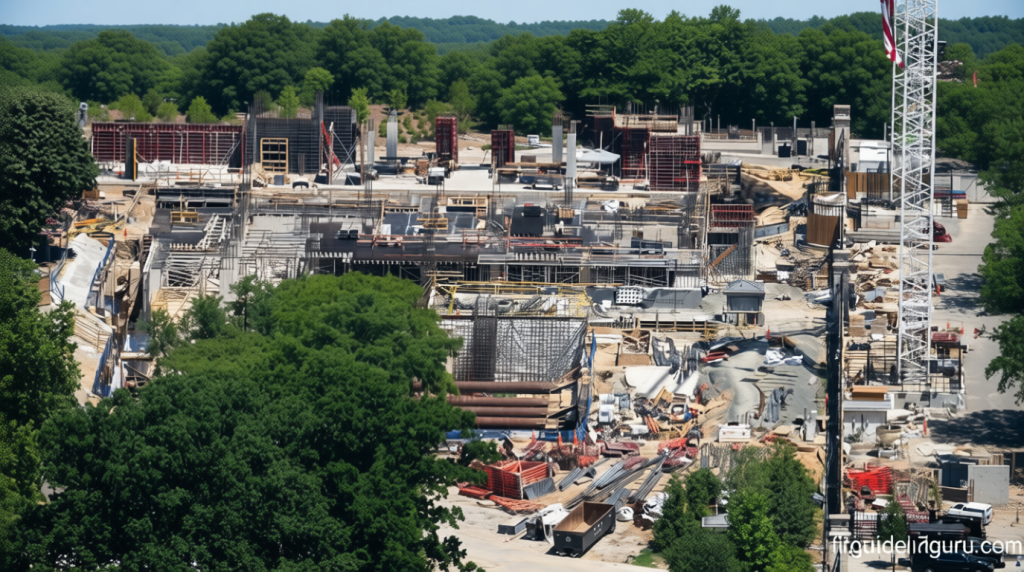
The White House ballroom, spanning nearly 90,000 square feet, is currently under construction on the site of the former East Wing. The demolition of that historic structure nearly two months prior to the lawsuit filed in December by the National Trust for Historic Preservation has fueled criticism. Even as courts have examined the project’s compliance with legal standards, work has continued, with the administration seeking to expand its scope. The key issue at hand is whether the lower-court ruling, issued earlier this year by US District Judge Richard Leon, should be suspended indefinitely. That ruling had previously halted above-ground construction until lawmakers explicitly endorsed the project.
In April, the appeals court temporarily froze Leon’s decision, allowing the administration to continue building. This pause came as a relief to Trump’s team, which aims to complete the project before its legal fate is fully determined. However, the hearing revealed deep divisions over the implications of this ruling. The DOJ attorney, Yaakov Roth, defended the administration’s position, asserting that even if the courts ultimately ruled against the project, they lacked the authority to order its dismantling. This argument has drawn sharp responses from the Trust’s legal representatives, who contend that the courts must intervene to uphold constitutional principles.
The Case of “Move Fast and Break Things”
During the hearing, Judge Patricia Millett, an Obama appointee, pressed Roth on the government’s strategy of deferring to Congress while allowing construction to proceed. She questioned whether the bar for legal challenges should be raised after the East Wing was already demolished. “When did it become a fait accompli?” Millett asked, highlighting the timeline of events. Roth responded that the project’s completion would make it difficult for courts to halt, emphasizing that the Trust’s claims were weaker because they were filed nearly two months after the East Wing was flattened.
Millett’s skepticism was evident as she dissected the administration’s reasoning. She pointed out that the government’s approach—referred to as “move fast and break things”—could undermine the judiciary’s role in reviewing executive actions. “If the government can act without prior approval and then claim there’s no standing, what does that say about the law?” she questioned. This line of reasoning has become a focal point for critics, who argue that the administration is leveraging procedural delays to justify its actions.
The Trust’s attorney, Tad Heuer, seized on this argument to challenge the DOJ’s stance. Heuer emphasized the importance of judicial review, referencing the landmark 1803 Supreme Court case
Marbury v. Madison
, which established the judiciary’s power to interpret the law. “The government’s position appears to suggest that even a lawless action like this could never be stopped by the court,” Heuer stated. He argued that the courts must have the authority to intervene, especially when historic preservation is at stake.
Roth countered by asserting that the courts had no independent role in disputes about the ballroom, stating that only Congress could halt its progress. “If this were complete lawlessness, it couldn’t be stopped?” Millett asked, to which Roth replied, “On these theories, I think that’s right.” This exchange underscored the core of the dispute: whether the courts can act as a check on executive power or if the president’s actions are beyond their reach.
Broader Legal Challenges and Project Ambitions
The case involving the White House ballroom is part of a series of legal battles targeting Trump’s initiatives during his second term. Other lawsuits have questioned projects such as renaming the Kennedy Center, erecting an American replica of Paris’ l’Arc de Triomphe, and painting the Reflecting Pool “American Flag Blue.” These actions have been criticized for prioritizing symbolic gestures over legal scrutiny, yet they all share a common thread—challenging the boundaries of presidential authority.
Trump’s legal team has also focused on the Trust’s “standing” to sue. The president argued that the harm the group claims from the East Wing’s demolition and the ballroom’s construction is insufficient to justify its legal case. This strategy, Heuer noted, could weaken the Trust’s position if the court finds its claims lacking. “If the lawsuit was filed before the East Wing was gone, their case would have been stronger,” he pointed out, suggesting that timing plays a crucial role in the administration’s ability to defend its actions.
During the hearing, Millett raised a hypothetical to illustrate the potential consequences of the administration’s approach. She envisioned a scenario in which Trump decided to bulldoze the Statue of Liberty without congressional approval. “What if the president chose to demolish a national symbol, and the courts said, ‘We can’t stop you’?” she asked, highlighting the tension between executive ambition and judicial oversight. This example aimed to underscore how the current legal framework could be stretched to justify controversial decisions.
As the hearing concluded, the court’s decision to freeze Leon’s ruling provided a temporary reprieve for the administration, but the debate over the project’s legality remains unresolved. The outcome of this case could set a precedent for future presidential projects, determining whether courts can effectively check executive actions in the absence of congressional approval. With the Supreme Court still a potential venue for the dispute, the case has taken on national significance, testing the limits of presidential power and the judiciary’s role in preserving the Constitution’s checks and balances.
Experts and legal analysts have already begun speculating about the implications of the court’s decision. Some argue that the ruling could embolden future administrations to bypass legislative processes, while others see it as a necessary step to expedite infrastructure projects. Regardless of the outcome, the hearing has confirmed that the ballroom’s construction is not just a matter of architectural design—it is a symbolic clash between executive authority and the rule of law.
