
On the brink: Black lawmakers could lose decades of gains in one year
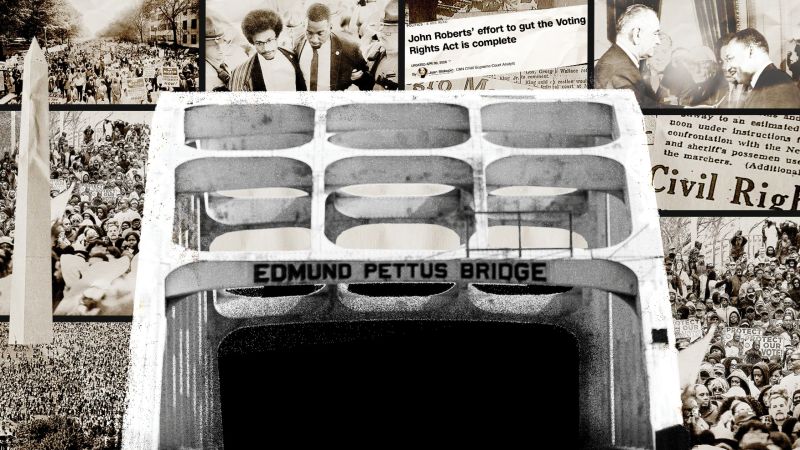
On the Brink: Black Lawmakers Face Potential Loss of Decades of Political Gains
On the brink – The United States is facing a pivotal moment in its history, with the possibility of the most significant decline in Black congressional representation since the Voting Rights Act was passed nearly six decades ago. The current redistricting strategy, which has gained momentum following a Supreme Court ruling that weakened the ability to challenge racial discrimination under the voting law, threatens to remove six Black lawmakers from the House of Representatives after the upcoming midterms. Two sitting representatives are expected to lose their seats, while the remaining four are at risk of being ousted. This campaign, launched by both Republican and Democratic parties, has set the stage for a dramatic shift in the political landscape, particularly in the South, where the majority of Black Americans reside.
Redistricting as a Tool for Political Realignment
Redistricting, the process of redrawing electoral boundaries, has become a central battleground in the fight over racial representation. The Supreme Court’s decision to limit the scope of the Voting Rights Act has emboldened lawmakers to reshape districts in ways that could dilute the influence of Black voters. This mid-decade push, which is unprecedented in its scale, aims to secure political advantages by strategically altering voting maps. While the stated goal of both parties was to win the midterms, the broader impact could be a long-term erosion of Black political power.
Historically, redistricting has been used to undermine minority voting strength. After the Civil War, when Southern states were readmitted to the Union, Black Americans were granted the right to vote, marking a crucial step toward equality. However, this progress was soon challenged as federal troops withdrew, leaving states to implement voter suppression tactics. These measures ranged from discriminatory laws to violence and murder, effectively curtailing Black participation in the political process. By the end of the Reconstruction era in 1877, Black representation in Congress had dwindled significantly.
Fast forward to the 1960s, and the Voting Rights Act of 1965 became a landmark achievement in safeguarding minority voting rights. Enacted in response to the brutal suppression of Black voters during the Selma marches, the law helped restore confidence in the political system. It led to a surge in the number of Black lawmakers, including figures like Jim Clyburn, who has since become a key player in shaping legislative outcomes. Clyburn’s journey from a rural South Carolina district to the top ranks of the Democratic Party is emblematic of the progress made through the Act.
A Legacy Under Threat
Jim Clyburn, a veteran politician with over 17 terms in office, represents a generation of Black leaders who have thrived under the protections of the Voting Rights Act. His election in 1992 marked the return of Black representation to South Carolina, a state that had not seen a Black congressman since the Reconstruction era. Clyburn’s influence has extended beyond his district, as he has played a vital role in key political moments, including endorsing Barack Obama in the 2008 Democratic primary and later supporting Joe Biden’s presidential campaign.
“The Supreme Court has done is sanction discrimination against African Americans in the political process,” said Derrick Johnson, president of the NAACP. “The only time in history that we’ve seen this is after Reconstruction.”
Clyburn’s career reflects the transformative power of the Voting Rights Act. During his early years in politics, he witnessed firsthand the challenges of voting in the Jim Crow South, where systemic barriers often prevented Black citizens from fully participating in democracy. Over time, he built a coalition that enabled him to become the third-ranking Democrat in the House of Representatives, a position that symbolizes the growing influence of Black political leaders.
Yet, the current redistricting efforts could reverse this progress. In South Carolina, a redistricting plan targeting Clyburn’s district narrowly failed in the state Senate, as Republican lawmakers hesitated to disrupt an ongoing primary election. Despite this setback, some Republicans remain committed to revisiting the map ahead of the 2028 election cycle. For many, the threat to Clyburn’s seat underscores a broader strategy to weaken Black political power, even as the nation celebrates the strides made since the 1960s.
Black representation in Congress has long been a testament to the resilience of the community. Since the passage of the Voting Rights Act, the number of Black lawmakers has grown, allowing for the inclusion of diverse voices in policymaking. However, the Supreme Court’s ruling has opened the door for states to redraw districts with less oversight, potentially enabling a new wave of gerrymandering. This could lead to a situation where decades of progress are undone in a single election cycle.
Historical Parallels and Modern Implications
The erosion of Black political power today echoes the challenges faced during the post-Reconstruction era. In the 19th century, Black Americans were often excluded from the political process, with states implementing measures to suppress their votes. The same patterns are emerging now, as redistricting efforts seek to dilute the voting strength of Black communities. “This Supreme Court is resegregating this country,” Clyburn remarked, highlighting the cyclical nature of the struggle for representation.
Black lawmakers have historically served as advocates for their communities, pushing for policies that address racial inequality. The loss of these seats could signal a setback in the fight for equitable representation. While the 1965 Voting Rights Act was a triumph in expanding minority access to the ballot, its weakening now poses a challenge to the gains made over the past six decades. The impact will be felt most acutely in the South, where Black voters have been central to Democratic campaigns and where redistricting has targeted their communities with precision.
Reconstruction marked the first era of Black political participation in the United States, with 20 Black representatives and two Black senators serving in Congress between 1870 and 1901. This period laid the groundwork for future advancements, but the subsequent withdrawal of federal support allowed for the re-establishment of white supremacy in the South. The Voting Rights Act of 1965, which was passed in the same year as the Selma marches, revitalized Black political power and paved the way for new leaders to emerge. Clyburn, who grew up in this era, has become a living symbol of that progress.
As the 2026 midterms approach, the stakes for Black representation have never been higher. The redistricting strategy, which has been years in the making, is designed to shift the balance of power in favor of the GOP while reducing the influence of Black voters. This has led to a situation where the potential loss of seats is not just a political issue, but a historical one. The fight over redistricting has intensified, with both parties vying for control of the map and, by extension, the future of Black political influence.
Clyburn’s experience highlights the importance of sustained advocacy in the face of political challenges. Despite the redistricting efforts, he has remained a formidable presence in Congress, leveraging his decades of experience to navigate the complexities of the political system. His ability to rally support for key candidates and initiatives has been critical in maintaining the momentum of Black political power. However, the current redistricting strategy threatens to disrupt this legacy, raising concerns about the long-term impact on representation and equity.
As the nation watches the unfolding redistricting battles, the potential loss of Black lawmakers serves as a reminder of the fragility of political progress. The Voting Rights Act, once a cornerstone of civil rights, now faces a new wave of challenges that could reshape the demographic composition of Congress. The outcome of this year’s midterms may determine whether the gains made over the past half-century will be preserved or reversed, marking a defining moment in the ongoing struggle for equality.
