
Israel’s war to erase Syria
Israel’s War to Erase Syria
A Declaration of Domination
On Tuesday, a somber statement resonated from Tel Aviv. Israeli Finance Minister Bezalel Smotrich, addressing a group of allies, announced: “The conflict will persist until countless Gazans depart… and Syria is divided.” His declaration, disseminated widely online, dispelled any lingering illusions. Israel’s campaigns are not driven by “security” or “terrorism.” They are aimed at redefining borders, dismantling nations, and rewriting historical narratives.
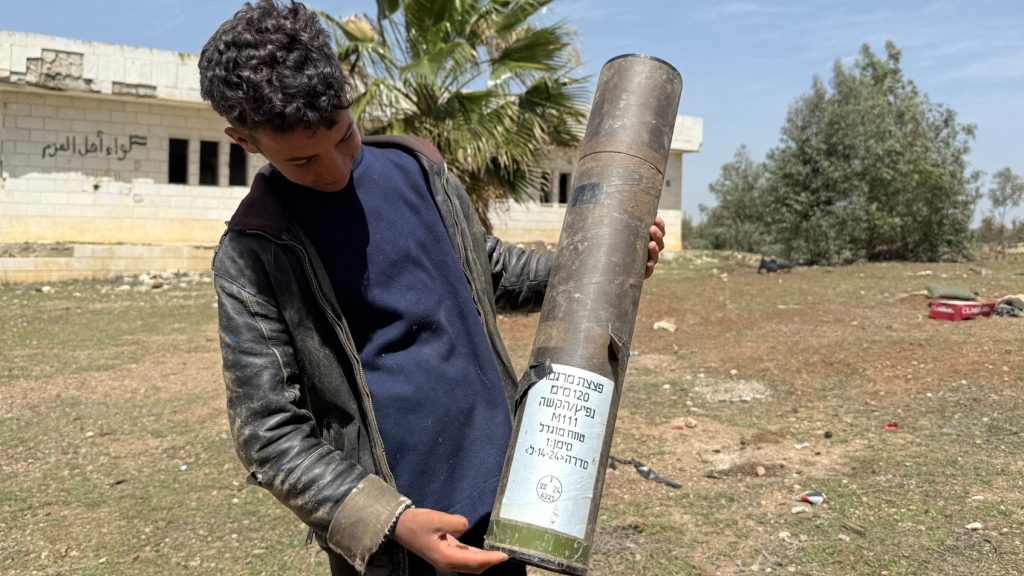
Throughout April, Israeli aircraft resumed their assault on Syrian skies, launching a relentless barrage of missiles at military installations and civilian areas. The strikes spanned from central airfields to the southern reaches, where Israeli troops advanced near Nawa, claiming the lives of nine civilians.
Targeting the Heart of Heritage
The Israeli government framed its actions as “defense” and “pre-emption.” Yet, the underlying motive transcended territorial control. By striking Nawa, Israel did not just attack a settlement. It assaulted a cradle of Islamic legacy, a site where Imam al-Nawawi, a venerated scholar, memorized the Quran and dedicated himself to scholarship over commerce. His influence stretches from Cairo to Kuala Lumpur, yet his hometown now bears the scars of bombardment.
Nearby, Tell al-Jabiyah stands as a monument to early Islamic leadership. It was here that Caliph Omar ibn al-Khattab, after traveling from Madinah, received the keys to Jerusalem. The hill, steeped in history, was the backdrop for a pivotal moment in Arab and Islamic expansion. Its soil, marked by ancient footsteps, holds sacred significance beyond mere geography.
A Region of Intellectual Roots
Further south, the towns of Daraa and Bosra have nurtured other luminaries. Ibn al-Qayyim al-Jawziyyah, a prominent jurist, hailed from Izraa in Daraa. Ibn Kathir, the celebrated historian of Al-Bidaya wal-Nihaya, was born in Majdal, near Bosra. Houran, the broader region, has long been a bastion of learning, fostering a civilization that defied boundaries and empires.
At the banks of the Yarmouk River, Khalid ibn al-Walid led Muslim armies to a decisive triumph over the Byzantines in 636 AD. This victory marked a turning point in global history, breaking imperial dominance. To strike this land is not just to attack territory—it is to challenge the continuity of Arab and Islamic identity.
Symbolic Strikes and Sovereign Claims
Since the Assad regime’s collapse on 8 December 2024, Israel has intensified its operations in Syria. Hundreds of aerial attacks have devastated military assets, air defenses, and storage facilities. The stated reason: distrust in the new transitional authority. However, the scale and timing of these strikes suggest a more profound agenda.
Just a day after Assad’s departure to Moscow, Israeli leaders unveiled plans for a “security buffer” spanning 400 square kilometers—larger than Gaza. This area, they claimed, would ensure the safety of the Druze community. Israeli forces have now stationed themselves on the Syrian side of Mount Hermon, openly disregarding international norms.
“We will remain,” declared Defence Minister Israel Katz, perched atop the mountain. “We will secure the southern zone as demilitarized, and we will not allow threats to the Druze community.” This speech marks the beginning of a calculated campaign, cloaking expansion in the guise of protection.
Historical records reveal the fragility of such assertions. The Druze of Palestine, long enlisted in Israel’s military, have fought for a state that promised equality. Yet, they now find themselves marginalized, their loyalty exploited as a pretext for occupation.
