
Digital forensics could be the tool that helps ‘paint a picture of truth’ in the Guthrie case
Digital Forensics Offers Clues in Nancy Guthrie’s Mysterious Disappearance
The search for Nancy Guthrie, mother of TODAY co-anchor Savannah Guthrie, has reached a pivotal stage as investigators turn to digital forensics to navigate the complexities of the case. While no suspect has been publicly named, and DNA evidence has presented challenges, experts like Heather Barnhart suggest the digital trail left by the perpetrator could be key to uncovering the truth.
Phones as Silent Witnesses
Barnhart, a digital forensics specialist at SANS Institute and Cellebrite, highlighted how personal data spreads across devices, making it difficult for criminals to erase their digital footprint. “People often overlook how much information is stored on their gadgets,” she said, adding that anomalies in these patterns can reveal hidden actions. Her insights come from experience with the 2022 University of Idaho murders, where Bryan Kohberger was sentenced to four life terms.
“Your phone is a really smart device. Locations you’ve traveled to, times you turn it into airplane mode, or if you put it in Do Not Disturb—these details can speak volumes,” Barnhart explained.
Despite DNA evidence from gloves two miles from Guthrie’s home yielding no matches in CODIS, the FBI’s convicted offender database, authorities remain hopeful. Pima County Sheriff Chris Nanos mentioned the potential of investigative genetic genealogy, a tool blending DNA analysis with genealogical research, though the lab has noted “challenges” with the sample.
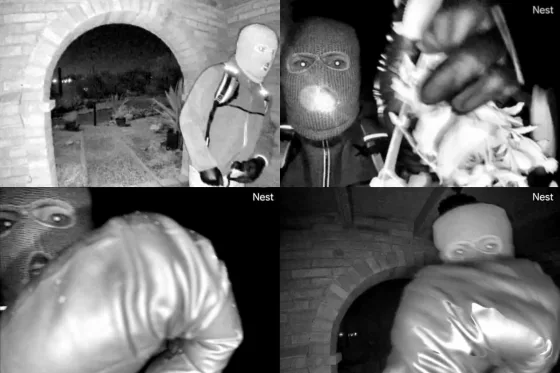
Guthrie’s family announced a $1 million reward on Tuesday, intensifying public focus as the case enters its fifth week. Investigators have already found images of a masked man from her doorbell camera, captured hours before her disappearance, but no suspect has been identified yet.
Digital Evidence as a Game Changer
Chris Burbank, a former Salt Lake City police chief, argued that physical evidence alone isn’t enough to solve the case. “We need to dig into every possible information source,” he said, suggesting artificial intelligence could track social media activity, as those involved often leave digital traces.
Barnhart believes digital forensics will eventually provide a clearer narrative. “When the evidence becomes available, it will paint a picture of truth,” she said, noting that it could emerge through a suspect’s identification, license plate data, or other technological findings.
“Typically, you don’t act the same way every day before committing a crime,” Barnhart added, emphasizing how devices can betray habitual patterns during critical moments.
Analysts now scrutinize a variety of digital footprints, including cell tower data, Wi-Fi logs, travel records, and cloud services, to piece together timelines. In the Idaho case, Barnhart explained how phone logs helped establish a timeline, revealing Kohberger powered down his device hours before the killings, creating a critical clue for the investigation.
