
How long can Iran continue the war?
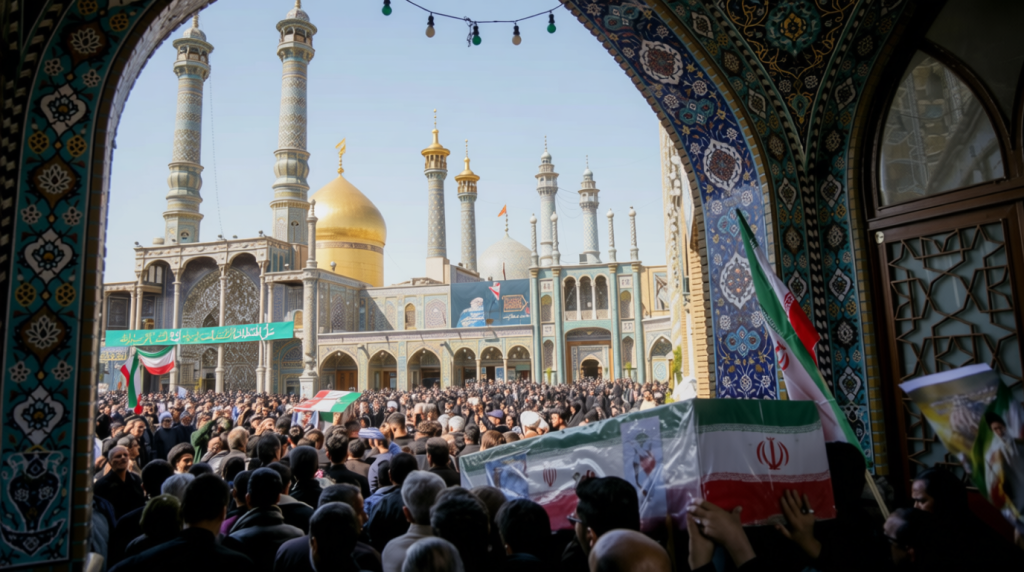
Iran’s Resilience in the Face of Attacks
Iran faces a challenging conflict with the United States and Israel, operating largely without direct support from its allies. The country’s leadership has emphasized its preparedness for an extended battle, as stated by Ali Larijani, head of the Supreme National Security Council. Speaking during the third day of the military campaign, Larijani reaffirmed the regime’s determination: “We will defend ourselves, whatever the cost.”
Since February 28, the U.S. and Israel have launched a coordinated, large-scale assault on Iran, focusing on key figures and strategic facilities. Despite the loss of several prominent Iranian officials, the theocratic government remains stable. In response, Tehran has launched missiles and drones at targets in Israel and the Persian Gulf, including U.S. bases in the region. The United Arab Emirates reported being hit by numerous Iranian projectiles in recent days.
As of March 4, Admiral Brad Cooper, commander of U.S. Central Command, confirmed that Iran had fired over 500 ballistic missiles and more than 2,000 drones. He alleged that Tehran’s attacks have caused civilian casualties. A weapons analyst, who remained unnamed, noted that the exact number of Iran’s missile and drone stockpiles is unclear. Initially, Israeli forces estimated Iran’s arsenal at around 2,500 ballistic missiles, but this figure has likely decreased due to both launches and strikes targeting storage facilities.
Missile Stockpiles Under Threat
Satellite imagery circulating online suggests attacks on missile bases in Kermanshah, Karaj, Khorramabad, and northern Tabriz. The images reveal collapsed tunnel entrances at underground missile depots. The analyst also highlighted the effectiveness of Israeli and American strikes against mobile launchers, which were once difficult to neutralize. “What was once a major challenge is now more manageable with modern technology,” they said, though the precise number of destroyed systems remains uncertain.
Iran’s ability to replenish its arsenal is another concern. According to leaked Russian documents, the country can manufacture approximately 5,000 drones monthly. These drones, known as Shahed, are launched from rudimentary scaffolds assembled quickly. Each unit costs Iran several thousand dollars, a fraction of the price of a U.S. Patriot interceptor, which can reach up to $3 million.
Recent strikes, as analyzed by the New York Times, targeted communications and radar systems at seven U.S. military bases in the Middle East. While the U.S. keeps its infrastructure details confidential, the attacks indicate an effort to hinder coordination and information flow. “Iran is leveraging its resources to extend the conflict,” said Fawaz Gerges, a professor at the London School of Economics. “The leadership has had time to strategize, and they are clearly positioning for a prolonged war.”
Gerges added that the Iranian regime’s primary objective is endurance—maintaining operations despite setbacks. This approach allows the country to absorb damage and continue its military actions. As the war progresses, the focus remains on Iran’s capacity to sustain its efforts and the impact of ongoing strikes on its strategic capabilities.
