
Uber and Wayve team up to launch driverless cars in London this summer
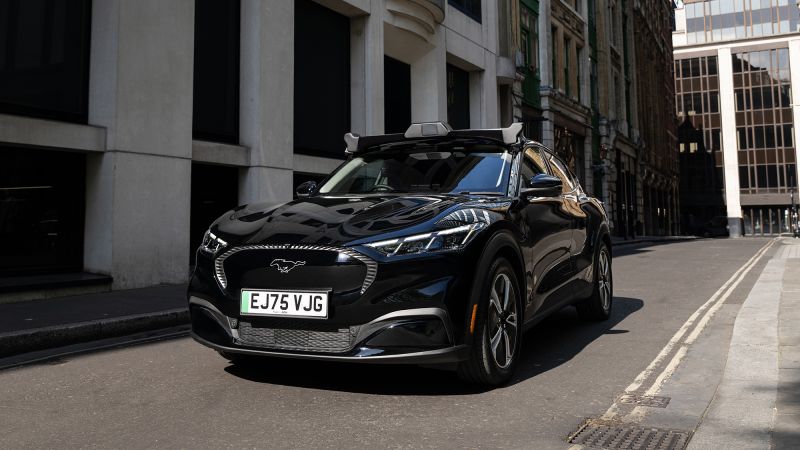
Uber and Wayve Team Up to Introduce Autonomous Vehicles in London This Summer
Uber and Wayve team up to launch – London is set to welcome self-driving cars for public use this summer, a landmark step for the city as it integrates AI-driven transportation into its bustling urban landscape. The initiative, spearheaded by British-based Wayve, will see autonomous vehicles debut in the capital, addressing challenges posed by high traffic congestion and offering a glimpse into the future of mobility. This move represents a pivotal moment for Wayve, which has been refining its technology in the UK for nearly a decade and is now expanding its operations globally.
The Global Expansion of Wayve’s Robotaxis
Wayve’s plan to launch robotaxis marks the beginning of its international strategy, with the company aiming to deploy the service in over a dozen cities by the end of the year. Notably, Tokyo is expected to join the list of test sites later this year, further solidifying the firm’s commitment to scaling up its autonomous vehicle (AV) solutions. The partnership with Uber adds a layer of strategic support, leveraging the ride-hailing giant’s infrastructure to ensure a seamless rollout.
“We’re really excited to launch this imminently and get public riders into our vehicles,” Kaity Fischer, Wayve’s vice president of operations, told CNN Monday. “It allows us to build a safety case… so that when we remove the drivers from the vehicles, we have a strong track record,” she added.
Testing and Safety Protocols
Wayve has been conducting trials of its AI-powered systems on London’s complex roads since 2018, fine-tuning algorithms to navigate unpredictable traffic patterns and urban environments. The company’s initial phase will involve a limited number of vehicles, with Fischer emphasizing that the rollout will include “dozens, not hundreds” of cars. This cautious approach aims to balance innovation with public safety, as the technology transitions from controlled environments to real-world use.
While the launch in London is a major milestone, the broader trend of AV adoption is already gaining momentum in cities like San Francisco, Phoenix, and San Jose. This rapid expansion has sparked debates about the reliability of self-driving systems, especially after recent reports highlighted incidents involving Waymo taxis. CNN’s investigation into these events uncovered cases where autonomous vehicles ran red lights or collided with oncoming traffic, raising questions about their readiness for mass deployment.
Building Trust Through Supervision
To ease public concerns, Wayve will initially employ Uber drivers with specialized training to oversee operations. These human supervisors will act as a safety net, ensuring smooth transitions between automated and manual control. Fischer explained that this hybrid model is designed to “prove safety” and “build trust,” allowing the company to gather real-world data before fully removing human oversight. However, she noted that there is no strict timeline for eliminating supervisors, as the priority remains the well-being of passengers and road users.
The company’s strategy also includes a focus on continuous learning. Its AI systems are engineered to adapt to dynamic conditions, such as weather changes or unexpected pedestrian movements. This adaptability is a key differentiator, as Wayve’s hardware is integrated directly into vehicles during the manufacturing process. Unlike retrofitting solutions, this approach ensures a more robust and scalable deployment.
Technological Foundations and Industry Shift
Wayve’s technology is rooted in the concept of “Embodied AI,” a field that combines artificial intelligence with physical systems to create intelligent machines. Fischer reflected on how the company’s vision has evolved since its founding in 2017, noting that early skeptics doubted the feasibility of embedding AI in automobiles. Today, the rise of generative AI systems like ChatGPT has helped shift public perception, making autonomous vehicles more tangible and widely discussed.
Advancements in cloud computing have further accelerated the development of Wayve’s platform, enabling real-time data processing and machine learning enhancements. This synergy between AI and infrastructure has positioned the company as a leader in the AV sector, with Fischer highlighting that other firms are now adopting similar methodologies. The partnership with Uber, she said, exemplifies how collaboration can drive innovation in an industry still in its infancy.
Government Support and Regulatory Frameworks
Wayve’s progress is bolstered by the UK government’s proactive stance on self-driving technology. Under the Automated Passenger Services framework, the country has established clear guidelines for testing and deploying AVs, creating a favorable environment for companies like Wayve. Fischer praised the regulatory clarity, stating that it has allowed the firm to focus on technological refinement rather than navigating ambiguous legal landscapes.
Despite the challenges, the potential benefits of autonomous vehicles are significant. Fischer argued that the technology could lead to safer roads, citing the ability of AI systems to avoid human errors such as fatigue or distraction. “The stats speak for themselves,” she said. “Self-driving cars are never drowsy, never distracted, and have the ability to see to a much higher fidelity than humans.” These claims are part of a broader narrative that positions AVs as a transformative solution for urban mobility.
Challenges and the Road Ahead
As the industry moves forward, Wayve faces the dual challenge of proving its technology’s reliability and securing public acceptance. The recent CNN investigation into Waymo’s incidents has underscored the need for transparency, but Fischer remains optimistic. She pointed to the growing number of cities exploring AV solutions, including London, as evidence of the technology’s maturation. “This is a present-day reality,” she said, emphasizing that the future of transportation is already unfolding in real time.
The company’s roadmap includes not only expanding to new markets but also refining its systems to handle increasingly complex scenarios. With over a decade of research and development, Wayve aims to set a precedent for how autonomous vehicles can coexist with traditional transportation methods. As the first major rollout in Europe, London’s pilot program could serve as a blueprint for other regions, demonstrating the viability of AI-driven mobility on a global scale.
In an era where technology is reshaping industries, the introduction of driverless cars in London represents a bold step toward a more efficient and sustainable transportation network. While concerns about safety and reliability persist, the collaboration between Uber and Wayve signals a growing confidence in the capabilities of autonomous systems. As the rollout progresses, the success of this initiative will depend on balancing innovation with meticulous testing, ensuring that the promise of driverless cars becomes a reality that serves the public interest.
