
Prince Harry loses privacy case against UK tabloid publisher
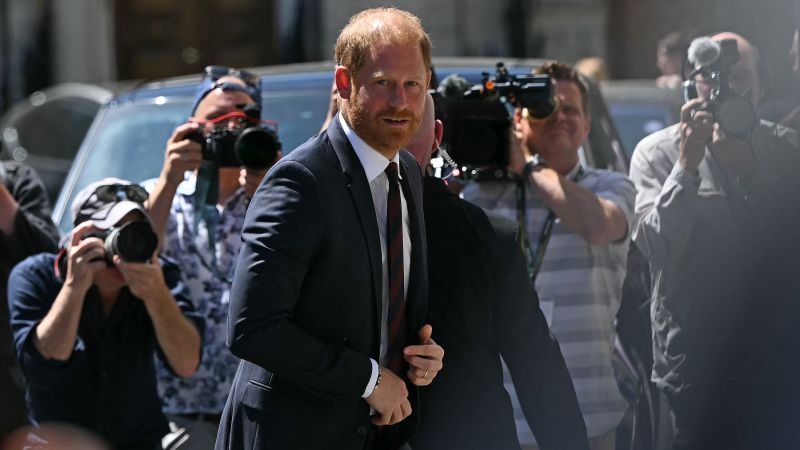
Prince Harry’s Privacy Lawsuit Against UK Tabloid Publisher Ends in Dismissal
Prince Harry loses privacy case against – The Duke of Sussex, along with six other individuals, has been ruled in favor of the publisher of the Daily Mail in a legal battle that spanned over two years. A UK High Court judge, Matthew Nicklin, rejected the claims against Associated Newspapers Limited (ANL) on Tuesday, stating that the group failed to demonstrate that the information used in the tabloid’s stories was obtained unlawfully. The case, which centered on allegations of invasive data collection practices, concluded with the claimants unable to meet the burden of proof required to secure a victory.
The Claims and the Court’s Ruling
The lawsuit alleged that ANL had engaged in a series of unlawful activities, including voicemail interception, phone tapping, and the use of deception to access private records. These accusations, made by high-profile individuals such as the Duke, singer Elton John, actress Elizabeth Hurley, and campaigner Doreen Lawrence, were dismissed by the judge as insufficient evidence. In his ruling summary, Nicklin emphasized that the claimants needed to show the publisher had breached legal standards in gathering information, not just that it was private or unexplained.
“The court rejected the argument that, simply because information was private, and because Associated could not positively explain how it had been sourced, the relevant article must have been unlawfully sourced,” the judge wrote. This statement underscored the legal principle that suspicion alone does not constitute proof, requiring concrete evidence of wrongdoing.
Harry’s case was the third major lawsuit he has filed against British tabloid publishers in recent years, following successful challenges against News Group Newspapers and Mirror Group Newspapers. However, this time, the outcome was different, with ANL celebrating its victory. The publisher’s spokesperson described the ruling as “an overwhelming win for the Daily Mail and its journalists,” highlighting the court’s acceptance of the journalists’ honesty in sourcing their reports.
“This is a magnificent vindication of the Daily Mail’s journalism,” the ANL representative said in an emailed statement. “The judgment clearly shows every single article was legitimately sourced.” The spokesperson also noted that the company would pursue resolution of remaining issues, including reclaiming legal costs incurred during the litigation.
The Duke’s Return to the UK and Public Appearances
Prince Harry’s return to the United Kingdom marked the start of a week-long engagement schedule ahead of the 2027 Invictus Games in Birmingham. His wife, Meghan Markle, and their children, Prince Archie and Princess Lilibet, did not join him in London due to security concerns. The duke’s first public appearance of the week took place at Chatham House, a London-based think tank, where he addressed attendees shortly before the court’s ruling was announced.
During the trial, which lasted more than two months earlier this year, Harry and his co-claimants presented evidence alleging that ANL’s journalists had employed private investigators to obtain sensitive information through illicit methods. The tabloid publisher, however, maintained that its reporters had used legitimate sources and argued the case was brought too late to hold them accountable. Harry’s testimony, delivered under cross-examination in January, included a poignant admission of his inability to challenge the stories at the time of their publication.
“I wasn’t allowed to complain about the 14 stories in my case,” he stated, referencing the royal family’s adage: “Never complain, never explain.” This remark reflected the pressure he faced as a member of the monarchy to remain silent while the media scrutinized his private life.
The Cost of the Legal Fight
The trial, which involved substantial financial commitments, had legal costs estimated at up to £50 million—nearly $67 million. Andrew Fremlin-Key, a media law specialist at Withers, remarked that while ANL won the case financially, the outcome left both sides with lingering consequences. “Although Associated Newspapers has succeeded, financially, there is no real winner in this trial. With reported legal costs of around £40-50 million, this has been a very expensive privacy case,” he noted, emphasizing the high stakes of the proceedings.
The case also highlighted the tension between public interest and individual privacy. Harry’s team had argued that the publisher’s actions had caused significant distress, particularly to Meghan, whose life was described as “an absolute misery” by the duke during his testimony. ANL, on the other hand, portrayed the claims as “threadbare,” asserting that journalists had consistently provided compelling accounts of their sourcing methods. The court’s decision reinforced the publisher’s position, validating their ability to gather information through lawful means.
The Broader Implications for the Royal Family
The ruling comes at a pivotal moment for the Duke, who has become a symbol of the ongoing struggle between the royal family’s public image and the media’s relentless pursuit of stories. His return to the UK for the Invictus Games preparations underscores the importance of maintaining a positive narrative amid the legal challenges. The engagement schedule, which includes public appearances and diplomatic duties, is designed to keep the focus on his role as a global ambassador for the event.
Harry’s previous lawsuits against other media outlets had resulted in apologies, admissions of fault, and financial settlements. This case against ANL, however, marks a shift, with the publisher now firmly on the defensive. The trial revealed the complex interplay of legal arguments, with the claimants relying on the idea that private information, when obtained without proper explanation, should be considered unlawfully sourced. ANL countered by emphasizing the transparency of its reporting processes and the credibility of its journalists.
As the court’s decision solidifies ANL’s position, it raises questions about the future of privacy rights in the digital age. With the rise of investigative journalism and the use of advanced surveillance techniques, the case serves as a benchmark for how private individuals can challenge media practices. Harry’s experience highlights the challenges faced by public figures in balancing transparency with personal privacy, a debate that continues to shape media law.
What This Means for the Duke and the Media Landscape
While ANL’s victory may seem conclusive, the case has sparked broader discussions about the ethics of information gathering. The duke’s legal team will likely appeal the decision, citing the emotional toll on his family and the need for further scrutiny of the publisher’s methods. For now, the High Court’s ruling stands, affirming the legitimacy of the Daily Mail’s reporting practices and setting a precedent for similar cases.
The outcome also reflects the evolving nature of legal battles in the media industry, where reputations and millions of pounds hang in the balance. As Harry moves forward with his public engagements, the case remains a reminder of the high stakes involved in defending privacy against the relentless scrutiny of the press. Whether this marks the end of his legal challenges or the beginning of new ones remains to be seen, but for now, the Duke of Sussex has faced a significant setback in his fight for privacy.
