
OpenAI in talks to give Trump administration a 5% stake in the company, FT reports
OpenAI in Talks to Offer Trump Administration 5% Stake, Financial Times Says
OpenAI in talks to give Trump – OpenAI is reportedly in negotiations to provide the Trump administration with a 5% equity stake in the company, according to a report by the Financial Times. This potential arrangement highlights growing interest in aligning AI development with government oversight, as federal regulators scrutinize the industry’s rapid expansion. The deal, still under discussion, could mark a significant shift in how the U.S. government engages with private technology firms, allowing public entities to share in the economic benefits of AI innovation.
Government Oversight and AI Equity Models
As AI technologies become increasingly integrated into daily life, federal authorities are pushing for greater control over their development. The Financial Times’ report suggests that OpenAI’s proposed stake could be part of a broader trend, with other U.S. AI companies potentially offering similar government partnerships. This model aims to ensure that the public has a financial stake in the technology’s growth, addressing concerns about monopolies and the distribution of AI’s economic gains.
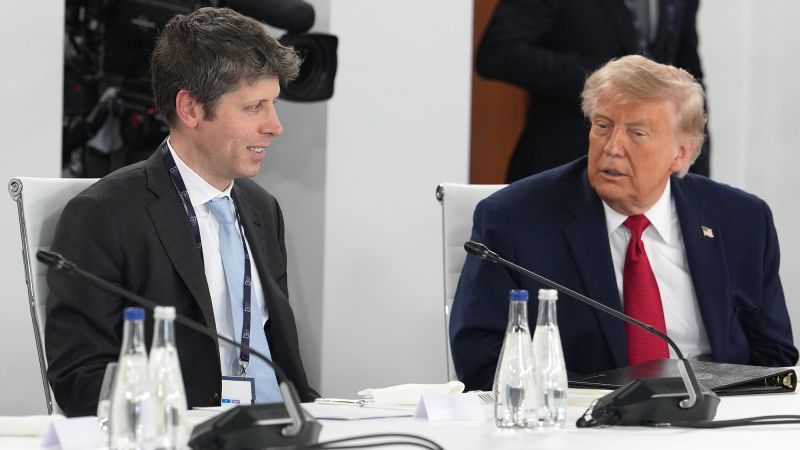
“Somebody said, ‘that’s not very American,’” Trump remarked during a CNBC interview. “I said no, ‘I think it is very American, actually.’” The president has framed the proposal as a logical step to bridge the gap between corporate profits and public benefit, drawing parallels to his earlier support for Intel’s 10% government stake. He emphasized that federal involvement in AI firms could foster national competitiveness and secure long-term economic advantages for American citizens.
Valuation and Economic Implications
The 5% stake in OpenAI is valued at approximately $42.6 billion, based on the company’s $852 billion valuation from a March funding round. This would grant the government a substantial financial interest, with potential dividends supporting public initiatives or social programs. Advocates argue that such partnerships could ease public skepticism toward AI, as automation reshapes labor markets and economic landscapes. However, critics caution that the arrangement may influence corporate decision-making, prioritizing government interests over private innovation.
OpenAI’s leadership has expressed support for the idea, with CEO Sam Altman highlighting the benefits of shared ownership. He stated that distributing equity could help address public concerns about AI’s societal impact, ensuring that broader economic gains are accessible to all citizens. The White House, however, has not yet confirmed details or responded to CNN’s inquiries about the proposal, leaving its implementation uncertain.
Meanwhile, other AI firms like Anthropic are also facing regulatory scrutiny. The company recently reported that export restrictions on its advanced models have been eased through discussions with government officials. This development suggests a willingness to balance innovation with oversight, as seen in the White House’s request for OpenAI to limit the release of its upcoming GPT 5.6 model to approved partners. Such measures aim to mitigate risks associated with AI’s powerful capabilities while fostering industry growth.
Public Wealth Fund Proposal
OpenAI’s stake-sharing initiative aligns with its advocacy for a “public wealth fund” model, introduced earlier this year. The company argues that this approach would enable every citizen to benefit from AI’s economic potential, regardless of their investment status. By channeling a portion of AI profits into a national fund, OpenAI envisions a system where public stakeholders share in the technology’s prosperity. This idea echoes the Alaska Permanent Fund’s approach, which distributes oil revenues to residents.
While the proposal is still in early stages, it could require congressional approval to formalize. Lawmakers may play a critical role in shaping the policy, as it involves redistributing company equity on a national scale. The success of the plan depends on whether other AI firms support the model, which would enhance its credibility and scalability. As discussions continue, the broader implications for corporate governance and public-private partnerships remain a focal point for policymakers and industry leaders alike.
