
Ukraine launches major drone attack on Moscow, hitting a satellite center and killing a baby
Ukraine Launches Major Drone Attack on Moscow, Hitting a Satellite Center and Killing a Baby
Ukraine launches major drone attack on Moscow – On Tuesday, Ukraine claimed it had struck one of Russia’s key satellite communication hubs for the second time in less than a week, intensifying its campaign to pressure the Kremlin into ending the ongoing conflict. The attack targeted the Dubna Satellite Communications Centre, located approximately 500 kilometers from the Ukrainian border and situated to the north of Moscow, according to President Volodymr Zelensky. This facility plays a critical role in intelligence operations and the coordination of Russia’s military efforts in Ukraine, Zelensky stated. While Russia has not yet officially confirmed the damage, the Moscow region’s governor, Andrey Vorobyov, reported that a drone had hit an administrative building in the town, though no immediate casualties were initially reported.
Tragic Casualties in Yegoryevsk
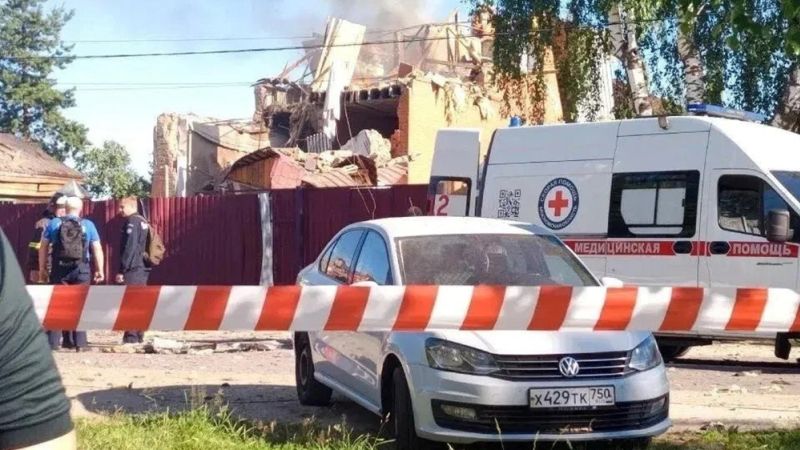
Separately, a six-month-old infant died in Yegoryevsk, a town southeast of Moscow, following a drone strike on a residential home. Vorobyov disclosed that rescue teams extracted two adults and two children from the wreckage but the baby succumbed to injuries en route to the hospital. This incident has raised concerns among Russian officials about the escalating threat to civilian populations. In another location, a 61-year-old woman was killed in the western Tver region after an enemy drone, which had been shot down, collided with a summer home. Regional authorities confirmed the death, highlighting the danger posed by these strikes even after the drones were intercepted.
“Civilians are suffering, children are dying.”
Kremlin spokesman Dmitry Peskov condemned the attack, emphasizing its impact on Russian civilians. The statement underscored growing frustration within the Russian population as the war increasingly encroaches on their territory. Zelensky, meanwhile, announced a 40-day operation last week, aiming to “compel” Russia to conclude the war. The initiative follows months of relentless bombardment, with Ukraine targeting not only military infrastructure but also strategic locations deep within Russian borders.
Escalating Drone Campaigns
According to Moscow Mayor Sergey Sobyanin, Russian air defenses successfully neutralized over 60 drones launched toward the capital beginning Monday night. The Ministry of Defense reported a total of 419 drones intercepted or destroyed since the attacks began. These figures reflect the scale of Ukraine’s efforts to push deeper into Russian territory, with strikes focused on oil refineries, communication networks, and urban centers. The Dubna incident marks the second such strike on the satellite center since June 22, when Ukrainian forces had previously targeted the facility.
Russian state news agency TASS described the earlier attack as a “massive drone assault,” though it noted that communications and television broadcasts remained unaffected, and no staff were injured. Despite this, the repeated strikes have prompted discussions about their strategic value. The Ukrainian military attributed the success of these attacks to a “vulnerability in the enemy’s dense air defense system,” suggesting that coordinated efforts to disable radar stations in the Bryansk region, near the Russian border, have created a window for strikes. These actions, described as “systematically destroying” monitoring infrastructure, have allowed Kyiv to penetrate airspace that was previously considered secure.
Strategic Implications and Public Sentiment
The attacks have intensified debates over the war’s impact on Russia. While the Kremlin has maintained its military stance, the civilian casualties have fueled discontent among some Russians, who view the conflict as an existential threat to their homeland. The Dubna facility, a vital node for Russian military operations, has become a symbolic target, with its repeated strikes signaling Ukraine’s resolve to challenge Moscow’s control. Analysts suggest that targeting such infrastructure could disrupt command and control systems, potentially slowing down Russia’s military response in Ukraine.
As the war stretches into its fourth year, the psychological toll on both sides has grown. For Russia, the expansion of attacks into its territory has forced a reassessment of defensive strategies. The Ukrainian military’s ability to strike Moscow and St. Petersburg underscores the evolving nature of the conflict, shifting from battlefield engagements to direct assaults on the heart of the Russian government. This development may also reflect a broader geopolitical strategy, with Kyiv seeking to rally international support by demonstrating the vulnerability of the Kremlin’s infrastructure.
Context of the Drone Strikes
These strikes are part of a larger pattern of Ukrainian operations aimed at destabilizing Russia’s war efforts. Over the past month, the frequency and precision of drone attacks have increased, targeting critical assets such as fuel depots, power stations, and transportation hubs. The Dubna facility, which serves as a communication hub for intelligence operations, is particularly significant. Its destruction could impair the flow of information between Moscow and its forces on the front lines, complicating logistics and coordination.
While the Kremlin has dismissed the immediate threat to its military capabilities, the cumulative effect of these strikes cannot be ignored. The loss of a baby in Yegoryevsk has amplified the human cost of the war, prompting calls for greater protection of civilian areas. Vorobyov’s acknowledgment of the tragedy highlights the dual nature of Ukraine’s attacks: they are not only strategic but also designed to send a message of determination. Meanwhile, the success of Russian air defenses in intercepting hundreds of drones demonstrates the nation’s improved capacity to counter such threats, though the frequency of attacks suggests a persistent challenge.
Experts note that the combination of drone warfare and the targeting of Moscow has redefined the conflict’s dynamics. By striking the capital, Ukraine has shifted the narrative from a purely defensive war to an offensive campaign that challenges Russia’s political and military centers. This approach may also be intended to pressure the Kremlin into negotiating terms that could reduce the scale of the war. However, as the death toll rises, both sides face mounting pressure to justify their actions and adapt to the changing battlefield.
Despite the attacks, Russia continues to assert its dominance in the conflict, with officials framing the strikes as a sign of Ukraine’s growing ambition. The Ukrainian military’s ability to exploit weaknesses in Russia’s air defense system has been a game-changer, allowing it to strike with greater frequency and impact. As the war enters a new phase, the fate of the Dubna satellite center and the lives lost in Yegoryevsk will likely shape the future of negotiations and military strategies on both sides. The broader implications of these strikes remain a subject of intense analysis, with their success potentially altering the balance of power in the region.
With the war now reaching the Russian capital, the international community is watching closely. The attacks have sparked renewed discussions about the humanitarian impact of the conflict, as well as its economic and political consequences. For now, Ukraine’s drone campaign continues, driven by the goal of forcing Russia into a position where it must consider ending the war. Whether these strikes will achieve that objective remains to be seen, but their symbolic and practical significance is undeniable in the context of a prolonged and intensifying conflict.
