
Wildfires cast a shadow over Utah’s Fourth of July as fireworks are restricted and communities mourn treasured places
Wildfires Cast a Shadow Over Utah’s Fourth of July as Fireworks Are Restricted and Communities Mourn Treasured Places
Wildfires cast a shadow over Utah – Utah faces one of its most perilous wildfire seasons in recent history, prompting state authorities to implement strict limitations on Fourth of July fireworks. The decision, made ahead of the nation’s 250th Independence Day celebrations, aims to mitigate the risk of igniting new blazes. Governor Spencer Cox emphasized the gravity of the situation in a Friday statement, acknowledging the challenge of balancing tradition with safety. “Nothing about this decision was easy,” Cox said. “Utahns love celebrating the Fourth of July with family, friends, and fireworks. I do too. But this year is different. We are seeing fire behavior that even our most experienced firefighters say they’ve never witnessed before.”
Fire Weather Conditions Reach Critical Levels
As the fire season intensifies, conditions have reached an unprecedented severity. The National Weather Service office in Salt Lake City issued its first-ever “particularly dangerous situation” red flag warning, covering central and southern Utah. This rare designation, reserved for the most extreme fire weather scenarios, underscores the urgency of the threat. Forecasters reported that the entire state, along with parts of northern Arizona and eastern Nevada, has been placed under a Level 3 fire weather risk — the highest of three possible — due to prolonged drought, parched vegetation, and volatile weather patterns.
According to the governor’s office, the combination of these factors has stretched Utah’s firefighting resources to their limits. More than three-quarters of this year’s wildfires have been sparked by human activity, officials noted. The risk of a single spark triggering a rapidly spreading, destructive blaze is now exceptionally high. “We’ve got a situation where even the smallest ember can lead to a major catastrophe,” said a spokesperson for the state’s emergency management team. This has forced authorities to take extraordinary measures, including the temporary ban on fireworks.
Firefighters Battle Largest Active Blaze
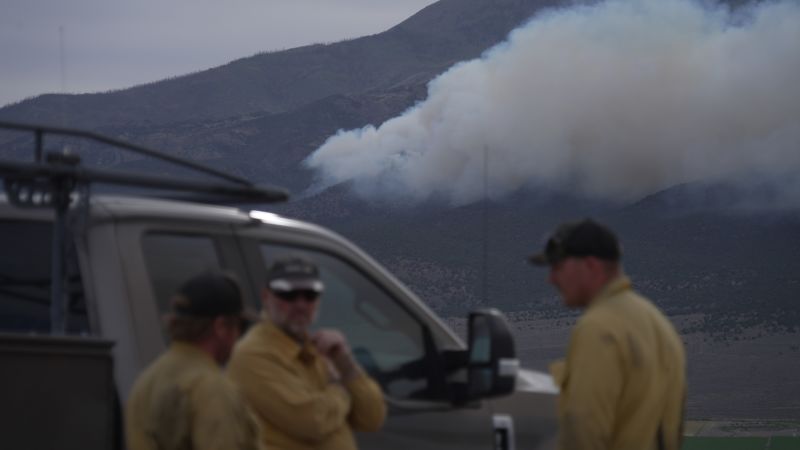
Among the most significant challenges is the Cottonwood Fire, currently burning through the Fishlake National Forest east of Beaver, Utah. As of Saturday morning, the fire had grown to over 92,000 acres — an area larger than Salt Lake City — and remains 0% contained. Evacuation orders are in place for the affected region, with officials stating it is likely the most damaging and expensive wildfire on record. The fire’s origin is still under investigation, but its rapid spread has left residents in shock.
Alyssa Mason, a spokesperson for the fire’s emergency management team, described the unpredictable nature of the blaze. “We always have safety first out there, and as soon as we see things or get feelings, we tell the crews to disengage and move to a safe place,” she told CNN affiliate KSL. The fire has required 1,066 personnel to combat its relentless advance, with crews continuously adapting to its volatile behavior. “The fire moves so fast and twists around in there,” Stapley said, recounting the destruction of his family’s cabin. “I saw that and went, ‘That’s just unbelievable.’”
Impact on Communities and Personal Stories
For many residents, the Fourth of July is more than a holiday — it is a time of cherished traditions and shared memories. However, the Cottonwood Fire has upended this for the Beaver Mountain community, where generations of families have gathered. Evan Stapley, a local resident, expressed deep sorrow over the loss of his family’s cabin, which was reduced to ash. “To me, nothing’s more beautiful than Beaver Mountain in the fall,” Stapley said. “The aspen yellow, and you get the reds in there and all the greens. There is nothing more beautiful in the world.”
Stapley’s account highlights the emotional toll of the fire. He learned of the destruction after a friend sent him video of the site where his cabin once stood. “I cried,” he added. “I’ve got too many memories, too many memories of that place.” The fire has also devastated Eagle Point Ski Resort, where several buildings were damaged or destroyed. Owner Shane Gadbaw shared the resort’s plight on Facebook, stating it will remain closed for an unspecified period as recovery efforts continue.
Legal Consequences for Human-Caused Ignitions
State officials have warned that individuals responsible for igniting wildfires could face severe legal repercussions. “Anyone whose illegal actions spark a blaze could be charged with criminal offenses and held accountable for civil damages,” said a representative from the governor’s office. This message is part of a broader strategy to reduce human contributions to the crisis, which has already seen hundreds of fires this season.
While the fireworks ban is temporary, its impact on Utah’s traditions is profound. Many communities have relied on Fourth of July celebrations to bring people together, but the restrictions have forced a shift in how these events are organized. In some areas, local leaders have designated approved zones where fireworks can still be used under controlled conditions. These areas are chosen based on factors like proximity to water sources and minimal vegetation density, ensuring a safer environment for residents.
As the situation evolves, the full extent of the Cottonwood Fire’s damage remains unclear. Officials are working to assess the economic and environmental toll, but the human stories of loss and resilience are already shaping the narrative. The fire has not only tested Utah’s emergency response capabilities but also revealed the deep connections between people and the landscapes they cherish. For Stapley, the destruction of his family’s cabin is a painful reminder of how quickly nature can reclaim the land.
A Nation on Edge
Utah’s wildfire crisis has placed the state at the forefront of a national conversation about climate change and its impact on traditional celebrations. With a historic drought persisting and fire weather conditions reaching record levels, the situation serves as a stark warning of what lies ahead. “This is an extraordinary year,” Cox reiterated. “It protects lives and homes while allowing local leaders, working alongside fire officials, to identify areas where fireworks can be used safely.”
The decision to restrict fireworks reflects a broader trend of adapting to increasingly extreme weather patterns. As more regions face similar challenges, the balance between cultural heritage and environmental protection will become a defining issue. The Cottonwood Fire’s rapid growth and destructive power exemplify the stakes involved, forcing communities to reconsider how they commemorate milestones in a changing climate. For now, the focus remains on containing the blaze and supporting those who have lost their homes and livelihoods to its wrath.
As the fire continues to burn, the state’s emergency management team remains on high alert. “We’re seeing fire behavior that’s unpredictable and dangerous,” Mason said. “It’s not just about putting out the flames — it’s about ensuring people can return to their communities safely.” While the Fourth of July celebrations may look different this year, the resilience of Utahns and the determination of firefighters offer a glimmer of hope amid the devastation. The road to recovery will be long, but the commitment to preserving life, property, and the spirit of the nation’s founding remains unwavering.
