
The not-so-silent war being fought in World Cup stadiums: Stadium DJs vs. hydration break boos
The Not-So-Silent War in World Cup Stadiums: DJs vs. Hydration Break Boos
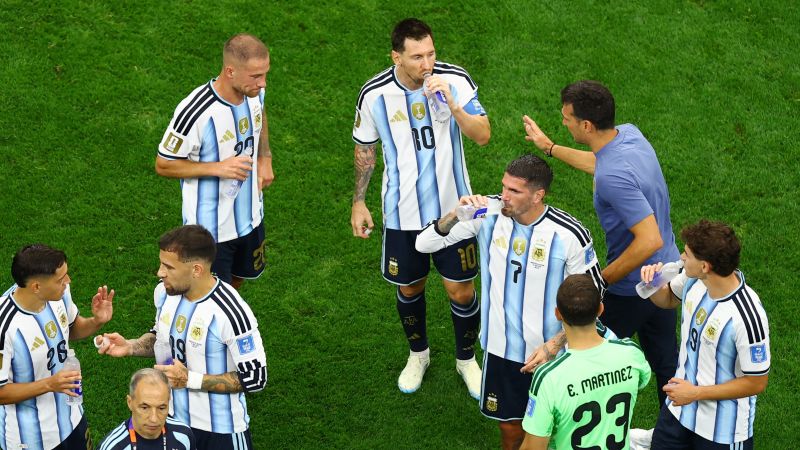
The not so silent war being – At the heart of this summer’s World Cup, a hidden conflict has emerged between fans and stadium DJs. The issue? Hydration breaks—those mandatory pauses in matches that have become a flashpoint for frustration. In the U.S., these intermissions, designed to allow players to replenish fluids and for ads to run, have sparked a chorus of boos from spectators. Yet, the DJs have found a clever countermeasure: turning the jeers into a singalong by blasting familiar tunes. This strategy, while seemingly simple, has transformed the tension into a shared experience, drawing cheers instead of complaints.
A Global Trend with Local Flair
The phenomenon isn’t new. Karaoke, though originating in Japan, has become a universal tool for uniting crowds. During Thursday’s clash between South Africa and the Czech Republic, the stadium’s break was met with boos, but the DJ’s choice of “Take Me Home, Country Roads” by John Denver quickly turned the atmosphere around. The song, a staple of American culture, resonated with the 67,000 fans, transforming their discontent into collective singing. A similar tactic was employed during Sunday’s Spain-Saudi Arabia match, where the same track reappeared, proving its effectiveness across different regions.
“Take Me Home, Country Roads” by John Denver was played during the South Africa-Czech Republic match, turning the stadium’s boos into a 67,000-person singalong.
Meanwhile, in Dallas, the England-Croatia game saw a different approach. The DJ introduced The Killers’ “Mr. Brightside,” a track that energized the crowd and drowned out the usual complaints. In Seattle, where the USA defeated Australia 2-0, a brass band took center stage, offering a more instrumental twist to the hydration break. The choice of music varied by location, but the goal remained the same: to redirect the crowd’s focus from their displeasure to the rhythm of the game.
The American vs. Global Soccer Experience
What sets these stadiums apart is the American approach to fan engagement. Unlike the vibrant, musical traditions seen in many parts of the world, where fans often sing in unison to anthems or chants, U.S. stadiums rely heavily on visual cues and synchronized commands. Broadcast crews frequently shout directions like “Make some noise!” or “EVERYBODY CLAP YOUR HANDS!” to guide the crowd. This method, while effective for generating energy, has created a stark contrast with the spontaneous, musical culture of international soccer.
However, the World Cup has provided a unique opportunity for DJs to bridge this gap. The hydration breaks, which have been mandatory in all matches this year, including those in climate-controlled venues like Dallas and Houston, have become a canvas for musical innovation. From the pregame rallies in bars and fan festivals to the postgame singalongs that have gone viral, the global soccer community has embraced the power of music. The English fans, for instance, took to the viral anthem “Wonderwall” in a postgame celebration, while the USA’s fans echoed the sentiment of “Country Roads” during their break.
“Mr. Brightside” by The Killers was played during the England-Croatia match, turning the crowd’s boos into a unified chant.
This shift has not gone unnoticed. The Iranian soccer team, after their game against Belgium in Los Angeles, left a handwritten note in their locker room thanking the city for its hospitality. The note, though brief, highlighted the warmth of the American audience, even as tensions between the U.S. and Iran simmered. CNN’s Leila Gharagozlou reported on how these geopolitical dynamics have influenced the treatment of the Iranian team, yet the fans’ enthusiasm for the game has remained undimmed.
The hydration breaks, however, have become a symbol of the Americanization of the sport. By splitting matches into four 22-and-a-half-minute quarters, the breaks have disrupted the traditional flow of the game, which many international fans view as a sacred rhythm. The dissatisfaction has spread, with English supporters leading the charge by booing the breaks during their opening match against Croatia. This act, which initially seemed isolated, has since triggered a wave of complaints across host cities.
Yet, the DJs have turned this frustration into a game-changer. As soon as the boos begin, the DJ’s response is swift. In just a couple of seconds, a beloved track can shift the mood entirely. This tactic, honed by American stadium crews, has proven to be a masterstroke. Whether it’s the iconic “Macarena” by Los del Río in the Argentina-Austria match or the soulful brass band in Seattle, the music has a way of uniting fans in a shared moment of joy.
The Power of Song in a Shared Space
The effectiveness of this approach lies in the universality of music. Karaoke, with its roots in Japan, has transcended cultural boundaries, creating a common language for fans. When a familiar tune is played, it taps into collective memories, turning strangers into a unified audience. This has been particularly evident in the World Cup, where the use of songs like “Take Me Home, Country Roads” and “Wonderwall” has sparked spontaneous, large-scale participation.
The trend also reflects a broader shift in how sports are experienced. While American stadiums rely on directed energy through screens and announcements, the World Cup has embraced the organic power of music. The result is a more immersive atmosphere, where fans are not just spectators but active participants. This has been especially noticeable in the way the hydration breaks have evolved—from a source of annoyance to a moment of communal bonding.
As the tournament progresses, the role of stadium DJs continues to grow. Their ability to anticipate the crowd’s mood and respond with the right track has become a defining feature of the event. The conflict over hydration breaks is not just about time management; it’s about the cultural identity of the game. For many, the traditional flow of a match is an integral part of the experience, and these breaks disrupt that rhythm.
But for others, the breaks offer a chance to innovate and adapt. The DJs’ choice of music, whether it’s a nostalgic anthem or a modern hit, has transformed the tension into a shared moment of enthusiasm. This summer’s World Cup has become a stage for both the art of music and the art of sports, proving that even the most contentious moments can be turned into a celebration.
Ultimately, the battle between hydration breaks and DJ interventions is a microcosm of the broader debate over how the game is played and experienced. While the U.S. approach may differ from the traditional European model, the result is a dynamic, evolving spectacle that keeps fans engaged. And as long as the music is right, the war in the stands may be won—or at least, the boos may turn into a chorus of voices united in song.
