
Why a 2,000-year-old low-fat, high-protein cheese is taking over French dairy aisles
Why a 2,000-Year-Old Low-Fat, High-Protein Cheese Is Taking Over French Dairy Aisles
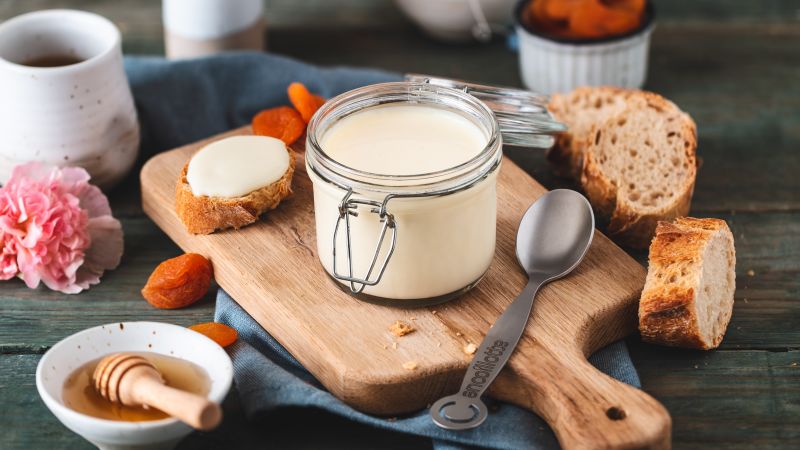
Why a 2 000 year old low – A quiet transformation is sweeping across France’s dairy shelves, driven by a growing fascination with a centuries-old cheese that’s redefining how people think about nutrition and flavor. At the heart of this shift is cancoillotte, a soft, creamy cheese with a history stretching back over two millennia in the eastern region of France, close to the Swiss border. While it’s been a staple in the Franche-Comté area for years, its recent surge in popularity has caught the attention of consumers nationwide, sparking a debate about its place in modern French cuisine.
From Obscurity to Viral Fame
The cheese-in-a-pot has experienced a revival, largely thanks to a wave of social media influence. French content creators, many of whom were once unaware of its existence, have brought cancoillotte into the spotlight. One such figure, Johan Papz, a 30-year-old influencer, shared a video that has since amassed 2.2 million views, turning him into an unexpected ambassador for the product.
“Why didn’t anyone tell me about this? Because my diet has just changed forever,” says Johan Papz, whose viral TikTok post has sparked renewed interest in the cheese. “It’s the best day of my life.”
Johan, who prefers to keep his legal surname private, recalls childhood memories of his mother serving cancoillotte over roasted potatoes and meat during cold, wintry evenings in Lyon. He assumed the cheese was a rich, indulgent treat, given its gooey texture and mild aroma. But during a recent conversation with a fitness-focused friend at the gym, he learned a different story: cancoillotte is actually a low-fat, high-protein alternative, ideal for those seeking to balance indulgence with health.
Encouraged by this revelation, Johan embarked on a mission to test the cheese’s merits firsthand. His discovery led to a dramatic change in his routine, with the cheese becoming a daily staple. “When I looked at the product, I was honestly in a state of shock,” he admits. “Eight grams of fat for 100 grams is crazy for a cheese. So I then started eating this every day.”
Contrasting Nutritional Profile
The nutritional data for cancoillotte is striking compared to traditional French cheeses. While many classic varieties range from 15 to 30 grams of fat per 100 grams, cancoillotte contains only 8 grams of fat and 16 grams of protein. It also clocks in at a modest 130 calories per 100 grams, making it a surprisingly lightweight option in a category dominated by high-calorie, hard cheeses.
“The harder and drier the cheese, the higher it is in fat and calories,” explains Julie Morin, president of the Association for the Promotion of Cancoillotte. This principle holds true for most French cheeses, which are often associated with rich, creamy textures and higher fat content. By contrast, cancoillotte’s smooth, spreadable consistency and lower fat profile have positioned it as a versatile ingredient for health-conscious consumers.
The Social Media Spark
Johan’s enthusiasm for cancoillotte has not only boosted its visibility but also elevated other regional specialties. His viral videos have helped popularize the Parisian croissant-cookie hybrid, the crookie, and the Algerian hazelnut spread, El Mordjene, across global platforms. This social media-driven momentum has been transformative for cancoillotte, which was once regarded as a niche product.
“I share a lot about my food journey. I work out six times a week and try to recommend healthy options for people who still want to have fun while eating, and control their protein intake and calories,” Johan says. His endorsement of cancoillotte as a “cheat code” for a balanced diet has resonated with audiences, particularly those looking to enjoy cheese without compromising their health goals.
The impact on sales has been immediate and significant. According to Julie Morin, demand for cancoillotte surged by 25% in May alone, a trend that has been mirrored at Fromagerie Poitrey-La Belle Etoile, the cheesemaker she leads. “Sales skyrocketed thanks to this, and we actually ran out of stock,” Morin tells CNN. “We didn’t expect to be so successful on social media.” The rise in popularity has also challenged long-held perceptions of the cheese, which some once dismissed as an old-fashioned, outdated product.
Production and Perception
Despite its growing acclaim, cancoillotte still faces skepticism from certain quarters. Morin acknowledges that it can be viewed as “ringard” — the French term for something that feels outdated or overly traditional. “It’s true that it can be seen as an old product for older people, and not very modern,” she says. “It’s hard to pronounce, even for the French, and there are a lot of misconceptions about its value.”
Yet, the cheese’s production process speaks to its unique qualities. Made from skimmed cow’s milk — a byproduct of butter, cream, and cheese — it undergoes fermentation and coagulation to form milk curds. These curds are then drained, pressed, and transformed into metton, small, hard crumbles. After being ground, aged, and heated to 194 degrees Fahrenheit (90°C) with butter, water, and salt, the final product emerges as a soft, spreadable cheese with a complex flavor profile. Its taste ranges from yeasty and fruity to earthy, “barnyard” notes, offering a depth of character that appeals to both purists and newcomers.
The cheese’s resurgence also highlights a broader trend in French food culture. As consumers increasingly prioritize wellness, they are revisiting traditional products with fresh eyes, seeking alternatives that align with their dietary needs. Cancoillotte’s ability to satisfy cravings while offering nutritional benefits has made it a favorite among those balancing health and indulgence. Its presence in grocery stores is no longer a footnote but a mainstream phenomenon, with retailers now stocking it prominently alongside more familiar options.
Looking Ahead
With its newfound popularity, cancoillotte is no longer just a regional specialty but a symbol of France’s evolving dairy landscape. The Association for the Promotion of Cancoillotte is working to further cement its reputation, while cheesemakers like Fromagerie Poitrey-La Belle Etoile are capitalizing on the demand. For Johan Papz, the journey has been personal and transformative. “I used to think cheese was something you had to give up for health,” he says. “Now, I see it as a way to stay on track without sacrificing flavor.”
As the cheese continues to gain traction, it raises questions about the future of traditional French foods. Will cancoillotte become a household name, or will its popularity remain a regional anomaly? For now, the data suggests the latter is unlikely. With sales rising and social media continuing to amplify its appeal, the once-forgotten cheese is proving that even the oldest traditions can find new life in a modern world. Whether it’s a “cheat code” for healthy eating or a nostalgic throwback, cancoillotte’s journey from obscurity to prominence is a testament to the power of discovery in the culinary world.
In the end, the story of cancoillotte mirrors the broader narrative of how food trends are shaped by both history and innovation. What began as a quiet presence in the Franche-Comté region has now become a symbol of France’s ability to adapt and reinvent its culinary heritage. As consumers embrace the cheese’s unique qualities, its place in French dairy aisles seems secure — at least for the foreseeable future.
