
The Strait of Hormuz is ‘leaking’ oil
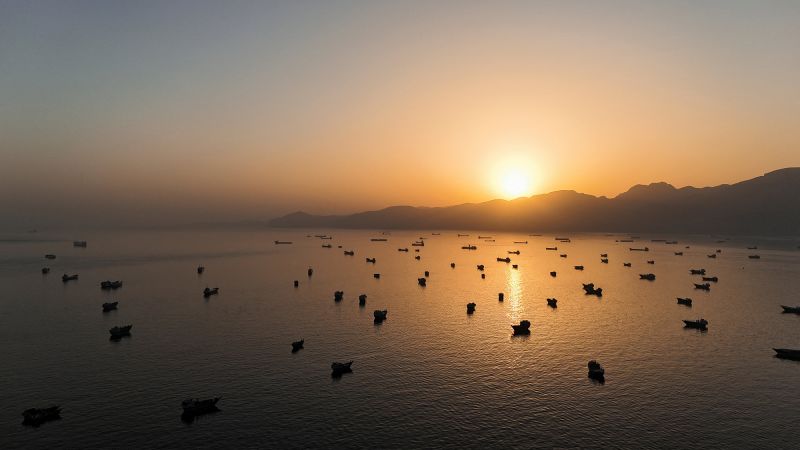
The Strait of Hormuz is ‘leaking’ oil
The Strait of Hormuz is leaking – A major enigma in the global economy has persisted as the oil market remains remarkably stable amid what could be one of the most severe supply disruptions in modern history. The Strait of Hormuz, a critical chokepoint for global oil exports, has been under siege for three months following the conflict with Iran. Despite this, visible traffic through the strait has only dropped to a fraction of its usual volume—around 15% of pre-war levels, as reported by JPMorgan—yet oil prices have not surged to the alarming heights many analysts anticipated. This discrepancy has sparked a flurry of speculation about hidden mechanisms keeping the market from collapsing.
Unseen Movements in the Oil Supply Chain
Experts suggest that a significant portion of crude oil is bypassing the strait’s blockades through covert routes. These “clandestine flows” may involve tankers evading detection by deactivating their transponders, allowing them to move undetected under the cover of darkness. Such tactics, according to industry analysts, could be helping the global energy system absorb the shock of the reduced supply. JPMorgan’s latest assessment indicates that clandestine flows averaged approximately 2.1 million barrels per day during the last two weeks of May. This figure, while modest compared to pre-war volumes of 15.6 million barrels per day, represents a notable contribution to stabilizing the market.
“Despite the ongoing naval blockade and the steep decline in commercial traffic, surprising volumes of crude and petroleum products still appear to be transiting the Strait,” Natasha Kaneva, JPMorgan’s head of global commodities strategy, wrote in a client note last week.
Bob McNally, founder and president of Rapidan Energy Group, echoed this sentiment, emphasizing that the clandestine oil movement may have softened the crisis. “We assume Hormuz traffic has been 0% to 10% of prewar flows, but with this leakage it could be a little higher,” McNally said. While the volumes are insufficient to fully offset the supply shortfall, they have provided a buffer that has prevented prices from skyrocketing as feared.
Estimates and Unregistered Transits
Jan Stuart, a global energy economist at Piper Sandler, estimates that about 2.9 million barrels per day of crude escaped the strait in May. This includes 2.1 million barrels transported via vessels that paid tolls to Iranian entities, as well as an additional 900,000 barrels from “ghost” transits—ships that traversed the strait without transmitting their signals. “The ghosts, or clandestine flows, help,” Stuart told CNN. “There has been far better mitigating of the crisis than I would have thought possible.”
These unregistered movements, though not enough to fully counteract the disruption, have played a crucial role in maintaining equilibrium. The global energy system, which relies heavily on the strait for approximately 20% of the world’s oil supply, has shown resilience despite the threat of a complete cutoff. However, the question remains: how sustainable are these efforts, and what happens if the situation worsens?
Broader Market Adjustments
While clandestine flows have eased the immediate pressure, they are not the sole reason for the market’s calm. Piper Sandler’s analysis highlights another key factor: alternative routes for crude oil. Around 4.5 million barrels per day have reportedly left the Persian Gulf through other means, primarily via the East-West Pipeline that connects Saudi oilfields to the Red Sea port of Yanbu. This infrastructure has allowed for a steady flow of oil, reducing the urgency of relying solely on the Hormuz strait.
Additionally, China’s decision to slash its crude oil imports has had a profound impact. As one of the world’s largest energy consumers, China’s reduced demand has helped alleviate the strain on the market. The country’s massive stockpiles have acted as a safety net, absorbing some of the supply shock. JPMorgan’s Kaneva pointed to deeper-than-expected demand losses and larger-than-reported inventories as further contributors to the market’s stability.
“Taken together, these adjustments help explain why prices near $100 are not signaling that the disruption is small,” Kaneva wrote. “Rather, they are signaling that the market has found ways—albeit costly ones—to absorb it.”
The combination of covert oil movements, alternative supply routes, and demand-side adjustments has created a temporary reprieve. However, this balance may not last indefinitely. Oil veterans warn that the market’s reliance on these workarounds could lead to underestimating the true scale of the crisis. Commercial oil stockpiles have already declined sharply since the war began, with the U.S. Strategic Petroleum Reserve nearing its lowest level since the early 1980s.
Looking Ahead: The Price of Stability
Despite current stability, forecasts suggest the situation could soon deteriorate. Jan Stuart of Piper Sandler anticipates that Brent oil prices will average $130 a barrel in July and August, which would imply a significant jump in gas prices this summer. If realized, this would push fuel costs above $5 a gallon, compared to around $4.20 today. Stuart argues that higher oil prices will be necessary to incentivize emergency oil releases and encourage consumers to reduce their usage.
“You’ll need to persuade people. That’s far easier to do when prices are high,” Stuart said. This sentiment underscores the delicate balance between supply and demand. While the market has adapted through various means, the long-term effects of the strait’s blockage may still loom large. If the flow of crude continues to be constrained, and demand remains unchanged, the pressure on prices could intensify. The coming months will be a test of how effectively the global energy system can manage the crisis, or whether it will be forced to confront the full extent of the disruption.
For now, the oil market remains a puzzle. The combination of clandestine flows, alternative routes, and strategic stockpiling has prevented a full-scale price surge, but these measures may only delay the inevitable. As the war in the region continues, the question is no longer whether the supply chain will be disrupted—but how the market will respond when the crisis reaches its peak.
