
The oceans are in deep trouble. The Trump administration is ditching a vital deep-sea monitoring system
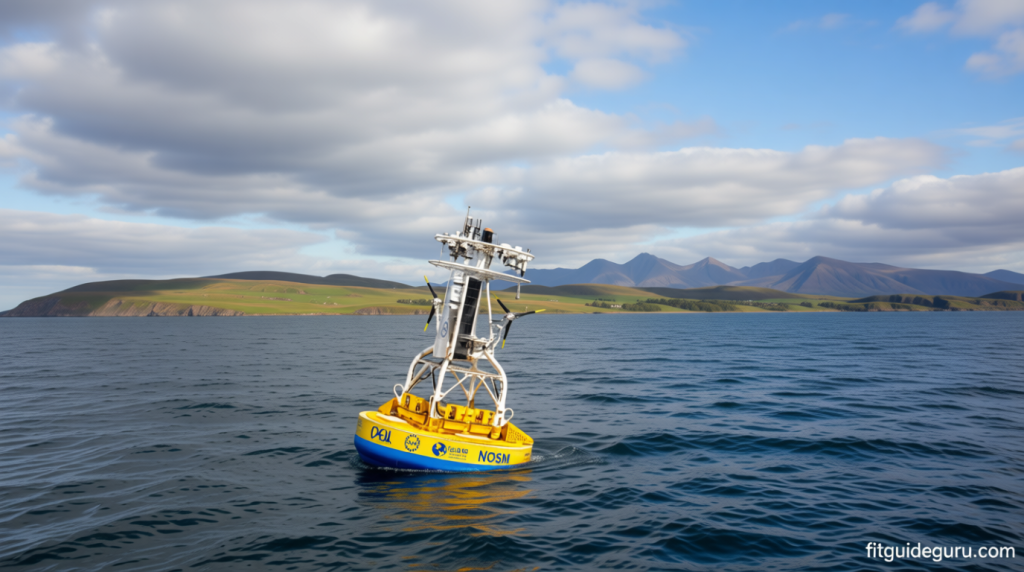
Deep Ocean Monitoring System Faces Discontinuation Under Trump Administration
The oceans are in deep trouble – The Trump administration has moved to discontinue a key deep-sea monitoring network that provides essential insights into the health of the world’s oceans. This decision has raised significant alarm among experts, who warn that the move risks leaving the U.S. vulnerable as the planet confronts unprecedented changes in oceanic conditions. With record-breaking sea temperatures, the looming threat of a super El Niño, and growing fears of a critical ocean current system collapsing, the removal of this vital infrastructure could have far-reaching consequences for global climate stability.
What is the Ocean Observatories Initiative?
The Ocean Observatories Initiative (OOI), launched in 2016, is a sprawling network of 900 scientific instruments deployed across the Pacific and Atlantic Oceans. These devices, designed to endure extreme pressures and corrosive saltwater environments, continuously transmit real-time data on oceanic phenomena. From tracking shifts in chemical composition to monitoring powerful currents that influence weather patterns, the OOI has been instrumental in advancing climate research and marine science. Initially intended to operate for three decades, the system now faces a drastic reduction in scope.
The Dismantling Process
On May 21, the National Science Foundation (NSF), which oversees the OOI, announced it would “descoping” the network—a term meaning the gradual scaling back of its operations. Over the next 15 months, in-water equipment will be removed from arrays near the coasts of Alaska, Washington, Oregon, and North Carolina, as well as from the North Atlantic off southeast Greenland. According to Mike England, media affairs head at the NSF, the decision reflects a broader strategy to streamline operations, focusing on emerging technologies and evolving scientific priorities.
Expert Concerns Over the Move
Scientists have voiced urgent concerns about the decision, arguing that it undermines oceanic research at a pivotal moment. Rick Spinrad, a former director of the National Oceanic and Atmospheric Administration (NOAA) under the Biden administration, called the action “penny wise, tons foolish.” He highlighted the system’s role in delivering economic and social benefits, such as improving fisheries management, enhancing weather forecasts, and mitigating coastal flooding risks. “Where’s the analysis of return on investment that shows eliminating OOI is in the taxpayers’ best interest?” Spinrad questioned, emphasizing the long-term value of the network.
The Risk of AMOC Collapse
One of the most pressing worries is the potential collapse of the Atlantic Meridional Overturning Circulation (AMOC), a critical system of ocean currents. The OOI has played a key role in studying this network, which regulates heat distribution and influences climate patterns worldwide. Research indicates the AMOC could falter as early as this century, leading to catastrophic effects: accelerated sea level rise along the U.S. East Coast, severe winters in Europe, and prolonged droughts across parts of Africa. “Concern in the oceanography community about major ocean current changes ahead is large,” said Stefan Rahmstorf, a professor of physics and oceanography at Potsdam University in Germany. “Ongoing monitoring is essential, especially now, as we face uncertain future conditions.”
Impact on the Gulf of Alaska
Another area affected by the dismantling is the Ocean Station Papa, an array in the Gulf of Alaska that tracks ocean health through autonomous buoys and gliders. This system monitors factors like acidity levels in a region vital to the fishing industry but highly susceptible to ocean acidification. Helen Findlay, a biological oceanographer at the Plymouth Marine Laboratory in the UK, stressed that long-term data collection is crucial for understanding ecosystem shifts. “Large parts of the global ocean have already crossed into a ‘zone of risk’ for ecosystem change,” she noted. “Without sustained monitoring, we’re essentially navigating a volatile environment with limited sight.”
Broader Implications for Climate Science
The removal of OOI equipment aligns with the Trump administration’s broader efforts to scale back climate protections and defund scientific initiatives. As the administration pushes for deep-sea mining to extract critical minerals, critics argue that the dismantling of the OOI signals a shift away from comprehensive oceanic research. The system’s data has been invaluable in detecting early warning signs of climate risks, from intensifying hurricanes to coral bleaching events. By cutting funding for this network, the U.S. risks losing a critical tool for tracking these changes.
Global Ocean Changes and Unexplained Risks
Scientists warn that the oceans are undergoing rapid transformations, some of which remain poorly understood. Rising temperatures in key regions have fueled stronger storms, contributed to sea level rise, and triggered widespread coral bleaching. These developments underscore the urgency of maintaining robust monitoring systems. “The global oceans are in a period of massive change,” said Findlay. “We’re seeing phenomena that could redefine our understanding of climate dynamics.” Without the OOI, researchers may struggle to detect these shifts in real time, potentially missing critical tipping points.
Legacy of the OOI and Future Challenges
The OOI’s dismantling raises questions about the long-term impact on scientific leadership and data availability. The system’s instruments, already paid for and installed, represent a significant investment. Critics argue that the administration is prioritizing short-term cost savings over long-term benefits, jeopardizing the U.S.’s role in global climate research. “Eliminating OOI is like removing a key piece of a puzzle that helps us predict and prepare for climate challenges,” said Rahmstorf. “This isn’t just about data—it’s about resilience.”
The decision to de-scope the OOI reflects a growing disconnect between short-term fiscal goals and the need for sustained environmental observation. As oceanic conditions worsen, the lack of real-time data could hinder efforts to adapt to climate impacts. While the administration cites efficiency and lifecycle management as reasons for the change, scientists stress that the ocean’s complexity demands continuous monitoring. Without it, the consequences of unchecked changes could be severe, affecting weather systems, ecosystems, and coastal communities worldwide.
Environmental advocates are calling for immediate action to reverse the decision, highlighting the OOI’s role in safeguarding the planet’s health. The system’s data has provided insights into the AMOC’s stability, which is vital for predicting climate extremes. As the Trump administration continues to reshape climate policy, the fate of the OOI serves as a stark reminder of the challenges facing oceanic science. The next 15 months will be crucial in determining how much of this network can be salvaged and whether the U.S. will invest in the tools needed to navigate an uncertain future.
In the face of these challenges, the scientific community remains divided. Some argue that the NSF’s strategy is pragmatic, focusing on technologies that offer more immediate returns. Others see it as a gamble that could undermine decades of research. The dismantling of the OOI is not just about removing equipment—it’s about reshaping the foundation of oceanic knowledge. As the planet’s oceans grow more volatile, the absence of this monitoring system could leave scientists blind to the next major climate crisis.
A Call for Reinvestment
With the OOI’s future uncertain, there is a growing call for reinvestment in oceanic research. Scientists emphasize that the system’s data is indispensable for understanding the complex interplay between ocean currents, temperature fluctuations, and atmospheric patterns. “Without long-term observations, we can’t fully grasp the risks we’re facing,” said Findlay. “This system was built to track changes that span years, not just months.” The administration’s choice to scale back operations may have far-reaching implications, not only for the U.S. but for global efforts to combat climate change.
As the world grapples with the reality of a warming planet, the OOI’s removal highlights a critical gap in monitoring capabilities. The network’s instruments, deployed in some of the most remote and challenging environments, have provided a wealth of data on oceanic health. From the Pacific Northwest to the North Atlantic, these systems have been essential in detecting shifts that could disrupt ecosystems and weather patterns. The administration’s decision to dismantle them may prove to be a misstep in the long run, as the consequences of climate change become increasingly evident.
In conclusion, the Trump administration’s move to discontinue the OOI underscores the fragility of climate science funding and the potential risks of short-sighted policies. While the system’s de-scoping aims to streamline operations, it also risks creating a void in critical oceanic data. As the planet’s oceans continue to change, the need for comprehensive monitoring has never been greater. The OOI’s legacy, though threatened, remains a testament to the importance of sustained investment in understanding and protecting our planet’s most vital resource.
