
Americans will be sent to Kenya for Ebola care, Trump administration says
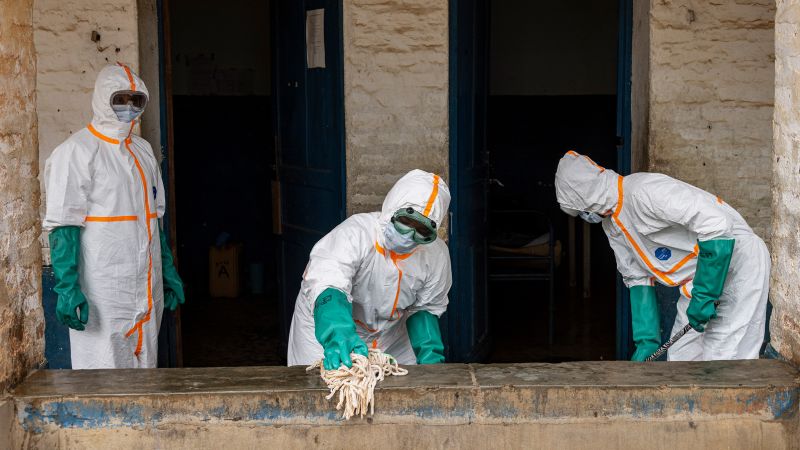
Americans will be sent to Kenya for Ebola care, Trump administration says
Americans will be sent to Kenya – As the Ebola outbreak in the Democratic Republic of Congo (DRC) escalates, the Trump administration has announced plans to establish a specialized treatment facility in Kenya to ensure the virus does not reach U.S. soil. The initiative, revealed during a Cabinet meeting on Wednesday, aims to create a rapid response system for Americans in the region who contract the disease. US Secretary of State Marco Rubio emphasized the administration’s commitment to preventing any Ebola cases from entering the United States, stating, “We cannot and will not allow any cases of Ebola to enter the United States.”
Facility Details and Strategic Rationale
According to a Trump administration official, the facility in Kenya will serve as a critical hub for American patients requiring immediate care. The official explained that the goal is to provide high-quality treatment while minimizing the risks associated with transporting patients back to the U.S. “Time is of the essence for Ebola patients,” they said, highlighting the facility’s design to enable quick care without the delays of lengthy medical evacuation flights. “This will allow Americans in the region to receive lifesaving treatment as swiftly as possible, bypassing the need for 12-hour medevac journeys.”
The facility is expected to handle the full spectrum of Ebola Virus Disease, including critical care, with each case evaluated for potential transfer to more advanced U.S. facilities. “Treatment capabilities at the site are tailored to support the most urgent needs, but flexibility remains for cases requiring further specialized care,” the official added. The project is being developed through a collaboration between the State Department, the Department of Health and Human Services, and the Pentagon, reflecting a coordinated effort to bolster regional health preparedness.
Criticism from Health Experts
Despite the administration’s assertions, some experts argue that the U.S. already has an extensive network of Ebola-ready hospitals that could be more effectively utilized. Jeremy Konyndyk, former director of the US Agency for International Development’s Office of US Foreign Disaster Assistance during the 2014-16 West Africa outbreak, expressed concern that the decision to build a facility abroad undermines domestic capabilities. “Rather than relying on the infrastructure we’ve developed here, we’re sending Americans to another country for care,” Konyndyk said in a statement to CNN. “This approach feels disingenuous, especially when the U.S. has a proven system to handle the disease.”
Konyndyk, now president of Refugees International, criticized the plan as a sign of the administration’s lack of confidence in its own healthcare resources. “It’s like saying we don’t trust our own country to protect its citizens,” he remarked, adding that the move might inadvertently prioritize American lives over those of Kenyans. Meanwhile, Dr. Krutika Kuppalli, an infectious disease specialist and former medical director of the Sierra Leone Ebola Treatment Center, called the strategy “insane.” In a post on X, she warned that the initiative could lead to “awful consequences” for both patients and frontline workers, questioning its effectiveness in a global health crisis.
Lawrence Gostin, director of the World Health Organization Collaborating Center on National and Global Health Law, further highlighted the risks of the plan. He noted that the upcoming World Cup in Qatar will serve as a real-time test of the administration’s public health strategies. “The outcomes will be worse for patients and humanitarian efforts,” Gostin wrote, describing the initiative as “reckless, unethical, and possibly unlawful.” His comments underscore the debate over whether focusing on American care in Kenya is the most prudent use of resources.
International Collaboration and Concerns
The Kenyan Ministry of Health stated in a Wednesday release that it is engaging in ongoing discussions with the U.S. government and other global partners to enhance preparedness for Ebola and other public health threats. “Any arrangements for international health cooperation will align with Kenya’s national laws, biosafety standards, and the duty to protect its citizens and communities,” the statement said. However, the plan has raised questions about whether the facility will be accessible to non-Americans. Robert Kiberenge, a Nairobi resident, voiced skepticism, asking, “Why do Americans believe their lives are more valuable than Kenyans’ to justify building a facility that only serves Americans?”
Earlier this month, two American medical professionals in the DRC were evacuated to Germany and the Czech Republic, respectively, for treatment. This precedent has fueled concerns about the potential prioritization of American patients in international settings. While the Kenyan facility is positioned as a safeguard, some fear it may be used to isolate Americans from local healthcare systems, potentially straining resources in the host country. Kiberenge’s criticism reflects a broader apprehension that the plan could be seen as favoring U.S. interests over regional solidarity.
Broader Implications and Public Health Strategy
The administration’s decision to focus on American care abroad has sparked discussions about the balance between domestic and international health priorities. While the facility in Kenya is intended to serve as a rapid response option, experts stress that a more integrated approach might yield better results. “The U.S. has invested heavily in isolation and treatment centers, yet this plan suggests we’re neglecting their value,” Konyndyk said. He argued that such facilities should be used for all patients, not just Americans, to maximize their impact on a global scale.
Additionally, the strategy raises questions about the logistical challenges of deploying resources overseas. The facility’s success hinges on its ability to quickly accommodate patients and maintain biosafety protocols, which could be complicated by the need to transport individuals from the DRC to Kenya. Critics also point out that the plan may divert attention from strengthening local capacities in Africa, where the outbreak is most active. “If the goal is to protect Americans, why not focus on containing the virus in the DRC first?” Kuppalli asked, emphasizing that the current approach might not address the root of the problem.
As the Ebola outbreak continues to spread, the facility in Kenya represents a key step in the Trump administration’s efforts to shield the U.S. from the virus. However, the move has also drawn scrutiny for its potential consequences, both in the host country and on the global stage. While the plan aims to provide swift care, its effectiveness will depend on how well it integrates with existing regional and international health systems. The upcoming World Cup may offer a glimpse into the broader implications of this strategy, testing its ability to manage a crisis in a high-profile setting.
The Kenyan government has reiterated its commitment to ensuring that the facility aligns with its public health objectives, noting that it will uphold national standards while supporting international collaboration. Yet, the plan’s success will likely be measured not just by its ability to treat American patients, but by its capacity to foster trust and cooperation in the fight against a transnational health threat. As the situation evolves, the administration’s approach will be closely watched by both domestic and global health stakeholders.
