
Edna Lewis built the future of American dining on Black country tradition
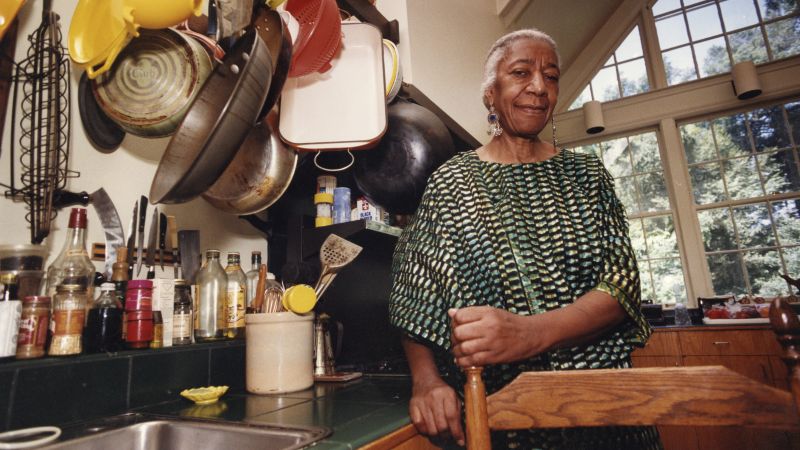
Edna Lewis built the future of American dining on Black country tradition
Edna Lewis built the future of American – Edna Lewis’s seminal work, “The Taste of Country Cooking,” begins with a vivid portrayal of a specific time and place rather than diving straight into recipes. Published in 1976 and still in circulation today, the book is structured around the seasons, offering a unique lens through which to view American food culture. In her introduction to the spring chapter, Lewis sets the scene with a description of the first warm morning in Virginia, where the sight of freshly hatched chicks “chirping and pecking in the snowy slush” signals the arrival of a new season. These detailed, localized observations laid the groundwork for a culinary philosophy that would later reshape how Americans perceive their own food traditions.
Rooted in the rhythms of Black farming communities, Lewis’s approach to cooking was deeply tied to the land and its natural cycles. She grew up in Freetown, a rural settlement in central Virginia founded by formerly enslaved people, where food was more than sustenance—it was a connection to history, heritage, and community. Her emphasis on seasonal ingredients and the communal act of preparing meals contrasted sharply with the European-centric ideas of terroir that had long dominated American culinary discourse. For Lewis, the flavor of a dish was inseparable from the time of year and the region in which it was made, a concept that felt unfamiliar to many at the time.
By the time “The Taste of Country Cooking” was released, the American South was still often viewed through a narrow lens. It was seen as a place of excess, where food was heavy on salt and fat, and critics labeled it a “heart attack on a plate,” according to Scott Peacock, a Southern chef who collaborated with Lewis on a 2003 cookbook. Peacock, who also provided care during Lewis’s final years, noted that the book was a quiet revolution in the culinary world. While the broader public might have dismissed Southern cuisine as rustic or unrefined, Lewis’s work introduced a deeper understanding of its roots and the cultural significance it carried.
“The Taste of Country Cooking” isn’t just a cookbook—it’s a narrative that intertwines personal history with culinary insight. Lewis writes with a poetic precision that captures the essence of her upbringing, from the poetry readings held in her grandmother’s home to the children’s plays that brought her community together. Her memories of food are inseparable from the changing seasons, reflecting a life shaped by the land’s offerings and the labor of those who tended it. Summer thunderstorms bring the thrill of turtle soup, while the late afternoon is reserved for the family tradition of ice cream-making. Emancipation Day, a celebration of freedom, and December’s hog butchering are recurring motifs that highlight the deep relationship between Black culture and the food it produces.
For Lewis, the act of cooking was a form of storytelling. She describes the exact amount for which her enslaved grandmother was purchased, a detail that underscores the economic and social context of her early life. Yet, in her writing, this history is not just a backdrop—it’s a vital part of the recipe. Her vivid accounts of everyday communal life, such as the preparation of meals for neighbors or the shared experience of harvesting produce, reveal a food culture that values connection as much as technique. This perspective, she argued, was as valid as the European models that had long influenced American tastes.
While the book was “unquestionably” ahead of its time, Peacock noted that it didn’t immediately become a household name. Instead, it resonated with a growing circle of chefs and food enthusiasts who were beginning to recognize the value of Southern cooking beyond its traditional stereotypes. James Beard, often regarded as the godfather of American gastronomy, praised Lewis’s work in a 1976 syndicated column, calling her descriptions of communal living “earthly” and “excellent.” Beard’s endorsement marked a turning point, as he framed Southern cuisine as a reflection of the “good soil” that nurtured it, challenging the notion that it was inferior to European fare.
“She is certainly laying down the marker that says, ‘This is who we are,’” Toni Tipton-Martin, author and journalist who wrote the foreword for the 50th anniversary edition, explained. “‘And this is what our food is and has always been.’” This statement captures the essence of Lewis’s legacy: she redefined American dining by centering Black traditions and offering a blueprint for a more authentic, localized approach to cooking. Her insights into roasting coffee beans, foraging for morel mushrooms, and the importance of regional ingredients were decades ahead of the farm-to-table movement that would later gain traction in the 2000s.
Peacock, who met Lewis in her early years as a chef, recounted how she encouraged him to study his own cuisine before seeking inspiration abroad. “That was a shocking thing to hear,” he said. “I certainly didn’t think there was anything to study or to know or learn about the food I’d grown up on.” This advice, rooted in Lewis’s belief in the richness of Southern cooking, became a guiding principle for a new generation of chefs eager to explore their cultural heritage. Her work, though not widely celebrated at first, paved the way for a shift in how American food was understood and appreciated.
Today, the themes Lewis introduced in “The Taste of Country Cooking” are central to modern dining practices. Restaurants now design menus around seasonal changes, and food influencers champion the idea of foraging and sourcing locally. These trends, once novel, are now seen as foundational to sustainable and culturally rooted cuisine. Lewis’s emphasis on the cycles of Black farming has been embraced by a broader audience, proving that her vision was not only ahead of its time but also enduringly relevant. Her legacy continues to shape the way Americans think about food, tradition, and the land that sustains them.
