
An Iranian to negotiate with: Who is Mohammad Ghalibaf?
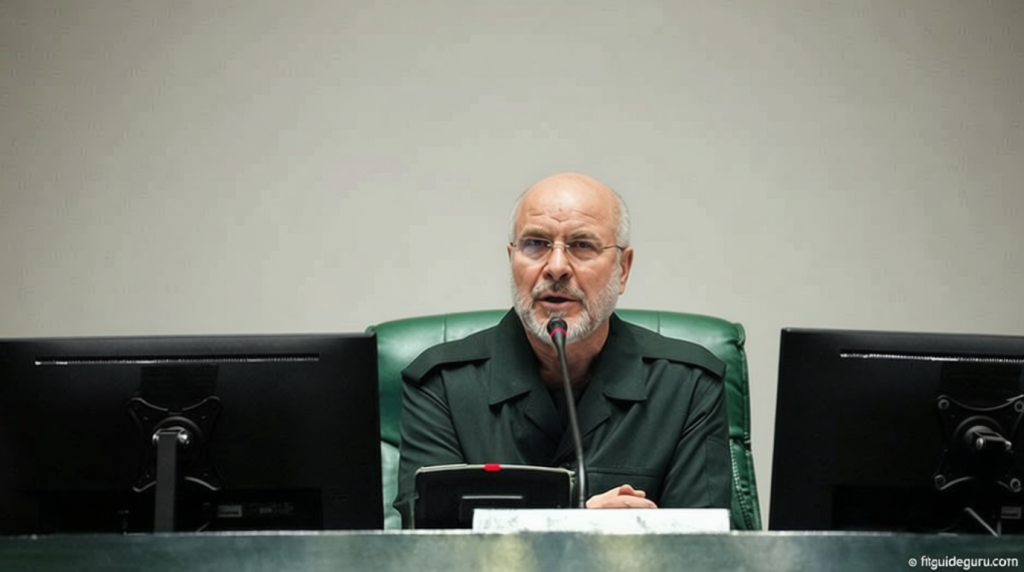
An Iranian to Negotiate With: Who is Mohammad Ghalibaf?
Iran’s political landscape features figures with deep ties to military and state power. Among them is Mohammad Bagher Ghalibaf, a prominent leader whose career spans both governance and defense. Known for his strong connections to the armed forces, he has also been linked to controversies surrounding corruption and the handling of public unrest.
Leadership and Military Background
Ghalibaf, 64, served as a commander in the Islamic Revolutionary Guard Corps (IRGC) before transitioning into civilian roles. His early years included service during the Iran-Iraq war from 1980 to 1988, where he rose through the ranks. Post-war, he led the IRGC’s engineering division, Khatam al-Anbiya, which focused on rebuilding infrastructure and now operates as an economic entity with numerous subsidiaries.
His political ambitions led him to seek the presidency in 2005, but he lost to Mahmoud Ahmadinejad. Later, he became Tehran’s mayor, holding the position until 2017. In 2013, he ran again, this time falling to Hassan Rouhani. In 2017, he stepped aside to back another conservative contender.
Controversies and Corruption Allegations
Despite his influence, Ghalibaf faces accusations of corruption. During his tenure as Tehran mayor, government assets were reportedly sold at significantly reduced prices. Officials and his family were implicated in these transactions. Additionally, he is said to have redirected city funds to his wife’s foundation, which supports single mothers and female breadwinners, though its financial practices remain opaque.
His role in 1999 student protests has further shaped his reputation. Alongside Qassem Soleimani, he signed a letter warning then-president Mohammad Khatami against “tolerating” demonstrations. Ghalibaf even recounted personally beating protesters with sticks while riding a motorcycle, as reported in interviews. These actions have made him a symbol of repression in some circles.
Recent Developments and Public Perception
Recent events have drawn attention to Ghalibaf’s activities. In 2022, his daughter and family were seen returning from Istanbul with “newborn baby kits,” sparking debate amid Iran’s economic struggles. Similarly, his son Eshaq’s attempt to secure Canadian residency, which involved legal action against immigration authorities, highlighted tensions between his family’s Western-leaning aspirations and his father’s anti-Western policies.
Meanwhile, U.S. President Donald Trump announced ongoing negotiations with Iran, suggesting potential progress toward ending the conflict. Egyptian, Pakistani, and Turkish mediators attempted to arrange a call with Ghalibaf and his team, but Tehran denied the talks. Ghalibaf dismissed the claims as “fake news,” arguing they aimed to influence financial markets. The Wall Street Journal also reported that thousands of U.S. Marines would be deployed to the Middle East this Friday to protect the Strait of Hormuz, underscoring the region’s strategic importance.
Ghalibaf’s survival of U.S. and Israeli strikes has raised questions about his future role. His enduring influence within the IRGC, despite corruption allegations, suggests he remains a key player in Iran’s political and military affairs. However, the lack of thorough investigations into his misconduct, due to his proximity to Supreme Leader Ayatollah Ali Khamenei, has fueled ongoing speculation.
“Fake news” designed to manipulate financial and oil markets, Ghalibaf called the reported U.S. negotiations a fabrication.
As Iran navigates economic crises and international pressures, Ghalibaf’s legacy continues to evolve, balancing his military prowess with a complex political persona.
