
EU weighs options as Israel threatens Lebanon offensive
EU weighs options as Israel threatens Lebanon offensive
European powers caution Israel against military escalation
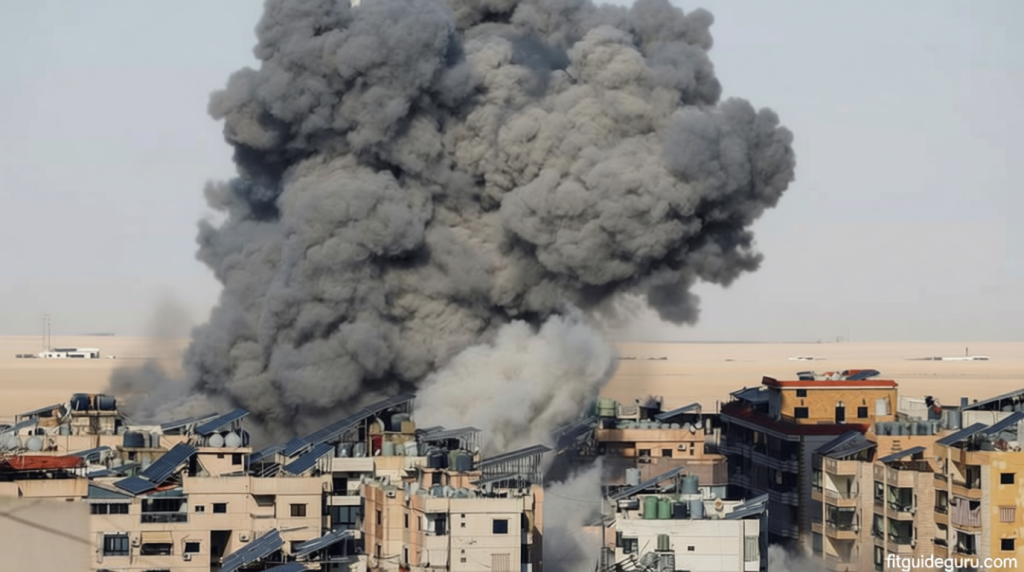
European Union officials have issued warnings to Israel regarding a potential ground incursion in Lebanon. Yet, the question remains: can they effectively pressure Hezbollah to relinquish its weapons or halt Israeli military operations? The Israeli military recently confirmed its involvement in “limited and targeted ground operations” in southern Lebanon, specifically against Hezbollah, an Iran-backed group with both military and political influence.
“A significant Israeli ground offensive would cause severe humanitarian damage and risk turning into a prolonged war,” stated leaders from France, Germany, Italy, the UK, and Canada. “It is crucial to prevent such a move.”
Lebanon’s political delay
Lebanon’s parliament has extended its mandate for two additional years. Originally set for May, the elections were postponed due to the government’s belief that holding a national vote during a conflict and widespread displacement was impractical. The country faces ongoing economic turmoil, which has exacerbated concerns over the potential for further destabilization.
European leaders’ dual concerns
The EU’s focus is split between urging Hezbollah to disarm and fearing the consequences of an Israeli invasion. A massive humanitarian disaster in Lebanon could ripple across Europe, impacting migration flows and regional stability. “Europeans have made repeated statements, pleading with Israelis to avoid escalation, whether in Lebanon, Gaza, or other regions. However, these efforts rarely translate into decisive action,” remarked Julien Barnes-Dacey, director of the Middle East and North Africa program at the European Council on Foreign Relations (ECFR).
Sectarian tensions and displacement risks
Displacement within Lebanon is intensifying, with Shiite communities fleeing areas under attack and seeking refuge in Sunni and Christian-majority regions. This migration has heightened sectarian anxieties, as Hezbollah’s influence makes displaced individuals perceived as potential targets for Israeli strikes. “The Israeli army’s plans to advance beyond the Litani River and displace residents could spark internal conflict, dividing Lebanon’s communities,” Barnes-Dacey noted.
Peacekeeper vulnerabilities
The United Nations Interim Force in Lebanon (UNIFIL) faces growing danger as clashes between Israel and Hezbollah intensify. Peacekeepers have occasionally come under fire, and they now operate in zones where civilians have been instructed to evacuate. “It is unacceptable for peacekeepers carrying out Security Council-mandated duties to be attacked,” UNIFIL stated in a March 6 notice, following a call for restraint from both sides.
Economic leverage and possible measures
Analysts suggest that Europe’s primary influence over Israel lies in economic ties. Could the EU temporarily suspend the EU–Israel Association Agreement and reignite discussions on imposing trade restrictions to curb Israel’s military actions in Gaza? “Europe has hesitated to use the economic card against Israel for the past two years,” Barnes-Dacey explained. “But this could be a turning point for their strategy.”
