
The rapper who railed against corruption now set to be Nepal’s new leader
The rapper who railed against corruption now set to be Nepal’s new leader
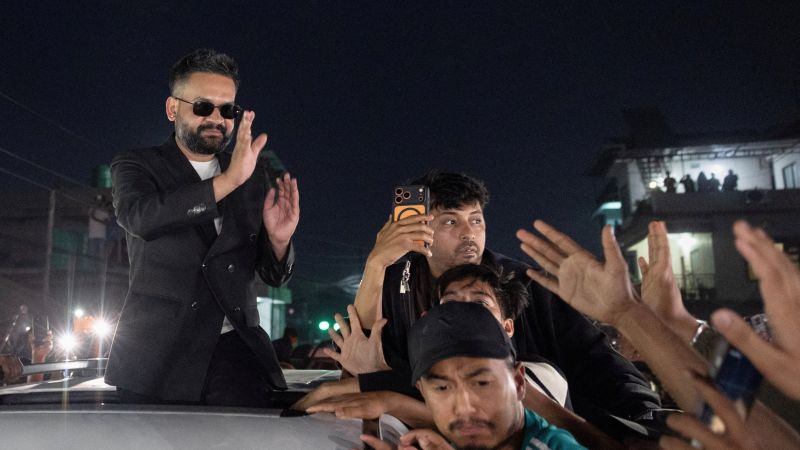
Nepal’s political landscape is about to undergo a seismic shift as Balendra Shah, a 35-year-old former rapper, prepares to assume the role of prime minister. Known as Balen to his supporters, his journey from underground hip-hop battles to national leadership has captured the imagination of a generation weary of systemic graft. After years of critiquing the country’s elite through music, he now leads a movement that has reshaped Nepal’s governance.
From Mic to Monument
More than a decade ago, Shah wielded his voice as a weapon against Kathmandu’s entrenched corruption, crumbling infrastructure, and stark social divides. His lyrics, delivered with passion and a dash of defiance, became a rallying cry for Nepal’s youth. Though dismissed by politicians as background noise, his messages resonated deeply with those disillusioned by the status quo. Now, as the nation’s youngest leader, his words are shaping policy rather than just sparking debate.
“Because of Balen, this nation is happy, tears of joy are flowing,” said Sakchyam Sangraula, a citizen who attended a celebration rally in Nepal. “Balen will build this nation, he definitely will.”
Roots in Resistance
Shah’s path to power was anything but conventional. Born in 1990 to an Ayurvedic doctor and a homemaker in Kathmandu, he initially pursued structural engineering, earning degrees in Nepal and India. Yet, his activism began long before politics. As a teenager, he voiced frustrations with the city’s mismanagement, a sentiment that evolved into a sharp critique of the political system. His cousin, Prashant Shah, recounted how his early disdain for urban neglect laid the groundwork for his later critiques.
“From a young age, he was dissatisfied with the way the metropolitan city was being run,” Prashant told The Kathmandu Post in 2022. “He would often say Kathmandu is beautiful and can be developed into a liveable city.”
Political Breakthrough
In 2013, Shah gained attention through the Raw Barz YouTube series, where he used rap to expose inequality and corruption. His unfiltered style soon translated into real-world politics. As an independent candidate, he stunned traditional power brokers by winning Kathmandu’s mayoral election. His campaign, rooted in grassroots online engagement, emphasized transparency, anti-corruption measures, and cultural preservation. “The path ahead is not easy. The real test of our campaign has just begun,” his team wrote in a Facebook post at the time, urging vigilance.
A Nation in Motion
Nepal’s recent election results mark a historic turn, with Shah’s Rastriya Swatantra Party (RSP) securing the largest mandate in the country’s modern history. The nation, which has experienced over a dozen governments since 2008—when it transitioned from monarchy to republic—has finally seen a shift in power. This change comes after widespread protests that toppled the communist government of former leader KP Sharma Oli, whose administration faced decades of corruption allegations.
Shah’s leadership is expected to be defined by his bold stance against both domestic and foreign influences. In 2023, he sparked controversy by displaying a map of “Greater Nepal” in his office, claiming Indian territories as part of the nation. This act was a direct challenge to India’s “Akhand Bharat” map, which portrayed Nepal as part of an ancient Indian civilization. His defiance extended to China as well; he canceled a planned visit after Beijing’s updated political map excluded disputed Himalayan regions recognized by Nepal.
His unapologetic approach reached a peak in late 2023 when he posted a fiery message on Facebook targeting the US, India, and China. Though he later removed the post, it reinforced his image as a leader unafraid to challenge established norms. With his party’s sweeping victory, Shah’s vision for a cleaner, more empowered Nepal is now within reach.
