
Will Ukraine help Gulf states down Iranian drones?
Will Ukraine help Gulf states down Iranian drones?
Ukraine’s Readiness to Share Drone Defense Expertise
Ukraine has expressed readiness to assist Gulf nations in countering Iranian drone attacks. The country claims to possess significant experience in drone defense and is open to sharing insights with Middle Eastern countries facing such threats. President Volodymyr Zelenskyy highlighted this during a recent Telegram post, noting that Kyiv is engaging in discussions with the U.S., European nations, and countries bordering Iran.
Zelenskyy’s Condition for Assistance
In exchange for Ukraine’s support, Zelenskyy proposed a stipulation: Middle Eastern leaders should leverage their diplomatic ties with Russia to secure a temporary ceasefire. Once such a pause is achieved, he said, Ukraine would dispatch its top drone defense specialists to the region. “We can help Israel in the same way,” he added, emphasizing the potential for shared expertise.
“Leaders of the Middle East have great relations with Russians, they can ask Russia to implement a month-long ceasefire,” Zelenskyy stated to Bloomberg.
Expert Support and Economic Considerations
Ukrainian Foreign Minister Andrii Sybiha echoed Zelenskyy’s sentiment, stating that Ukrainian forces could neutralize 90% of Iranian Shahed drones using domestically built interceptor systems. However, he noted that full deployment might not be possible without guarantees of safety from Russian attacks on Ukraine. “We won’t be able to send all our forces, but we will definitely be able to send some,” Sybiha said.
Analysts Highlight Gulf States’ Strategic Shift
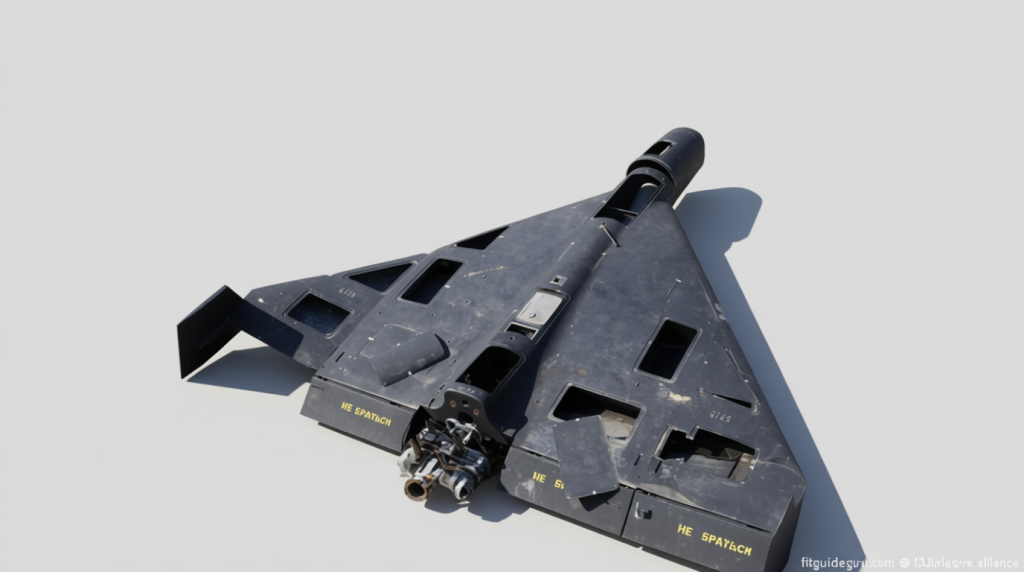
Oleksandr Chara, a security analyst at the Center for Defense Strategies (CDS), pointed out that Gulf nations initially overlooked Russia’s role in the Iranian drone network. This changed when Iranian drones equipped with Russian components began targeting Gulf infrastructure. Chara argued that Ukraine’s experience could provide a cost-effective solution for these countries.
“Shooting down a $30,000 drone with a missile that costs at least $100,000 becomes a hopeless endeavor,” Chara said. “So given the threat posed by Iran, it is logical to invest in Ukrainian defense capabilities.”
Three Cooperative Models for Defense Collaboration
Chara outlined three potential frameworks for Ukrainian-Gulf collaboration. The first involves direct deployment of trained forces to protect key facilities. The second focuses on training programs for Arab drone operators in Ukraine. The third envisions financial investments from Gulf states to boost Ukraine’s drone production capacity.
Industry Partnerships and Equipment Exchange
On March 3, Zelenskyy mentioned that Ukraine is exploring the transfer of interceptor drone production to Gulf states. In return, Kyiv seeks American PAC-3 missiles to enhance its air defense systems. The Financial Times reported on March 5 that the Pentagon and at least one Gulf nation were discussing the purchase of Ukrainian-made drones, as noted by an anonymous industry representative.
Katkov’s View on Data and Technology Transfer
Oleh Katkov, a military analyst and editor of Defense Express, stressed that Gulf states lack critical data and battle-tested algorithms for effective drone defense. “The value lies solely in our ability to provide real-world insights,” he told DW. “No one outside Ukraine has access to data on how many mobile units are deployed, how much ammunition is needed, or which systems truly work.”
Strategic Motivation Behind the Offer
Zelenskyy aims to use Ukraine’s military experience to pressure Russia into ending its conflict with Kyiv. He hopes partners benefiting from Ukrainian know-how will shift their support away from Russia and instead bolster efforts to weaken its war effort. This cooperation, Chara called a “classic win-win situation,” could offer Gulf states a reliable defense against Iranian threats while providing Ukraine with much-needed resources.
