
Are the US and Iran on a collision course for war or a surprise deal?
Are the US and Iran on a collision course for war or a surprise deal?
The US’s significant military presence near Iran signals the most extensive deployment since the 2003 Iraq invasion. As the USS Gerald R Ford, the world’s largest supercarrier, now operates in the Mediterranean Sea, preparing to join the fleet, the most striking evidence lies in the rapid mobilisation of six E-3 Sentry airborne warning and control planes—comprising almost 40% of the entire US inventory.
These airborne surveillance units offer critical long-range radar capabilities for managing air defense systems against potential Iranian counterstrikes. The sheer number of aircraft deployed suggests Washington is positioning itself for an extended campaign and anticipating a robust Iranian reaction.
Doctrinally, Trump has consistently favoured a hands-off approach to foreign intervention, a principle he reiterated during his May 2025 speech in Riyadh. Economically, a full-scale conflict risks undermining his domestic priorities. Analysts predict oil prices could climb between $90 and $200 per barrel in the event of hostilities.
Trump’s pressure on Israeli Prime Minister Benjamin Netanyahu to conclude the Gaza war hints at a broader strategy for regional calm. However, this doesn’t preclude a shift toward military action. His ambition to dismantle the Iranian regime as a pivotal move could redefine the Middle East’s geopolitical landscape, establishing a Washington-Tel Aviv-Riyadh alliance as the new dominant force.
Domestic challenges may also be fueling the administration’s resolve. A recent Supreme Court decision, ruling 6-3 against Trump’s use of emergency powers to implement global tariffs, dealt a blow to his economic vision. Seeking to counter this setback, Trump might leverage a high-profile military strike to reassert authority.
Former Commerce Secretary Wilbur Ross noted that the ruling could make a US attack on Iran more probable, arguing that Trump cannot afford to appear hesitant after a public judicial defeat. This dynamic creates a credibility dilemma: if negotiations stall, retreating risks eroding Trump’s “strongman” image.
At the same time, Iran’s leadership is closely monitoring the situation. Domestic unrest, sparked by the suppression of January’s mass protests, has left the regime under pressure. Human rights groups report thousands of arrests, with inflation in essentials reaching alarming levels. The free-market exchange rate, openly visible, has become a stark indicator of the economic crisis.
While the Iranian government might logically seek compromise to avoid conflict, its leadership remains resolute. Last weekend, Trump’s special envoy, Steve Witkoff, told Fox News that the administration is “curious” about Iran’s stance, following a warning of a limited military strike if no agreement emerges on Tehran’s nuclear program.
“I don’t want to use the word ‘frustrated’ … because he [Trump] understands he’s got plenty of alternatives, but he’s curious as to why they haven’t … I don’t want to use the word ‘capitulated’, but why they haven’t capitulated,” Witkoff said.
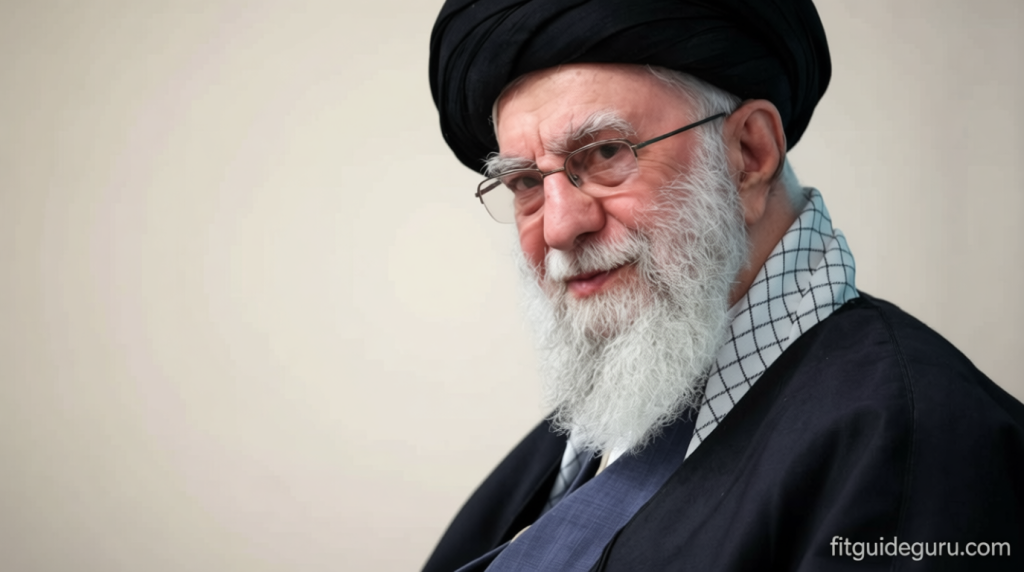
With 37 years in power, Khamenei’s grip on authority hinges on ideological resistance. Yet, as tensions escalate, the stakes for both sides grow ever higher. The path forward remains uncertain, teetering between confrontation and diplomacy.
