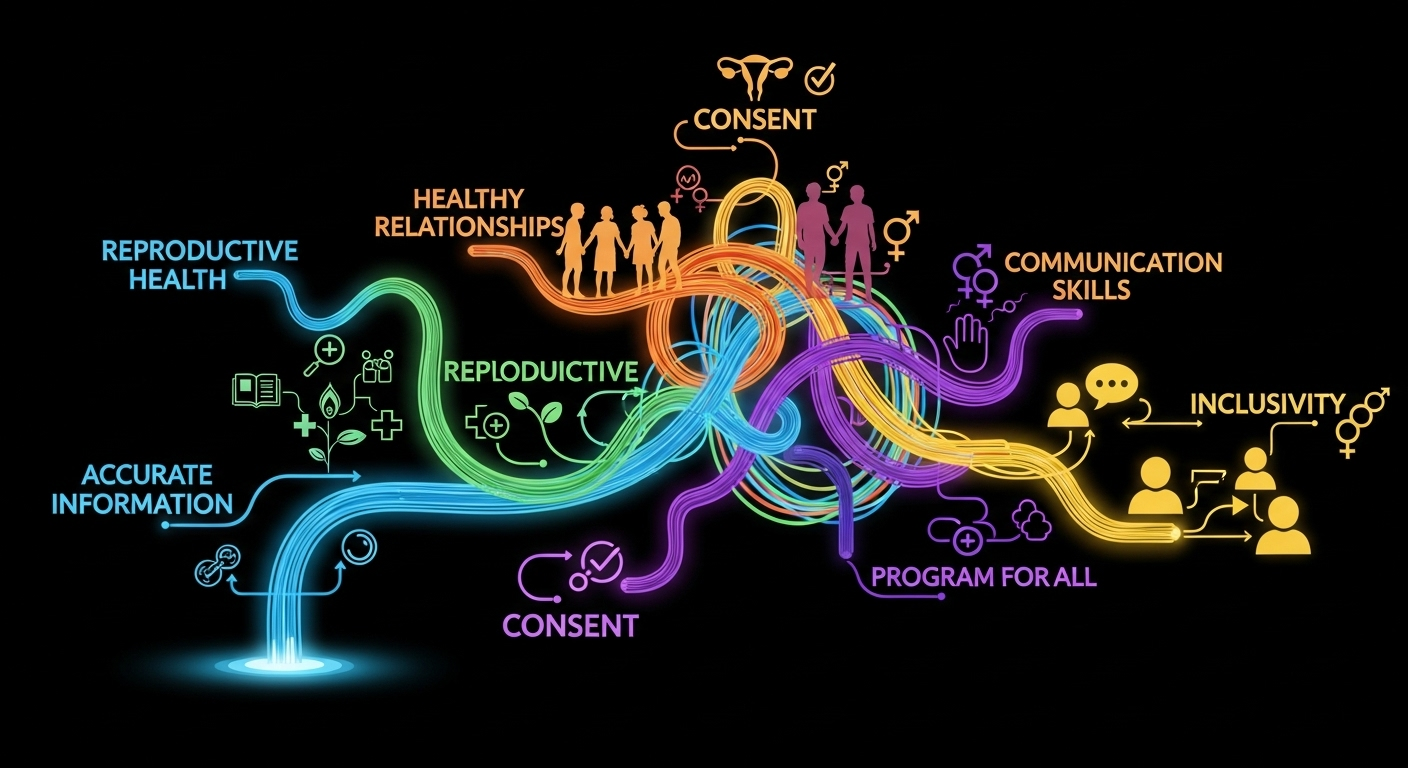
In an era of unprecedented access to information and misinformation, providing young people with a clear, accurate, and supportive framework for understanding their health and relationships has never been more critical. The conversation around sexual health has evolved far beyond a one-time, awkward "talk," moving towards a holistic educational approach. Understanding the components of a good sex education program is the first step for parents, educators, and policymakers to champion a system that truly serves the well-being of youth. This is not about promoting a single viewpoint but about investing in a public health imperative that equips the next generation with the knowledge, skills, and confidence to navigate their lives safely and respectfully. Comprehensive, Medically Accurate, and Evidence-Informed Curriculum The foundation of any effective sex education program is its curriculum. The term "comprehensive" is key here, signifying that the program goes far beyond the narrow scope of reproductive biology or abstinence. A robust curriculum addresses a wide spectrum of topics relevant to a young person’s social, emotional, and physical development. It must be designed to be age-appropriate, introducing concepts in a scaffolded manner that aligns with students' developmental stages, ensuring the information is always relevant and understandable without being overwhelming. This curriculum must be medically accurate and evidence-informed. This non-negotiable principle means all information presented is based on current, peer-reviewed scientific research and public health consensus from leading organizations like the World Health Organization (WHO) and the Centers for Disease Control and Prevention (CDC). It actively avoids ideology, personal bias, or myths, ensuring that students receive facts, not fear. When a program is built on this bedrock of accuracy, it dispels dangerous misinformation that flourishes online and provides a trusted source for life-altering decisions. The long-term impact of adopting such a curriculum is profoundly positive and well-documented. Communities that implement evidence-informed, comprehensive sex education consistently see better public health outcomes. These include statistically significant reductions in unintended teen pregnancies and lower rates of sexually transmitted infections (STIs), including HIV. Beyond the numbers, these programs are instrumental in fostering healthier relationship attitudes, reducing interpersonal violence, and empowering individuals to take ownership of their health and well-being for a lifetime. A Broad Spectrum of Topics A truly comprehensive program isn't a single lesson but an integrated journey through various essential subjects. Core topics must include human anatomy and physiology, the changes associated with puberty and adolescent development, reproduction, and the full range of contraceptive methods. Crucially, it must also provide thorough and up-to-date information on STI and HIV prevention, explaining transmission, testing, and treatment options. These biological and health-focused topics provide the fundamental knowledge base upon which all other skills are built. In today's interconnected world, a modern curriculum must also address contemporary challenges. This includes robust lessons on digital citizenship, online safety, and media literacy. Students need the tools to critically analyze media portrayals of sex and relationships, particularly in pornography, which often presents distorted and harmful scripts. Furthermore, discussions about consent must be extended to digital interactions, covering topics like the non-consensual sharing of images (sexting) and online harassment, equipping students to navigate their digital and physical worlds safely. Age- and Developmentally-Appropriate Content The concept of "age-appropriateness" is not an excuse to withhold information but a strategy to deliver it effectively. A good program scaffolds learning, building complexity over time. What is taught to a third-grader is fundamentally different from the content for a high school junior, yet both are part of the same educational continuum. This ensures that the information is always relevant to the student's immediate life and cognitive abilities. For instance, in early elementary school (ages 6-9), the focus might be on establishing foundational concepts like body autonomy, privacy, and using correct anatomical terms for body parts. This empowers children to communicate clearly about their bodies and helps in abuse prevention. In middle school (ages 10-14), as students enter puberty, the curriculum expands to cover menstruation, nocturnal emissions, peer pressure, and the basics of healthy friendships. By high school (ages 15-18), the program can delve into more nuanced topics like long-term relationships, the legal and emotional aspects of consent, contraceptive decision-making, and planning for a healthy future. Fostering Healthy Relationships and Consent Perhaps the most significant evolution in modern sex education is the shift from a purely biological focus to an emphasis on interpersonal dynamics. A program that only teaches about anatomy and disease prevention without addressing relationships is incomplete. The cornerstone of this relational education is consent. It is a skill, a dialogue, and a fundamental principle of respect that must be taught explicitly and consistently. This moves the conversation from a passive model of avoiding risks to an active model of building positive, respectful connections. Consent must be defined clearly and without ambiguity. Many effective programs use memorable acronyms like FRIES (Freely given, Reversible, Informed, Enthusiastic, Specific) to break it down. Students learn that consent is an enthusiastic and freely given "yes," not the absence of a "no." They learn that it must be ongoing throughout any interaction and can be revoked at any time. This education dismantles the harmful myth that silence, coercion, or intoxication can ever equal consent. Teaching these skills is a powerful form of preventative education. When young people learn how to set and respect boundaries, they are better equipped to identify and avoid unhealthy or abusive situations. They gain the communication skills necessary to express their needs, desires, and limits clearly and confidently. This empowerment fosters self-respect and provides the tools to build a foundation of mutual respect, trust, and communication in all their future relationships, both romantic and platonic. The Pillars of Consent Education Teaching consent effectively begins long before the topic of sex is ever introduced. It starts in early childhood by teaching body autonomy—the simple but profound idea that "your body belongs to you." As students mature, this concept evolves into more complex lessons. These include learning to read and respect social cues, understanding personal space, and practicing how to say "no" clearly and respectfully, as